
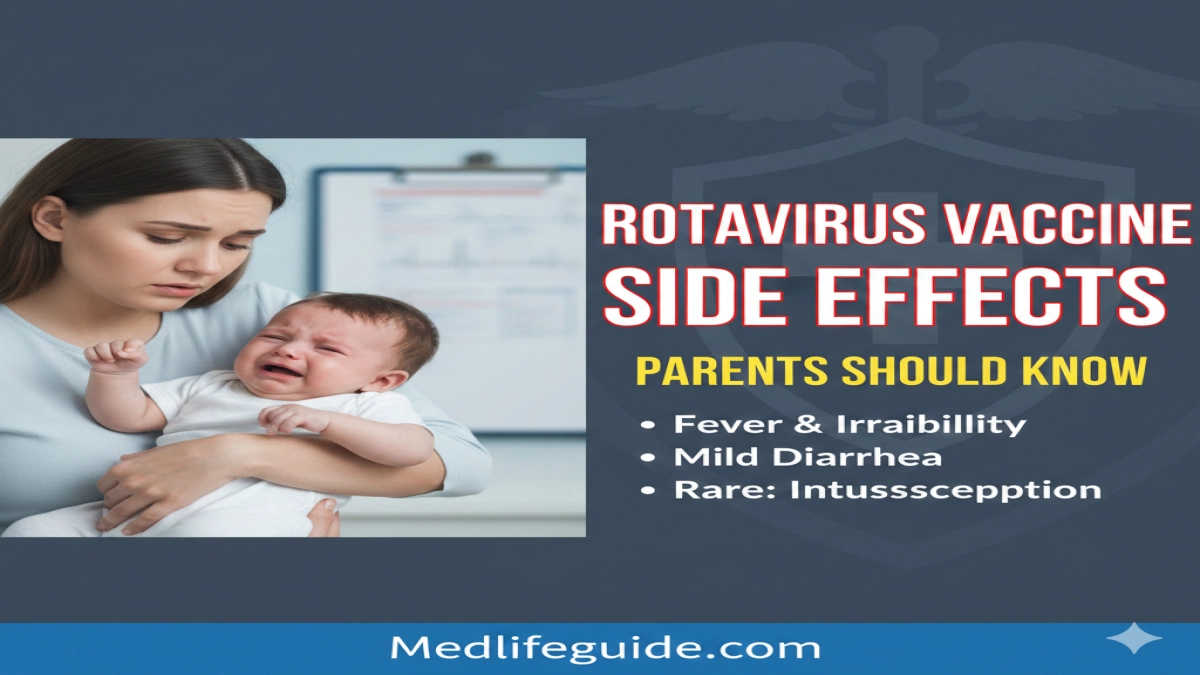
Medically Reviewed and Compiled by Dr. Adam N. Khan, MD.
What Is the Rotavirus Vaccine?
Rotavirus is a major cause of severe diarrhea, dehydration, and hospital stays in infants. The vaccine is given by mouth, usually in two or three doses depending on the brand. It has an excellent safety record, and serious problems are rare.
What Is the Rotavirus Vaccine?
Rotavirus is a major cause of severe diarrhea, dehydration, and hospital stays in infants. The vaccine is given by mouth, usually in two or three doses depending on the brand. It has an excellent safety record, and serious problems are rare.
Common Rotavirus Vaccine Side Effects
1. Temporary Fussiness
Many babies become a little irritable for a few hours. This settles on its own.
2. Mild Diarrhea or Loose Stools
Because the vaccine uses a weakened live virus, some babies develop mild diarrhea for a day or two.
3. Low-Grade Fever
A mild fever is common after most childhood vaccines. Parents can monitor at home unless the fever climbs high or lasts long.
4. Mild Vomiting
Vomiting once or twice is normal. Persistent vomiting needs medical attention because of dehydration risk.
Less Common but Known Side Effects
1. Rash Around the Mouth
This may happen due to drooling or irritation. It usually clears quickly.
2. Temporary Loss of Appetite
Some babies eat less within the first 24 hours.
3. Runny Nose or Mild Cough
Not caused by the vaccine directly but sometimes appears in the same time window.
Rare but Serious Rotavirus Vaccine Side Effects
1. Intussusception
This is a rare condition where the bowel folds into itself. It usually appears within the first week after the first or second dose. Signs include:
- Severe belly pain
- Legs pulling up toward the stomach
- Vomiting
- Blood-tinged stool
This needs urgent medical care.
2. Severe Allergic Reaction
Extremely rare. Signs include swelling of the face, trouble breathing, or sudden rash.
Unique Clinical Takeaways
Here’s the part most parents never hear about. These are insights doctors use when deciding safety and timing.
1. Symptom Overlap Can Mislead Parents
Babies often develop diarrhea or fussiness for unrelated reasons. Viral infections, formula changes, and teething can mimic “vaccine side effects.”
Clinicians look at timing, severity, and hydration status before linking symptoms to the vaccine. Understanding this prevents unnecessary worry and prevents delays in completing the vaccine schedule.
2. The Real Risk Window for Intussusception Is Narrow
The risk does not continue for months. Pediatricians watch for symptoms specifically in the first 7 days after dose one and dose two.
Parents who know this window can respond faster and avoid confusing normal digestive issues with emergency signs.
3. Babies With Certain GI Conditions Need Tailored Plans
Most infants can safely take the vaccine, but babies with:
- A history of bowel malformations
- Severe combined immunodeficiency (SCID)
- Uncorrected intestinal anomalies
may need special evaluation.
This isn’t because the vaccine is unsafe for all, but because these conditions already raise the baseline risk of bowel problems. A pediatrician usually reviews feeding patterns, stool history, and growth curves before deciding.
How Doctors Evaluate Possible Side Effects
Timeline Review
Pediatricians compare the onset of symptoms with known side-effect patterns.
Hydration Check
They check diapers, tears, saliva, and overall alertness to rule out dehydration.
Stool and Feeding Patterns
If symptoms don’t match typical post-vaccine patterns, doctors look for other causes such as viral gastroenteritis.
When Tests Are Ordered
Blood work or imaging is needed only when symptoms seem severe or outside the expected range.
When Parents Should Seek Medical Help
Contact a doctor if your baby has:
- Vomiting that keeps coming back
- Signs of dehydration
- Fever that lasts longer than 48 hours
- Severe abdominal pain
- Unusual sleepiness
- Bloody stool
Benefits Far Outweigh the Risks
The rotavirus vaccine drastically cuts the risk of severe dehydration, hospitalization, and complications from natural rotavirus infection. Most babies tolerate it well, and serious side effects remain extremely rare.
References and Citations
- Centers for Disease Control and Prevention — Rotavirus Vaccine Safety
- World Health Organization — Rotavirus Immunization Overview
- American Academy of Pediatrics — Vaccine Safety Profiles
- New England Journal of Medicine — Rotavirus Vaccine and Intussusception Risk
- Mayo Clinic — Rotavirus Infection and Vaccination Guidance
Medical Disclaimer
This article is for educational purposes only. It is not personal medical advice and does not replace consultation with a licensed physician. Always speak with your child’s healthcare provider regarding vaccines, symptoms, or medical concerns.