
Medically Reviewed and Compiled by Dr. Adam N. Khan, MD.
Dr. Khan is a board-certified physician specializing in metabolic health and preventative neurology. He has no relevant financial conflicts of interest to disclose regarding the clinical protocols discussed in this article.
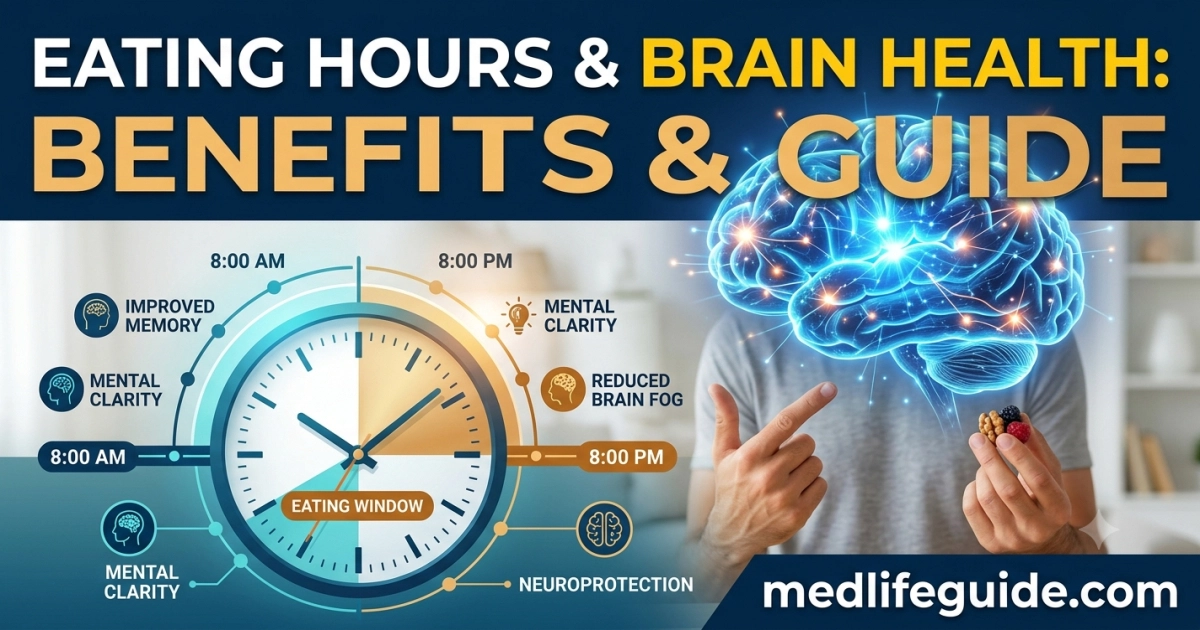
Quick Takeways
- Better Thinking: Restricting your daily eating hours helps improve memory, problem-solving skills, and daily focus.
- Cellular Cleanup: Fasting for a set window triggers autophagy, a process where your brain clears out damaged cells.
- Easier Than Calorie Counting: You do not need to change what you eat, just when you eat, to gain protective brain benefits.
🚨 EMERGENCY WARNING:Time-restricted eating is a lifestyle approach for long-term health. It is not an emergency treatment for sudden medical issues. If you or someone you care for experiences sudden confusion, slurred speech, sudden weakness on one side of the body, or a severe headache, call 911 or visit the nearest emergency room immediately. These are warning signs of a stroke or acute neurological emergency, not standard brain fog or hunger symptoms.
Introduction: What is Time-Restricted Eating?
Many people focus entirely on what they eat when trying to stay healthy. However, emerging research from top scientific institutions suggests that when you eat may matter just as much for your mind. Restricted eating hours—often called time-restricted eating (TRE) or intermittent fasting—involves consuming all daily meals and snacks within a specific number of hours each day.
For most Americans, it is common to eat across a 14-hour period, leaving the body very little time without food overnight. Reducing this consumption window to a structured 8- to 10-hour timeframe allows the body and brain to enter a fasting state. This dietary shift triggers protective chemical pathways that can shield brain cells from aging, injury, and disease.
Standard Modern Eating Pattern:
[ Breakfast 8 AM ] ---------------------- (12-14 Hours of Digestion) ---------------------- [ Late Snack 10 PM ]

Time-Restricted Eating Pattern:
[ Fasting ] -----[ First Meal 10 AM ] ------- (8-Hour Eating Window) ------- [ Last Meal 6 PM ]----- [ Fasting ]
How Restricted Eating Hours Help Brain Health
The brain is the most metabolically active organ in the body. Every bite of food you take requires significant energy to process, digest, and distribute. When you give your digestive tract a prolonged rest, it allows your metabolism to shift resources toward protecting, repairing, and optimizing your neural networks.
1. Activating the Metabolic Switch
When you avoid food for 10 to 16 hours, your body uses up its readily available sugar stores. Once that sugar runs out, your body flips a metabolic switch and begins burning fat for energy. This fat-burning process releases molecules called ketones into your bloodstream.
Ketones act as a super-fuel for your brain cells. They provide a cleaner, more efficient source of energy than glucose (sugar), which directly helps protect memory and learning functionality.
2. Triggering Brain Autophagy (Cellular Cleanup)
Think of your brain cells as busy factories. Over time, these factories build up cellular waste, damaged proteins, and worn-out parts. If this waste isn’t cleared away, it causes inflammation and contributes to memory loss conditions like Alzheimer’s disease.
Restricting your eating hours forces your brain to initiate a deep-cleaning process called autophagy. During autophagy, your brain cells literally eat their own waste, breaking down old or damaged components and recycling them into fresh, healthy parts. This prevents toxic buildups and keeps your neural pathways running smoothly.
3. Boosting BDNF and Neuroplasticity
Fasting acts as a form of mild, healthy stress for your brain cells. In response to this mild stress, the brain increases production of a vital protein called Brain-Derived Neurotrophic Factor (BDNF).
BDNF acts like a specialized fertilizer for your mind. It stimulates neuroplasticity, which is your brain’s ability to grow new connections, repair damaged synapses, and adapt to new information. Higher levels of BDNF make your brain more resilient against everyday mental exhaustion and long-term decline.
Scientific Evidence: What the Clinical Trials Show
The benefits of restricted eating hours are not just theoretical. Recent human clinical trials have provided strong, direct evidence of these neurological advantages.
The 2026 Nutrition Trial Insights
A landmark clinical trial highlighted by the American Society for Nutrition evaluated the effects of an 8-hour eating window on older adults at risk for cognitive decline. The researchers divided participants into two groups:
- Group A (Standard Window): Cut 500 calories per day but ate over a standard 12-hour window.
- Group B (Restricted Window): Cut 500 calories per day but restricted all eating to an 8.2-hour window (typically 10:00 AM to 6:00 PM).
After six months, both groups lost an average of 15 pounds. However, despite losing the exact same amount of weight, the restricted eating group performed significantly better on spatial planning, problem-solving, and attention tests. They also made far fewer mistakes on learning and memory tasks. This study proved that when you eat directly alters your brain performance, independent of weight loss or calorie counts.
Unique Clinical Takeaways
Before exploring the science of meal timing, here are three actionable clinical insights for implementing restricted eating hours safely:
- Prioritize an Early Window Over Late Fasting: Restricting food intake starting from the middle of the day aligns better with biological rhythms. Ending your eating window by 6:00 PM or 7:00 PM offers significantly higher cognitive protections than skipping breakfast and eating late into the night.
- Watch for Medication Timing Risks: If you take medications for blood pressure, thyroid, or diabetes, changing your eating schedule can alter how your body processes them. Always coordinate your eating window with your prescribing doctor to avoid dangerous drops in blood sugar or blood pressure.
- The “Brain First, Scale Second” Mindset: Clinical trials demonstrate that even when people lose identical amounts of weight, those using a restricted eating window achieve significantly better executive brain function. Do not judge the success of your eating routine solely by the bathroom scale; monitor your mental clarity, focus, and memory tracking instead.
Clinical Comparison Table
The table below outlines how standard calorie restriction compares directly to time-restricted eating based on recent medical literature.
| Feature | Standard Calorie Restriction | Time-Restricted Eating (TRE) |
|---|---|---|
| Primary Focus | Reducing total food volume | Restricting daily eating hours |
| Weight Loss Impact | Consistent and highly effective | Consistent and highly effective |
| Executive Function Gains | Minimal or secondary to weight loss | Significant improvements in planning and problem solving |
| Cellular Cleanup (Autophagy) | Low to moderate | High activation during fasting hours |
| Circadian Rhythm Alignment | Often poor due to late-night snacking | Excellent when ending eating windows early |
Step-by-Step Guide to Restricting Your Eating Hours
Transitioning to a structured eating window is straightforward, but it requires consistency to help your brain adapt to the metabolic shift.
Step 1: Pick Your Window (e.g., 10 AM to 6 PM)
       ↓
Step 2: Hydrate with Water, Black Coffee, or Plain Tea During Fasting
       ↓
Step 3: Eat Balanced, Nutrient-Dense Meals During Your Window
       ↓
Step 4: Close the Window 4 Hours Before Sleep to Protect Brain Rhythms
1. Choose Your Daily Window
The most common and clinically studied schedule is the 16/8 method. This means you fast for 16 hours and eat all of your meals within an 8-hour block.
- For an early schedule, try eating between 9:00 AM and 5:00 PM.
- For a standard schedule, try eating between 10:00 AM and 6:00 PM.
2. Manage Your Fasting Hours Safely
During your fasting hours, you should not consume any calories. However, staying hydrated is crucial for brain health and avoiding hunger-induced headaches. You may freely drink:
- Plain water
- Black coffee (no milk, sugar, or cream)
- Unsweetened herbal teas
3. Eat Brain-Boosting Foods
Restricting your hours doesn’t give you a free pass to eat low-quality food. To maximize your cognitive benefits, fill your eating window with nutrient-dense options like leafy greens, berries, nuts high in omega-3s, and fish.
4. Close Your Window Early
Avoid the common trap of shifting your eating window late into the evening (such as 1:00 PM to 9:00 PM). Eating large meals late at night disrupts your blood sugar control, increases systemic inflammation, and interferes with your sleep quality. For the best neuroprotective results, stop eating at least 4 hours before going to sleep.
Safety Considerations and Side Effects
While setting restricted eating hours is highly safe for the majority of healthy adults, it is not appropriate for everyone.
Who Should Avoid This Protocol?
Do not attempt time-restricted eating without explicit direct monitoring from a healthcare professional if you fall into any of these categories:
- Under Age 25: Fasting can potentially stunt physical growth and interfere with late-stage developmental changes.
- Pregnant or Breastfeeding: Developing babies require a continuous, uninhibited supply of nutrients.
- History of Eating Disorders: Structured restriction windows can trigger unhealthy psychological habits or restrictive behaviors.
- Type 1 or Advanced Type 2 Diabetes: Fasting can cause life-threatening drops in blood glucose if your insulin or oral medications are not precisely adjusted.
What to Expect Initially
When you first change your eating hours, your brain will take 5 to 7 days to adjust to the new metabolic schedule. During this transition phase, you may experience mild, temporary symptoms including:
- Dull headaches
- Irritability or “hanger”
- Minor stomach growling
- Mild daytime fatigue
These symptoms are normal signs that your body is learning to utilize fat stores for energy. If these symptoms persist for more than two weeks, or if you experience severe dizziness, fainting, or severe nausea, stop the protocol immediately and speak with your doctor.
Summary: A Simple Change for a Sharper Mind
Protecting your brain health as you age does not have to mean taking complex medications or tracking every calorie on a spreadsheet. By simply narrowing your daily consumption window and finishing your meals before the evening hours, you give your brain the vital rest it needs to clean up cellular waste, build new connections, and burn a cleaner source of fuel. Talk to your care team today to see if adjusting your eating hours is the right step for your long-term cognitive health.
Frequently Asked Questions (FAQs)
No, creamer contains calories and sugars that cause an insulin spike, which immediately breaks your fast and stops the cellular cleanup process in the brain.
While cellular benefits begin within days, human clinical trials show that significant, measurable improvements in planning and memory testing appear after 4 to 6 months of consistent practice.
As long as you eat an adequate amount of protein during your active eating window, time-restricted eating safely targets fat stores for ketone production without depleting muscle tissue.
While minor shifts of an hour won’t hurt, consistency is critical because your brain relies on stable circadian rhythms to manage cellular repair and sleep cycles efficiently.
Longer fasts are significantly harder to maintain, increase your risk of nutritional deficiencies, and are not necessary for achieving the everyday cognitive benefits provided by an 8-hour window.
References and Citations
- [1] Mayo Clinic: Intermittent fasting: What are the benefits?
- [2] National Institutes of Health (NIH): Time-restricted eating in Alzheimer’s disease: TREAD pilot trial
- [3] National Institutes of Health (NIH): The Effects of Intermittent Fasting on Brain and Cognitive Function
- [4] National Institutes of Health (NIH): Diet may improve brain health in older adults with obesity
- [5] ScienceDaily / American Society for Nutrition: Eating within 8 hours may help keep the aging brain sharp
- [6] The Guardian Science: Restricted eating hours may reduce cognitive decline in older age
- [7] Peer-Reviewed Journal (Nutrients): Intermittent Fasting as a Neuroprotective Strategy: Gut–Brain Axis
- [8] National Institutes of Health (NIH): Short-term fasting induces profound neuronal autophagy
Disclaimer:The text, graphics, images, and design layouts contained in this article are for informational and educational purposes only. This content is not intended to serve as a substitute for professional medical advice, clinical diagnosis, or personalized treatment plans. Always seek the direct advice of your physician or another qualified healthcare professional regarding any questions you may have about a medical condition or major dietary changes.