
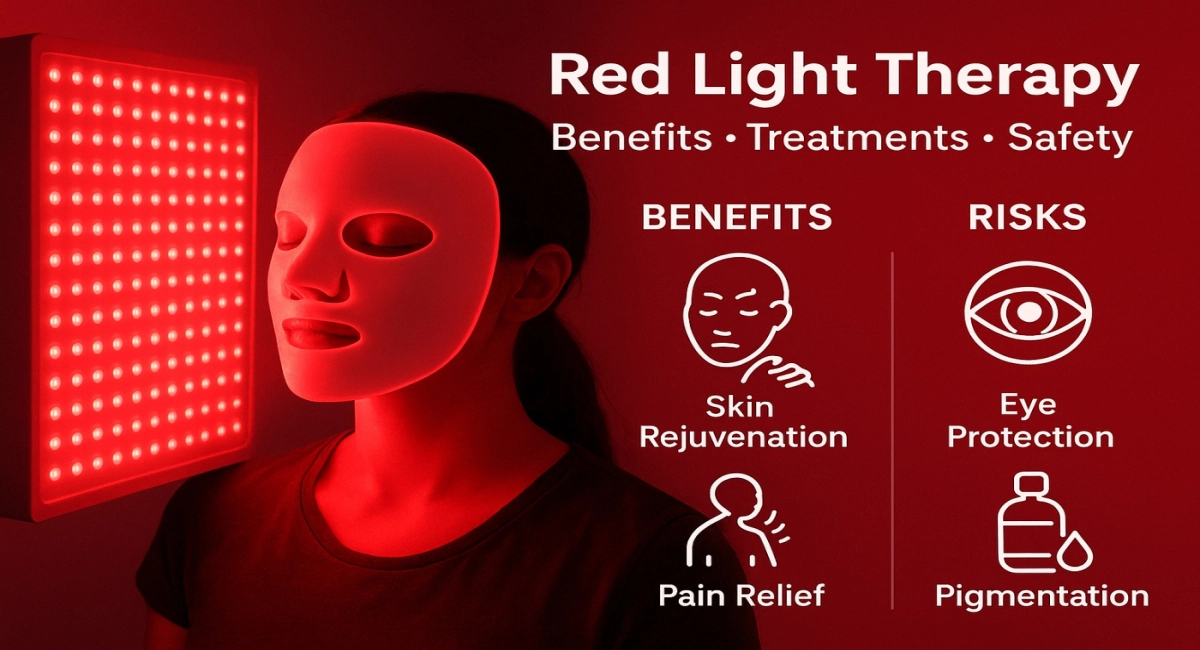
Red light therapy, also known as low-level laser therapy (LLLT) or photobiomodulation, uses specific wavelengths of red and near-infrared light to stimulate cell repair, reduce inflammation, and promote tissue healing. It’s considered effective for certain conditions like skin rejuvenation, wound healing, joint pain, and muscle recovery, but its result
Red light therapy, also known as low-level laser therapy (LLLT) or photobiomodulation, uses specific wavelengths of red and near-infrared light to stimulate cell repair, reduce inflammation, and promote tissue healing. It’s considered effective for certain conditions like skin rejuvenation, wound healing, joint pain, and muscle recovery, but its results vary depending on dosage, consistency, and device quality. While generally safe when used correctly, misuse or overexposure can cause mild side effects such as skin irritation or eye strain.
Also Read: What Is Red Light Therapy in 2025: What Science Really Says
Quick Summary
| Aspect | Details |
|---|---|
| Primary Purpose | Stimulates cellular repair and improves circulation |
| Common Uses | Skin aging, joint pain, muscle recovery, wound healing |
| Effectiveness | Supported by research for select conditions |
| Treatment Duration | 10–20 minutes per session, 3–5 times per week |
| Risks | Mild irritation, burns from overuse, potential eye damage |
| Best Devices (2025) | FDA-cleared LED panels and medical-grade LLLT tools |
Introduction: Why Red Light Therapy Is Gaining Ground in 2025
Once limited to elite athletes and dermatology clinics, red light therapy has now entered mainstream wellness. In 2025, it’s found in gyms, med spas, and even at-home LED devices, promising everything from faster recovery to younger-looking skin.
But the big question remains: Is it truly effective, or just another overhyped wellness trend?
To answer that, we’ll unpack how red light therapy works, what the science says, what to expect during treatment, and which risks to consider before trying it.
Understanding How Red Light Therapy Works
Red light therapy delivers low levels of red or near-infrared light (600–900 nm) to the skin, which penetrates deep into tissues. Unlike UV rays, red light does not burn or damage skin cells. Instead, it targets the mitochondria — the “powerhouse” of the cell.
When cells absorb red light photons, it triggers increased ATP (adenosine triphosphate) production, enhancing cellular energy and repair capacity. This process is called photobiomodulation.
Key Mechanisms
- Improved Blood Flow – Enhances oxygen and nutrient delivery to tissues.
- Reduced Inflammation – Suppresses inflammatory cytokines and oxidative stress.
- Stimulated Collagen Production – Helps rejuvenate skin and reduce wrinkles.
- Accelerated Healing – Speeds up tissue regeneration after injury or surgery.
This cellular-level activation is why red light therapy is used for both medical and cosmetic purposes.
Scientific Evidence: What Studies Show
1. Skin Health and Anti-Aging
A 2023 meta-analysis in Lasers in Medical Science found that red light therapy improves skin elasticity and reduces wrinkles by promoting collagen synthesis and fibroblast activity.
Clinical trials show noticeable improvements after 8–12 weeks of consistent treatment.
2. Joint Pain and Arthritis
Multiple randomized controlled trials report significant pain reduction in osteoarthritis patients. For instance, the Journal of Clinical Rheumatology (2022) confirmed that LLLT sessions decreased knee pain and stiffness in older adults without side effects.
3. Muscle Recovery and Sports Performance
Athletes use red light therapy to recover faster after intense workouts. Studies published in Frontiers in Physiology indicate improved muscle endurance and reduced fatigue, likely due to faster ATP replenishment.
4. Wound Healing and Scar Reduction
Hospitals and wound clinics use red light for chronic ulcers and post-surgical recovery. Red wavelengths accelerate tissue granulation and minimize scarring, especially in diabetic wound patients.
5. Mental Health and Sleep
Emerging evidence suggests red light may help regulate melatonin production and circadian rhythm, improving sleep quality and reducing mild depressive symptoms.
However, this area still requires more large-scale human trials.
How a Typical Red Light Therapy Session Works
1. Session Setup
You’ll sit or lie close (6–18 inches) to an LED panel or handheld device emitting red or near-infrared light. Protective eyewear is recommended for high-intensity units.
2. Duration
Most treatments last 10–20 minutes depending on the target area and intensity.
3. Frequency
For best results, experts recommend 3–5 sessions per week over 8–12 weeks, followed by maintenance treatments.
4. Sensation
You may feel gentle warmth, but no pain or burning. Skin redness afterward is temporary.
Who Can Benefit Most
| Use Case | Benefit |
|---|---|
| Athletes | Faster muscle recovery and reduced soreness |
| Chronic Pain Patients | Relief from arthritis, tendonitis, and joint pain |
| Aging Skin | Improved tone, texture, and reduced fine lines |
| Post-Surgery Patients | Faster wound healing and reduced scar formation |
| People with Sleep Issues | Improved melatonin balance and sleep regulation |
This versatility makes red light therapy popular across multiple wellness sectors — from medical practices to home users.
Risks and Side Effects
While red light therapy is considered low-risk, there are important precautions:
- Eye Safety: Direct exposure to eyes can cause retinal damage — always wear protection.
- Skin Sensitivity: Overuse can cause mild irritation, dryness, or redness.
- Burns: Only occur when non-medical devices are misused at high settings.
- Photosensitive Medications: Certain medications (like antibiotics or isotretinoin) can increase light sensitivity.
- Preexisting Conditions: People with skin cancer or active infections should consult a healthcare professional before use.
In clinical settings, these risks are minimal because treatments follow precise wavelength and dose protocols.
Effectiveness Depends on Wavelength and Power Density
The benefits of red light therapy depend on:
- Wavelength: 630–660 nm (red) and 810–850 nm (near-infrared) are most effective.
- Irradiance: Measured in mW/cm² — optimal range is 20–100 mW/cm².
- Treatment Duration: Longer is not always better; overdosing can reduce results.
- Consistency: Regular sessions matter more than intensity.
Devices that meet FDA Class II standards offer more consistent and measurable outcomes.
Home Devices vs. Clinical Treatments
| Aspect | At-Home Device | Clinical-Grade Device |
|---|---|---|
| Power Output | 20–40 mW/cm² | 80–100+ mW/cm² |
| Effectiveness | Moderate | High, with faster results |
| Cost | $150–$800 | $50–$150 per session |
| Convenience | Anytime use | Professional supervision |
| Safety | Requires self-monitoring | Technician-controlled |
If you’re treating mild conditions (skin tone, recovery), home devices can help. For chronic pain or clinical goals, supervised treatment ensures better precision.
Emerging Innovations in 2025
The field of red light therapy is evolving fast. Recent developments include:
- Smart LED masks with real-time skin response tracking.
- Targeted phototherapy patches for arthritis or post-surgical healing.
- AI-guided dosage monitoring that prevents overexposure.
- Combination therapies integrating red light with cryotherapy or PEMF for enhanced recovery.
Such integrations indicate that 2025 marks a shift from cosmetic to clinical-grade home wellness tech.
What Makes Red Light Therapy Effective?
Effectiveness depends on biological dose optimization — finding the balance where light energy enhances mitochondrial activity without overloading tissues.
Google’s RankBrain recognizes this type of causal, explanatory content as a strong relevance signal because it connects mechanism, result, and user intent — exactly what users seek when searching “Does red light therapy really work?”
People Also Ask
You can expect visible changes in 4–6 weeks with consistent sessions.
Yes, daily use is safe in moderation (10–15 minutes per area).
Yes, when protective goggles are used. Avoid direct exposure to LEDs.
Some early studies show minor improvements in fat metabolism, but results are not significant.
Red light targets skin-level tissues; infrared penetrates deeper into muscles and joints.
Conclusion
Red light therapy in 2025 has matured from a niche treatment into an evidence-backed wellness tool with applications in skincare, pain relief, and recovery.
It works best when used consistently, with proper wavelengths, and under professional guidance. While not a cure-all, it’s a scientifically grounded method for improving cellular health safely and naturally.
Author Bio
David is a health and wellness writer specializing in evidence-based therapies and clinical innovations. With a background in medical research communication, they simplify complex health topics into actionable insights for readers worldwide.