
Medically Reviewed and Compiled by Dr. Adam N. Khan, MD.
Pancreatic cancer treatment involves a mix of surgery, chemotherapy, and new precision medicines tailored to your unique genetic markers. Be
Medically Reviewed and Compiled by Dr. Adam N. Khan, MD.
Pancreatic cancer treatment involves a mix of surgery, chemotherapy, and new precision medicines tailored to your unique genetic markers. Because this cancer is often caught in later stages, doctors today use a “multimodal” approach. This means they combine different therapies to attack the tumor from several angles at once. In 2026, the focus has shifted toward personalized care, where your specific tumor DNA helps doctors choose the exact drugs most likely to work for you.
Understanding Your Treatment Options
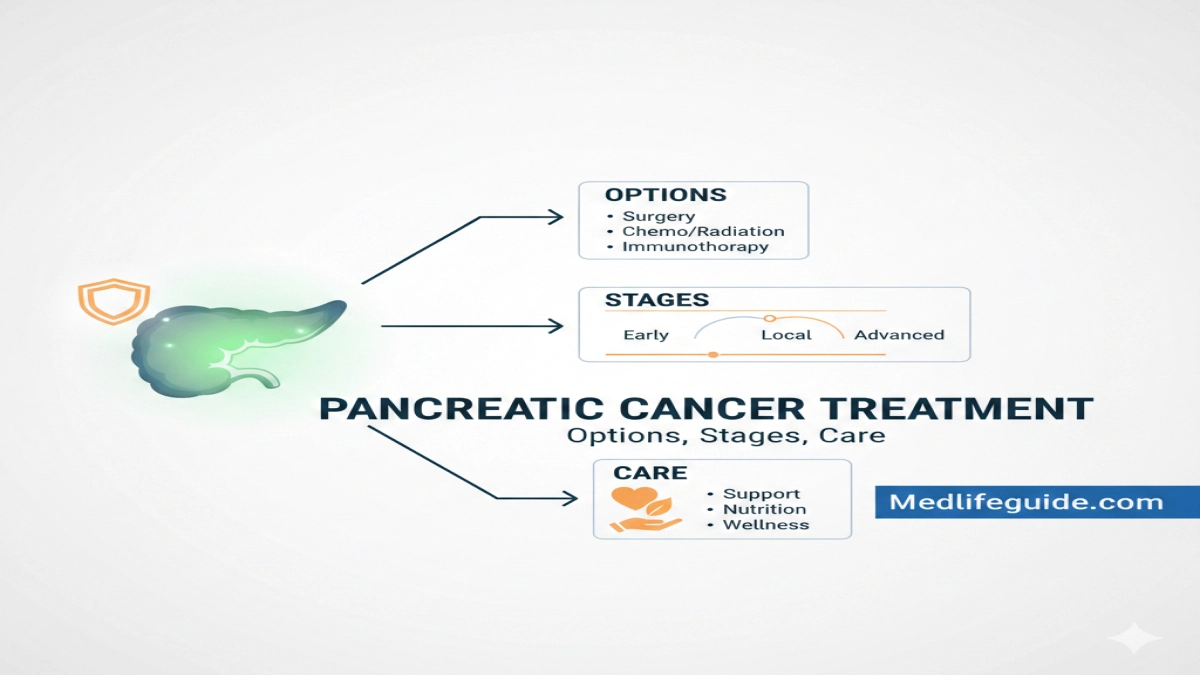
When you or a loved one faces a diagnosis, the first goal is to determine the “stage” of the cancer. This tells the medical team if the tumor is only in the pancreas or if it has spread. Your treatment plan will likely include one or more of the following:
- Surgery: To remove the tumor physically.
- Chemotherapy: To kill cancer cells throughout the body using strong medicine.
- Radiation Therapy: Using high-energy beams to shrink tumors in a specific spot.
- Targeted Therapy: Drugs that “target” specific weak spots in cancer cells.
- Immunotherapy: Helping your own immune system find and destroy the cancer.
Surgery: The Primary Goal for a Cure
Surgery is currently the only way to fully remove pancreatic cancer. However, only about 20% of patients are candidates for surgery at the time of diagnosis.
The Whipple Procedure
This is the most common surgery for tumors in the “head” (the wide part) of the pancreas. The surgeon removes the head of the pancreas, part of the small intestine, the gallbladder, and part of the bile duct. They then reconnect the remaining organs so you can still digest food.
Distal and Total Pancreatectomy
If the cancer is in the “tail” or “body” of the pancreas, a distal pancreatectomy is performed to remove those sections. In rare cases where the cancer is spread throughout the entire organ, a total pancreatectomy is required. Living without a pancreas is possible, but it requires taking insulin and digestive enzymes for the rest of your life.
Modern Chemotherapy Regimens
Chemotherapy uses drugs to stop cancer cells from growing. It can be given before surgery (neoadjuvant) to shrink a tumor, or after surgery (adjuvant) to kill any remaining microscopic cells.
Common Drug Combinations
In 2026, two main “cocktails” of drugs are the standard of care:
- FOLFIRINOX: A powerful four-drug combination. It is often the first choice for patients who are otherwise in good physical health.
- Gemcitabine plus Nab-paclitaxel: This pair is often better tolerated by patients who might find FOLFIRINOX too intense.
Note: Doctors now use AI-based tools to predict which of these two paths will work best for your specific body, reducing the “trial and error” phase of treatment.
Targeted Therapy and Precision Medicine
This is the most exciting area of pancreatic cancer treatment today. Instead of a “one-size-fits-all” approach, doctors look at the “fingerprint” of your tumor.
KRAS Inhibitors
About 90% of pancreatic cancers have a mutation in a gene called KRAS. For decades, this was “undruggable.” Now, new drugs can specifically block these mutated signals. While these drugs are effective, the cancer often tries to find a “workaround.” To stop this, doctors are now using triple-therapy combinations that block three different pathways at once, making it much harder for the cancer to survive.
BRCA Mutations
If you have a BRCA1 or BRCA2 gene mutation (often linked to breast or ovarian cancer), your pancreatic cancer may respond very well to a specific type of drug called a PARP inhibitor, such as olaparib.
Immunotherapy: Teaching the Body to Fight
Immunotherapy has been difficult for pancreatic cancer because the tumors are often surrounded by a “shield” of tough tissue that keeps immune cells out.
Breaking the Shield
New treatments are being tested to “break” this protective barrier. One method uses Acoustic Cluster Therapy, which uses tiny bubbles and ultrasound to “pop” holes in the tumor’s defense, allowing chemotherapy and immune cells to get inside.
Cancer Vaccines
Research in 2026 has led to the development of personalized vaccines. These are not like flu shots that prevent disease; instead, they are made using a sample of your own tumor to “train” your immune system to recognize and attack those specific cancer cells if they ever try to return.
Radiation Therapy and New Tech
Radiation uses high-energy X-rays to kill cancer. A newer version called SBRT (Stereotactic Body Radiotherapy) delivers very high doses of radiation with pinpoint accuracy. This protects the healthy organs nearby, like your stomach and liver, while hitting the tumor harder.
Another breakthrough is Adaptive Radiation Therapy (ART). Because your organs move slightly when you breathe or digest food, ART machines take a fresh image of your body every single day and adjust the beam to hit the tumor exactly where it sits at that moment.
Managing Side Effects and Nutrition
Treatment can be hard on the body. Maintaining your strength is a vital part of the “treatment” itself.
- Enzyme Replacement: Since the pancreas makes digestive juices, many patients need to take “PERT” (Pancreatic Enzyme Replacement Therapy) pills with every meal to help absorb nutrients.
- Small, Frequent Meals: Instead of three big meals, aim for 6 to 8 small snacks. This is easier on your digestive system.
- Protein is Key: Your body needs extra protein to repair the damage from chemotherapy and surgery. Lean meats, eggs, and beans are excellent choices.
- Hydration: Drink plenty of water, but try to drink it between meals rather than during them so you don’t feel too full to eat.
Why Clinical Trials Matter
In 2026, many of the most successful treatments are found within clinical trials. These are research studies that give patients access to the very latest drugs before they are available to the general public. If standard treatments aren’t working, a clinical trial may offer a new path forward using experimental medicine that is showing promise in the lab.
Summary of Key Takeaways
| Treatment Type | Primary Use | Goal |
| Surgery | Localized tumors | Complete removal of cancer |
| Chemotherapy | Most stages | Shrink tumor or kill hidden cells |
| Targeted Therapy | Genetic mutations | Block specific growth signals |
| SBRT Radiation | Non-surgical tumors | Local control with fewer sessions |
| Immunotherapy | Specialized cases | Use immune system to fight |
Dealing with pancreatic cancer is a journey that requires a team—surgeons, oncologists, dietitians, and support groups. With the advancements in precision medicine and better surgical techniques, there is more hope today than ever before.