
Medically Reviewed and Compiled by Dr. Adam N. Khan, MD.
Quick Summary
Pain behind the knee can come from joint issues, tendon injuries, nerve problems, or circulation disorders like a Baker cyst or a blood clot. The right diagnosis depends on the exact location of the pain, swelling, mobility limits, and any recent trauma. Early evaluation matter
Medically Reviewed and Compiled by Dr. Adam N. Khan, MD.
Quick Summary
Pain behind the knee can come from joint issues, tendon injuries, nerve problems, or circulation disorders like a Baker cyst or a blood clot. The right diagnosis depends on the exact location of the pain, swelling, mobility limits, and any recent trauma. Early evaluation matters because some causes are simple strains, but others need urgent care.
What Does Pain Behind the Knee Mean?
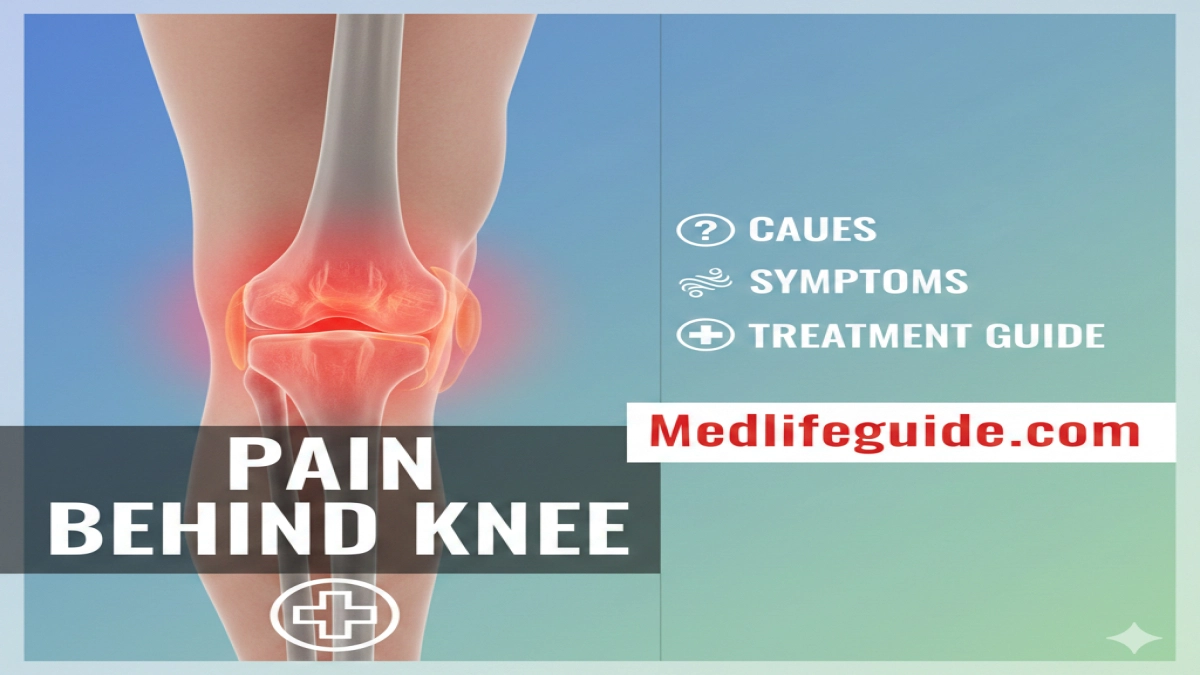
Pain in the back of the knee is also called posterior knee pain. This area includes ligaments, tendons, nerves, blood vessels, and the posterior part of the knee joint. When any of these structures are irritated, torn, or swollen, you feel pain.
Let’s break it down so you can see where the problem might come from.
Common Causes of Pain Behind Knee
1. Hamstring Tendon Strain
The hamstring muscles attach behind the knee. A sudden stretch, sprint, or awkward step can strain these tendons.
What it feels like:
- Sharp pain when bending the knee
- Tenderness along the back of the thigh
- Clicking sensation during movement
2. Baker Cyst (Popliteal Cyst)
A swollen fluid-filled sac behind the knee caused by excess joint fluid. Often linked with arthritis or meniscus tears.
Symptoms:
- Visible or palpable lump
- Stiffness
- Tightness when straightening the leg
3. Meniscus Tear
The posterior horn of the meniscus can tear and cause pain that radiates to the back of the knee.
Clues:
- Locking
- Knee catching
- Pain after twisting movements
4. Deep Vein Thrombosis (DVT)
A blood clot in the deep veins of the leg. This is a medical emergency.
Warning signs:
- Swelling
- Warmth
- Redness
- Pain that gets worse when standing or walking
5. Popliteus Tendon Injury
This small but important tendon stabilizes the knee. Injury often occurs during downhill running or twisting.
Symptoms:
- Pain when walking downhill
- Difficulty rotating the knee
- Tenderness when you press the outer-back side of the knee
6. Osteoarthritis
Degenerative joint changes can create pressure and swelling behind the knee.
Symptoms:
- Morning stiffness
- Grinding sensation
- Swelling on and off
When Pain Behind Knee Needs Immediate Care
Seek urgent evaluation if you notice:
- Sudden swelling
- Warmth and redness
- Pain after a fall
- Numbness or weakness
- Difficulty breathing (possible clot)
Symptoms Checklist
What this really means is your symptoms help narrow the cause.
- Swelling: Think Baker cyst or DVT
- Sharp pain: Meniscus or tendon injury
- Locking: Meniscus tear
- Burning or tingling: Nerve involvement
- Heavy, warm leg: Possible clot
Unique Clinical Takeaways
These are deeper, practical insights that help both clinicians and patients understand the bigger picture.
1. Posterior Knee Pain Often Hides Multi-Source Causes
Patients may come in reporting a single area of pain, but posterior knee pain can be a blend of joint, tendon, and vascular problems happening together.
For example:
- A mild meniscus tear can trigger swelling
- That swelling increases pressure
- The pressure then forms a Baker cyst
This chain reaction means the visible cyst is not the real cause. Treating only the cyst leads to recurrence. Understanding the root joint issue gives better long-term relief.
2. Gait Patterns Give Strong Diagnostic Clues
Watching how a patient walks often reveals more than imaging:
- A stiff, guarded gait suggests a meniscus tear
- A short stride with bent-knee walking points to hamstring injury
- Slow, heavy steps with calf tightness can indicate vascular issues
Clinicians who analyze gait early often avoid unnecessary imaging and catch circulation problems faster.
3. Pain Location Predicts the Likely Structure Involved
The back of the knee is small, but the exact pain spot matters:
- Inner-back pain: Medial meniscus or semimembranosus tendon
- Outer-back pain: Popliteus tendon strain
- High-back pain: Hamstring tendon
- Central-back swelling: Baker cyst
This quick mapping improves diagnostic accuracy and prevents mislabeling everything as “arthritis” or a “strain.”
Diagnosis: How Doctors Figure It Out
History and Physical Exam
A doctor looks at:
- Pain pattern
- Activities that triggered pain
- Walking style
- Swelling, bruising, or tenderness
Imaging
- Ultrasound: Best for cysts, blood flow, and soft tissue
- X-ray: Checks joint space and arthritis
- MRI: Best for meniscus and tendon injuries
Blood Tests
Done if infection, inflammation, or clot risks are suspected.
Treatment Options
Rest and Activity Changes
Give the knee time to settle. Avoid squatting, jumping, or long walks uphill.
Ice and Heat
Ice reduces swelling. Heat helps stiffness once swelling is gone.
Medication
Over-the-counter anti-inflammatories can reduce pain.
Physical Therapy
Strengthening the quadriceps, hamstrings, and glutes improves knee support.
Aspiration for Baker Cyst
Draining the fluid helps, but preventing recurrence requires treating the joint source of swelling.
Surgery
Only needed for:
- Severe meniscus tears
- Ligament injuries
- Persistent cysts
- Serious structural damage
How to Prevent Pain Behind Knee
- Warm up before exercise
- Keep hamstrings flexible
- Strengthen thigh and hip muscles
- Avoid sudden jumps or sprints
- Maintain a healthy weight
- Address early knee pain before it spreads
References and Citations
- Cleveland Clinic – Posterior Knee Pain
- Mayo Clinic – Meniscus Tears
- American Academy of Orthopaedic Surgeons – Hamstring Injuries
- National Institutes of Health – Popliteal Cyst Review
- Centers for Disease Control and Prevention – Deep Vein Thrombosis
Medical Disclaimer
This article is for educational purposes only and is not a substitute for professional medical advice. Always consult a qualified healthcare provider for diagnosis and treatment.