
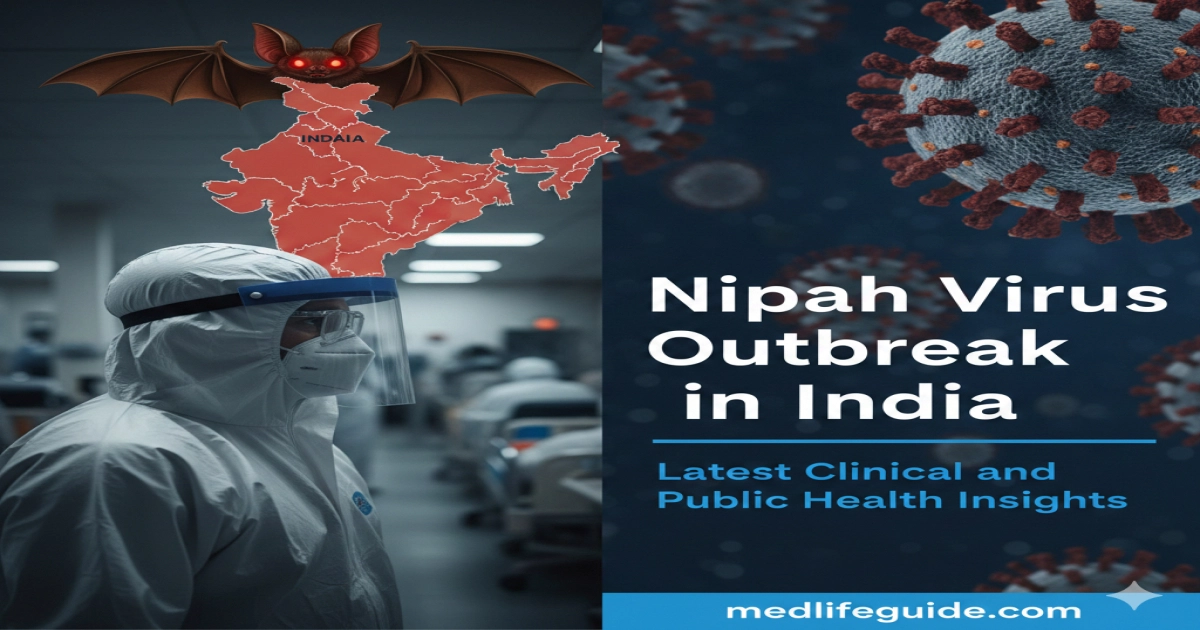
The Nipah virus (NiV) is a zoonotic viral pathogen capable of causing severe disease in humans with high case‑fatality ratios. India has experienced multiple NiV outbreaks since its first reported event in 2001, with recent confirmations of cases in West Bengal in January 2026 enhancing global surveillance focus on this pathogen. NiV continues to pose acute public health challenges due to the absence of licensed vaccines or specific antiviral treatments, necessitating rapid detection, supportive clinical care, and robust containment strategies.
Background and Epidemiology
What Is Nipah Virus?
Nipah virus is a Paramyxoviridae family member within the Henipavirus genus, naturally harbored by fruit bats (Pteropus species). Transmission can occur from infected animals to humans, via contaminated food, or through close contact with infected individuals or their body fluids. Human‑to‑human transmission has been documented during outbreaks, primarily in healthcare settings or close household contacts.
Historical Outbreaks in India
India’s confirmed NiV outbreaks and occurrences prior to 2026 include:
- 2001, Siliguri (West Bengal): 66 cases; ~68% case‑fatality ratio.
- 2007, Nadia (West Bengal): 5 cases; 100% fatality.
- 2018, Kozhikode & Malappuram (Kerala): 18+ confirmed cases; ~91% fatality.
- 2019, Ernakulam (Kerala): single case; survival.
- 2021, Kozhikode (Kerala): single fatal case (100%).
- 2023 & 2024 episodes: isolated and clustered cases documented across Kerala districts.
Current Outbreak Context (2026)
In January 2026, Indian health authorities confirmed NiV infection in multiple healthcare workers in West Bengal (North 24 Parganas), including two nurses who contracted the virus in a clinical setting. Rapid contact tracing and testing have been initiated with hundreds of individuals assessed and quarantined.
Virology and Transmission Dynamics
Natural Reservoir and Zoonotic Spillover
Fruit bats carry Nipah virus in saliva, urine, and excreta. Human exposure commonly occurs through:
- Consumption of contaminated raw date palm sap or fruits partially eaten by bats.
- Close contact with infected animals or their secretions.
- Secondary human‑to‑human transmission among caregivers and healthcare workers.
Human‑to‑Human Spread
Although less common than zoonotic transmission, NiV can spread person‑to‑person, particularly through direct contact with infected respiratory secretions or bodily fluids. This mechanism was observed in previous outbreaks and highlights nosocomial (healthcare‑associated) transmission risks.
Clinical Presentation
Incubation and Early Symptoms
- Incubation period: typically 4–14 days; rare reports up to 45 days.
- Initial symptoms: fever, headache, myalgia, nausea, and sore throat.
- Progressive signs: cough, difficulty breathing, and neurological involvement such as confusion or altered mental status.
Severe Disease: Encephalitis Syndrome
NiV can cause acute encephalitis (brain inflammation) leading rapidly to seizures, coma, and neurological deficits. Severe cases may show acute respiratory distress syndrome (ARDS).
Case Fatality
Outbreaks documented in Asia have shown case‑fatality rates between 40% and 100%, with variability based on outbreak context and clinical management capacity.
Diagnosis
Laboratory Methods
- RT‑PCR: Detects viral RNA in saliva, cerebrospinal fluid (CSF), blood, or respiratory samples.
- Serology (ELISA): Detects anti‑NiV antibodies in convalescent sera.
Prompt sample testing and confirmation via specialized labs (e.g., National Institute of Virology, Pune) are standard.
Treatment and Supportive Care
Absence of Specific Antivirals
There is no licensed NiV‑specific antiviral therapy or vaccine currently available. Investigational treatments include monoclonal antibodies and other experimental agents, but these remain under study.
Supportive Clinical Management
Care focuses on:
- Intensive supportive interventions for respiratory or neurological complications.
- Management of seizures, respiratory distress, and systemic complications in ICU settings.
- Infection control precautions to protect healthcare workers and other patients.
Public Health Response
Surveillance and Contact Tracing
Rapid identification of contacts, risk categorization, and monitoring for up to 21 days post‑exposure are key to containment. States neighboring outbreak zones (e.g., Tamil Nadu) have heightened surveillance following confirmed cases.
Quarantine and Isolation Protocols
Confirmed contacts with high‑risk exposure are quarantined or isolated based on symptom status and exposure classification. Testing of asymptomatic contacts continues according to public health guidelines.
Community Risk Communication
Public advisories emphasize avoidance of raw date palm sap and bat‑contaminated foods, use of protective equipment for caregivers, and hygiene practices.
Unique Clinical Takeaways
1. Differential Neurological Risk Profiling
In NiV outbreaks, clinical teams must differentiate Nipah encephalitis from other causes of acute encephalitis syndrome (AES), such as Japanese encephalitis or herpes simplex encephalitis. Key distinct markers include rapid progression to altered consciousness and respiratory involvement in the context of potential bat exposure. Diagnostic suspicion should remain high in clusters or neurologic presentations following zoonotic exposures.
2. Nosocomial Transmission Patterns in Healthcare Settings
Past outbreaks have documented nosocomial spread with infection of healthcare workers. Detailed records of aerosol‑generating procedures (intubation, suctioning) and inadequate PPE use correlate with secondary cases. Enhanced airborne and droplet precautions during high‑risk procedures can reduce transmission.
3. Environmental and Seasonal Risk Drivers
Repeated spillover events in Kerala suggest geographic and ecological risk zones where fruit bat populations overlap with human consumption of date palm sap. Seasonal peaks during fruit harvesting and sap collection periods may increase human exposure risk, calling for targeted public health messaging timed with these activities.
4. Asymptomatic Secondary Cases and Surveillance Gaps
Subclinical NiV infections can occur and are difficult to detect without proactive surveillance. Serological data showing past NiV exposure in bat populations indicate potential undetected transmission chains in humans, especially in areas where AES or ARDS cases are not etiologically defined.
Infection Prevention and Control (IPC)
Healthcare Setting Measures
- Implement standard, contact, droplet, and airborne precautions for suspected or confirmed cases.
- Use dedicated rooms and equipment to minimize cross‑contamination.
- Ensure rigorous cleaning and disinfection protocols, including 0.5% sodium hypochlorite for contaminated surfaces.
Community and Home Measures
- Hand hygiene, avoidance of unprotected care for symptomatic individuals, and avoidance of bat‑exposed foods are core preventive behaviors.
Challenges and Future Directions
Research and Vaccine Development
Efforts to develop NiV vaccines and therapeutics are ongoing, but no licensed product is available. Continued research investment is critical given the virus’s high fatality rates and potential for outbreaks.
Strengthening Laboratory Capacity
Expanding access to BSL‑3 laboratory diagnostics and point‑of‑care testing in high‑risk regions can shorten detection times and enable prompt public health action.
Medical Disclaimer
Content is informational and not a substitute for professional medical advice. Clinical decisions should be based on current guidelines and clinician judgment