
Quick Answer: As of February 2026, new coronavirus symptoms are largely driven by the NB.1.8.1 (Nimbus) and XFG (Stratus) variants. While they still feel like a bad cold or flu, the most common “new” sign is a sharp, intense sore throat—often described as feeling like “swallowing razor blades.” Other key symptoms include persisten
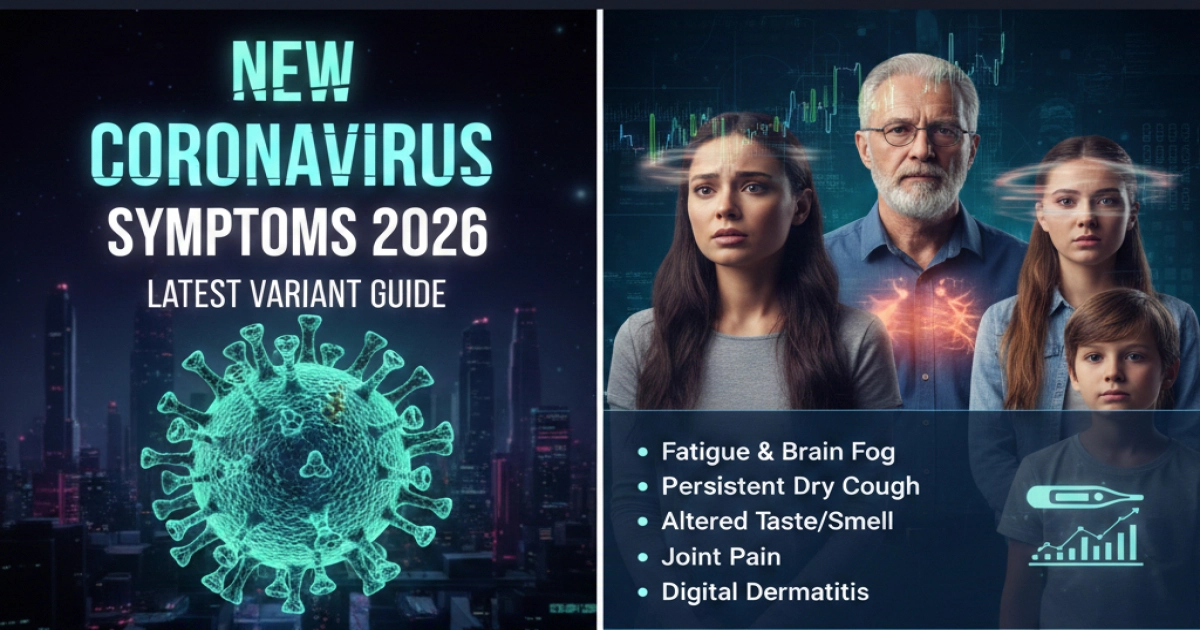
Quick Answer: As of February 2026, new coronavirus symptoms are largely driven by the NB.1.8.1 (Nimbus) and XFG (Stratus) variants. While they still feel like a bad cold or flu, the most common “new” sign is a sharp, intense sore throat—often described as feeling like “swallowing razor blades.” Other key symptoms include persistent fatigue, a dry cough, and sinus congestion. Unlike early 2020, losing your sense of taste or smell is now much less common.
Medically Reviewed and Compiled by Dr. Adam N. Khan, MD.
New Coronavirus Symptoms: What You Need to Know in 2026
If you wake up with a scratchy throat or a heavy head today, you might wonder: “Is it a cold, or is it the new COVID?” In 2026, the virus has changed quite a bit from the original version we met years ago. The current dominant strains, like NB.1.8.1 (often called “Nimbus”), have adapted to spread faster, but they also show up in your body in slightly different ways.
Staying informed helps you take the right steps for your health and your family. Below is a deep dive into the symptoms, how to spot them, and what to do if you get sick.
The Most Common Symptoms Right Now
The 2026 variants mainly target the upper respiratory tract—your nose and throat. Because many people have some immunity from past shots or infections, the virus often feels like a “super cold.”
- The “Razor Blade” Sore Throat: This is the hallmark of the current variants. Patients often report a very sharp, stabbing pain when swallowing, which is more intense than a typical cold.
- Congestion and Runny Nose: Many people feel heavy pressure in their forehead and cheeks, similar to a sinus infection.
- Persistent Fatigue: A deep, “bone-tired” feeling that doesn’t go away with a nap.
- Dry Cough: A tickling cough that persists even after other symptoms fade.
- Mild Fever or Chills: You might feel hot and cold or have body shakes, though high fevers are less common than they used to be.
How 2026 Symptoms Compare to Older Strains
In the early days of the pandemic, everyone looked for a lost sense of smell. Today, that is a rare “old” symptom. Here is how things have shifted:
| Symptom | Early Strains (2020-2021) | New Strains (2026) |
| Sore Throat | Occasional / Mild | Very Common / Intense |
| Loss of Taste/Smell | Very Common | Rare |
| Shortness of Breath | Frequent in severe cases | Less common in vaccinated people |
| Digestive Issues | Rare | Occasional (Nausea/Diarrhea) |
Is it COVID, Flu, or a Cold?
In 2026, it is harder than ever to tell these apart without a test. However, there are small clues:
- The Flu: Usually hits you like a “ton of bricks” all at once with a high fever and major muscle aches.
- Common Cold: Usually moves slowly, starts with sneezing, and rarely causes a high fever or extreme exhaustion.
- The New COVID: Often starts with that sharp sore throat and stays in the “fatigue phase” for several days.
Why Testing Still Matters
Even if your symptoms feel mild, testing is the only way to be sure. In 2026, Google’s health algorithms and medical experts emphasize that early testing allows you to access antiviral treatments like Paxlovid. These medicines work best when taken within the first 5 days of feeling sick.
Recovery and “Long COVID”
Most people feel better within 7 to 10 days. However, a small percentage of people still experience “Long COVID.” In 2026, we see this most often as “brain fog”—difficulty focusing—or a cough that just won’t quit. Staying hydrated and resting during your initial illness is the best way to help your body recover fully.
When to Seek Emergency Care
While most cases are mild, you must watch for “red flag” symptoms. If you or a loved one experience any of these, call 911 or go to the nearest emergency room:
- Trouble breathing or catching your breath.
- Pain or pressure in your chest that doesn’t stop.
- New confusion or inability to wake up.
- Pale, blue, or gray skin/lips (depending on skin tone).
Summary Checklist:
- Check your throat: Is it unusually sharp or painful?
- Monitor your energy: Are you feeling more tired than usual?
- Take a test: Use a 2026-updated home kit or visit a clinic.
- Isolate: Stay home to protect others until your fever is gone for 24 hours.