
Quick Summary
- Large UK-based analyses examined safety of Pfizer-BioNTech (BNT162b2) vaccination in children and adolescents.
- Myocarditis and pericarditis were observed at low rates in vaccinated groups within specific study analyses.
- Absence of cases in matched unvaccinated groups does not establish zero risk outside the dataset.
- Estimate
Quick Summary
- Large UK-based analyses examined safety of Pfizer-BioNTech (BNT162b2) vaccination in children and adolescents.
- Myocarditis and pericarditis were observed at low rates in vaccinated groups within specific study analyses.
- Absence of cases in matched unvaccinated groups does not establish zero risk outside the dataset.
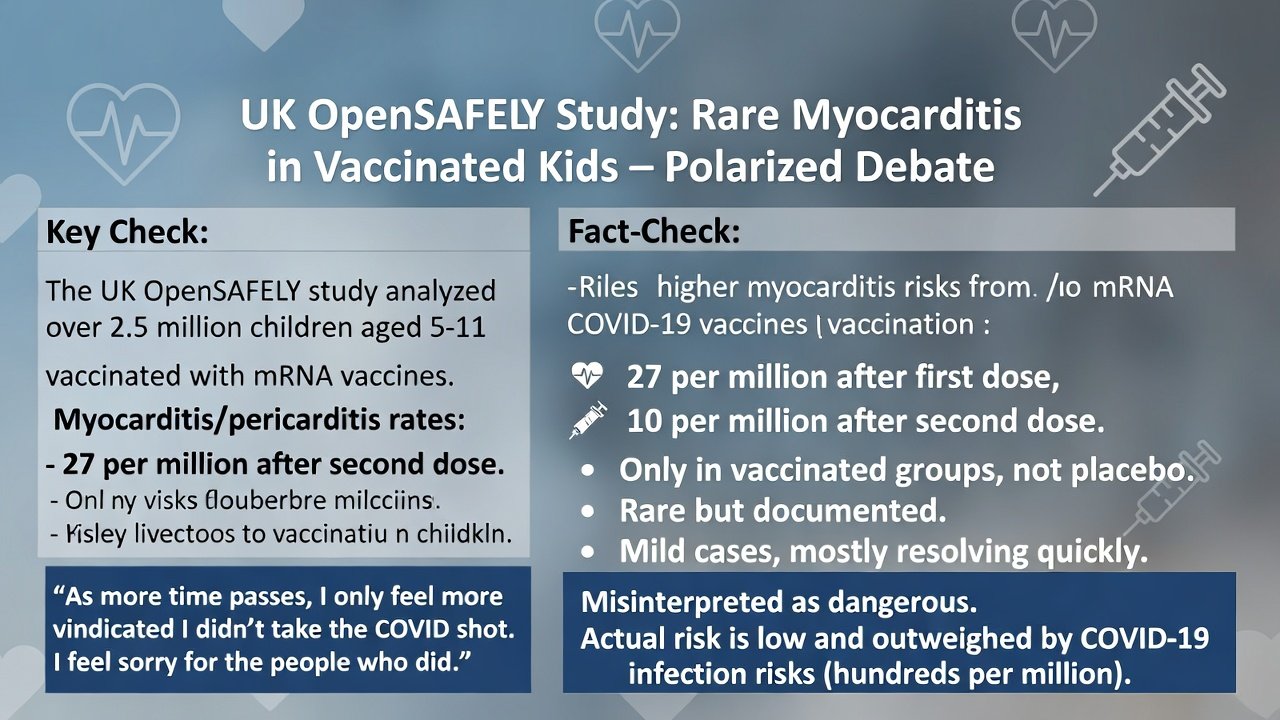
- Estimated rates: ~27 per million (first dose), ~10 per million (second dose).
- Additional studies show lower excess risk (3–5 per million adolescents).
- COVID-19 infection associated with higher and more persistent myocarditis risk than vaccination.
- Overall evidence indicates benefits of vaccination outweigh risks in pediatric populations.
As more time passes, I only feel more vindicated I didn't take the COVID shot. I feel sorry for the people who did. https://t.co/FjC0PGDHWc
— Riley Gaines (@Riley_Gaines_) March 19, 2026
Background
A large observational dataset from England analyzed safety and effectiveness of mRNA COVID-19 vaccination in children and adolescents. The analysis used health records from hundreds of thousands to millions of individuals, including matched vaccinated and unvaccinated cohorts.
The topic gained attention after public commentary on social media referencing study findings, particularly claims regarding myocarditis and pericarditis occurrence.
Study Overview (OpenSAFELY Platform)
- Population scale: millions of children and adolescents in England
- Specific analytical cohorts: approximately 820,000 adolescents in matched comparisons
- Vaccine studied: Pfizer-BioNTech (BNT162b2)
- Study design: observational, matched cohort analysis
Key Outcomes Measured
- COVID-19 infection rates
- Emergency department visits
- Hospitalizations
- Adverse events including myocarditis and pericarditis
Myocarditis and Pericarditis Findings
Observations in Study Data
- Cases recorded only in vaccinated groups within specific matched analyses
- No cases observed in matched unvaccinated groups in those analyses
Reported Rates
- First dose: ~27 cases per million
- Second dose: ~10 cases per million
Interpretation Constraints
- Observational data reflects outcomes within defined cohorts and matching criteria
- Absence of cases in unvaccinated groups does not demonstrate zero baseline risk
- Events classified as rare
Supporting Evidence from Additional UK Studies
Large Self-Controlled Case Series (~5.1 Million Children)
- Estimated excess risk:
- ~3–5 additional myocarditis cases per million adolescents
- No increased risk detected in younger children (ages 5–11) for several outcomes
Infection vs Vaccination Risk Comparison
Estimated Excess Risk (Example Analysis)
- COVID-19 infection: ~2.24 cases per 100,000 (6 months)
- Vaccination: ~0.85 cases per 100,000
Clinical Pattern Differences
- Infection-associated myocarditis:
- Higher severity
- Longer duration
- Vaccine-associated myocarditis:
- Typically short-term
- Highest risk within 1–4 weeks post-dose
Misinterpretations and Fact-Checks
- Claims that “1.7 million children developed heart defects” are incorrect
- Total population size ≠ number of adverse events
- Verified fact-checks confirm:
- Conditions are rare
- Data does not support widespread harm
Public Response
Observed Themes
- Concern over vaccine mandates and autonomy
- Personal regret among some individuals
- Criticism of misinterpretation of data
- Emphasis from others on overall vaccine safety
Scientific Consensus
Across UK, European, and US data sources:
- Myocarditis and pericarditis are rare adverse events
- Risk from COVID-19 infection exceeds vaccine-related risk
- Vaccination reduces:
- Infection rates
- Severe outcomes
- Hospitalization
References
- Andrews CD et al. OpenSAFELY COVID-19 vaccination analyses (2024–2026)
- Copland E et al. Safety outcomes in 5.1 million children, Nature Communications (2024)
- University of Cambridge and Great Ormond Street Hospital pediatric analyses (2025)
- Reuters Fact Check (November 2024)
- AFP and Public Health Collaborative fact-check reports
- Public social media statements (March 2026)
Thank You For Visting Our Website https://medlifeguide.com/. We Value Your Feedback!
This is for informational purposes only. For medical advice or a diagnosis, consult a professional.