
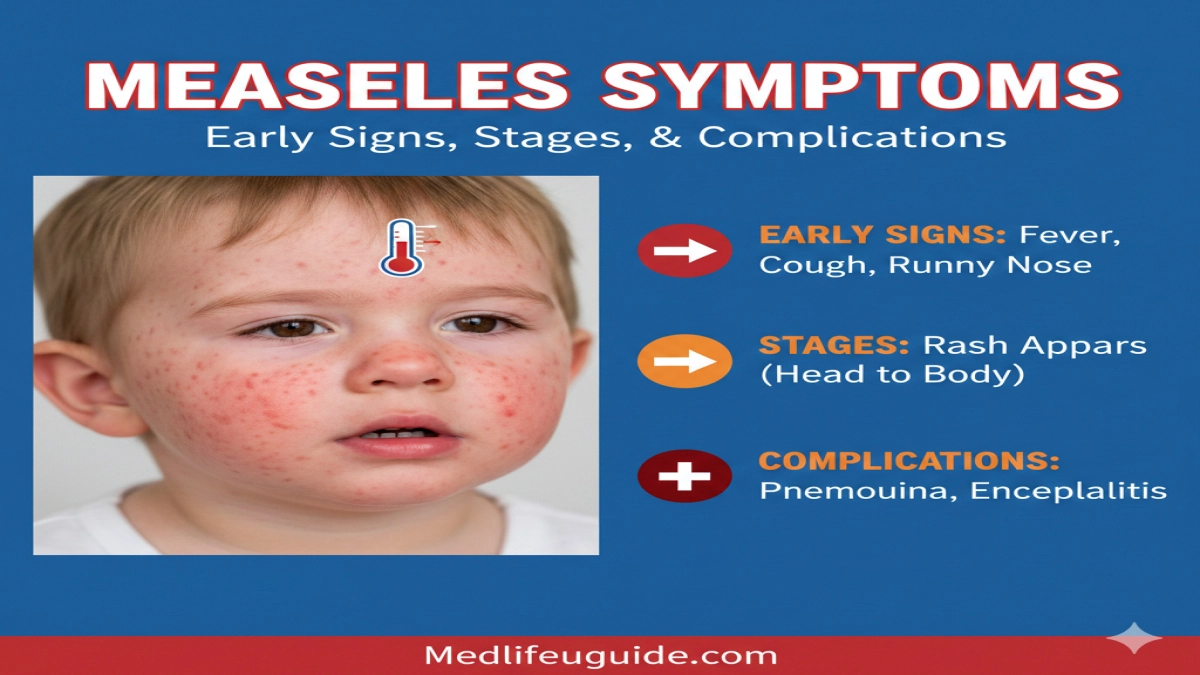
Measles is a highly contagious viral illness caused by the measles virus, a member of the Paramyxoviridae family. Despite global vaccination programs, measles remains clinically relevant due to outbreaks in unvaccinated or under-vaccinated populations. Understanding measles symptoms is critical for early detection, isolation, and prevention of sever
Measles is a highly contagious viral illness caused by the measles virus, a member of the Paramyxoviridae family. Despite global vaccination programs, measles remains clinically relevant due to outbreaks in unvaccinated or under-vaccinated populations. Understanding measles symptoms is critical for early detection, isolation, and prevention of severe complications.
Measles symptoms follow a predictable clinical progression. Initial signs are often nonspecific and resemble common viral respiratory infections. As the disease advances, characteristic features such as Koplik spots and a widespread maculopapular rash appear, confirming clinical suspicion.
What Causes Measles?
Measles is caused by the measles virus, transmitted primarily through respiratory droplets and airborne spread. The virus can remain viable in the air or on surfaces for up to two hours. Nearly 90% of susceptible individuals exposed to the virus will develop infection.
After exposure, the virus infects the respiratory epithelium and spreads systemically through lymphatic tissue, leading to the classic symptom pattern.
Incubation Period and Symptom Timeline
Incubation Phase (7–14 Days)
- No visible symptoms
- Viral replication occurs silently
- Patient is asymptomatic and unaware of infection
Prodromal Phase (2–4 Days)
Early measles symptoms begin during this phase and include:
- High fever (often exceeding 101–104°F)
- Persistent dry cough
- Coryza (runny nose)
- Conjunctivitis (red, watery eyes)
- General malaise and fatigue
This phase is critical because patients are highly contagious, yet symptoms resemble common respiratory illnesses.
Early Measles Symptoms
Fever
Fever is usually the first measurable symptom. It often escalates rapidly and may spike above 104°F, particularly in children.
Respiratory Symptoms
- Dry, hacking cough
- Nasal congestion and rhinorrhea
- Sore throat
Eye Involvement
Conjunctivitis is a hallmark early sign and may include:
- Redness
- Photophobia (light sensitivity)
- Excessive tearing
Koplik Spots: A Diagnostic Clue
What Are Koplik Spots?
Koplik spots are small, bluish-white lesions with a red base that appear on the buccal mucosa, typically opposite the molars.
Clinical Importance
- Appear 1–2 days before the rash
- Highly specific to measles
- Transient and easily missed
Their presence strongly supports a diagnosis of measles before the rash emerges.
Measles Rash: Appearance and Progression
Rash Characteristics
- Maculopapular (flat red spots with raised bumps)
- Begins at the hairline and face
- Spreads downward to trunk, arms, legs, and feet
Timeline
- Appears 3–5 days after initial symptoms
- Coincides with peak fever
- Rash fades in the same order it appears
Associated Findings
- Skin may desquamate (peel) slightly
- Rash darkens before fading
Systemic Symptoms During Rash Phase
- Severe fatigue
- Loss of appetite
- Dehydration
- Lymphadenopathy (swollen lymph nodes)
At this stage, viral load is high, and complications are more likely.
Measles Symptoms in Different Populations
Infants and Young Children
- Higher risk of severe fever
- Increased risk of pneumonia and encephalitis
- Poor feeding and lethargy common
Adults
- More severe symptom intensity
- Higher rates of hepatitis and hospitalization
Pregnant Individuals
- Increased risk of miscarriage
- No congenital measles syndrome, but maternal illness can be severe
Immunocompromised Patients
- Atypical presentation possible
- Rash may be absent
- High mortality risk
Common and Serious Complications
Common Complications
- Otitis media (ear infection)
- Diarrhea
- Laryngotracheobronchitis (croup)
Severe Complications
Pneumonia
- Most common cause of measles-related death
- Viral or secondary bacterial
Encephalitis
- Occurs in approximately 1 in 1,000 cases
- Can cause seizures, hearing loss, cognitive impairment
Subacute Sclerosing Panencephalitis (SSPE)
- Rare, fatal degenerative neurological condition
- Appears years after infection
Unique Clinical Takeaways
1. Measles-Induced Immune Amnesia
Measles virus causes prolonged immune suppression by erasing pre-existing immune memory. Patients may lose immunity to infections they were previously protected against, increasing susceptibility to other diseases for months to years after recovery. This effect is not evident from symptom lists but has major public health implications.
2. Differential Diagnosis Challenges in Early Stages
Early measles symptoms closely resemble influenza, COVID-19, adenovirus infection, and respiratory syncytial virus (RSV). Absence of rash in the prodromal phase frequently delays diagnosis. Clinicians must consider vaccination history and exposure risk when evaluating febrile respiratory illness.
3. Vitamin A Deficiency as a Severity Modifier
Patients with vitamin A deficiency experience more severe measles symptoms, higher complication rates, and increased mortality. This risk factor is particularly relevant in children and in populations with malnutrition, influencing both symptom severity and recovery outcomes.
When to Seek Medical Attention
Immediate medical evaluation is required if measles symptoms are accompanied by:
- Difficulty breathing
- Persistent high fever
- Seizures
- Altered mental status
- Signs of dehydration
Early isolation and reporting are essential to prevent community spread.
Diagnosis of Measles
Diagnosis is based on:
- Clinical presentation
- Vaccination and exposure history
- Laboratory confirmation (measles-specific IgM antibodies or PCR testing)
Symptoms alone are insufficient for confirmation without laboratory support.
Prevention and Symptom Avoidance
- Measles-mumps-rubella (MMR) vaccination
- Two-dose schedule provides approximately 97% protection
- Post-exposure vaccination within 72 hours may reduce severity
Prevention remains the most effective strategy, as there is no antiviral cure.
Prognosis After Symptom Resolution
Most patients recover fully within 2–3 weeks. Fatigue and cough may persist. Long-term outcomes depend on age, nutritional status, immune function, and complication occurrence.
Medical Disclaimer
This article is for informational and educational purposes only and does not constitute medical advice. Diagnosis and treatment of measles should be performed by qualified healthcare professionals. Always consult a licensed physician for medical concerns or symptoms