
Quick Answer
Low Sodium Snacks for CKD are foods that contain minimal salt (usually under 140 mg sodium per serving) and support kidney health by reducing fluid retention, high blood pressure, and heart strain.
Low Sodium Snacks for CKD
Chronic Kidney Disease (CKD) affects how well your kidneys remove waste and extra fluid from your body. Whe
Quick Answer
Low Sodium Snacks for CKD are foods that contain minimal salt (usually under 140 mg sodium per serving) and support kidney health by reducing fluid retention, high blood pressure, and heart strain.
Low Sodium Snacks for CKD
Chronic Kidney Disease (CKD) affects how well your kidneys remove waste and extra fluid from your body. When kidneys do not work properly, sodium can build up. Too much sodium causes:
- Swelling in legs and feet
- High blood pressure
- Shortness of breath
- Heart stress
The National Kidney Foundation states that most people with CKD should limit sodium to about 2,000 mg per day, unless their doctor says otherwise. Lower sodium intake helps control blood pressure and protects kidney function.
This guide explains safe snack options, what to avoid, label reading tips, and advanced clinical insights.
Why Sodium Control Is Critical in CKD
1. Sodium Raises Blood Pressure
High blood pressure is both a cause and a result of kidney disease. According to the Centers for Disease Control and Prevention (CDC), excess sodium intake directly increases blood pressure. High blood pressure damages small blood vessels inside the kidneys.
2. Sodium Causes Fluid Retention
Damaged kidneys cannot remove extra sodium efficiently. This leads to:
- Swelling (edema)
- Weight gain
- Increased strain on the heart
The National Institute of Diabetes and Digestive and Kidney Diseases (NIDDK) confirms that sodium restriction is essential in CKD management.
3. Sodium Increases Proteinuria
Research published in the Journal of the American Society of Nephrology shows that high sodium intake can worsen protein leakage in urine (proteinuria), a sign of kidney damage.
How Much Sodium Is “Low”?
Food labels define low sodium as:
- Very low sodium: 35 mg or less per serving
- Low sodium: 140 mg or less per serving
- Reduced sodium: At least 25% less than regular version
For CKD patients, aiming for snacks under 140 mg per serving is generally recommended unless instructed otherwise by a nephrologist.
Best Low Sodium Snacks for CKD
Below are kidney-friendly snack ideas supported by clinical nutrition guidelines.
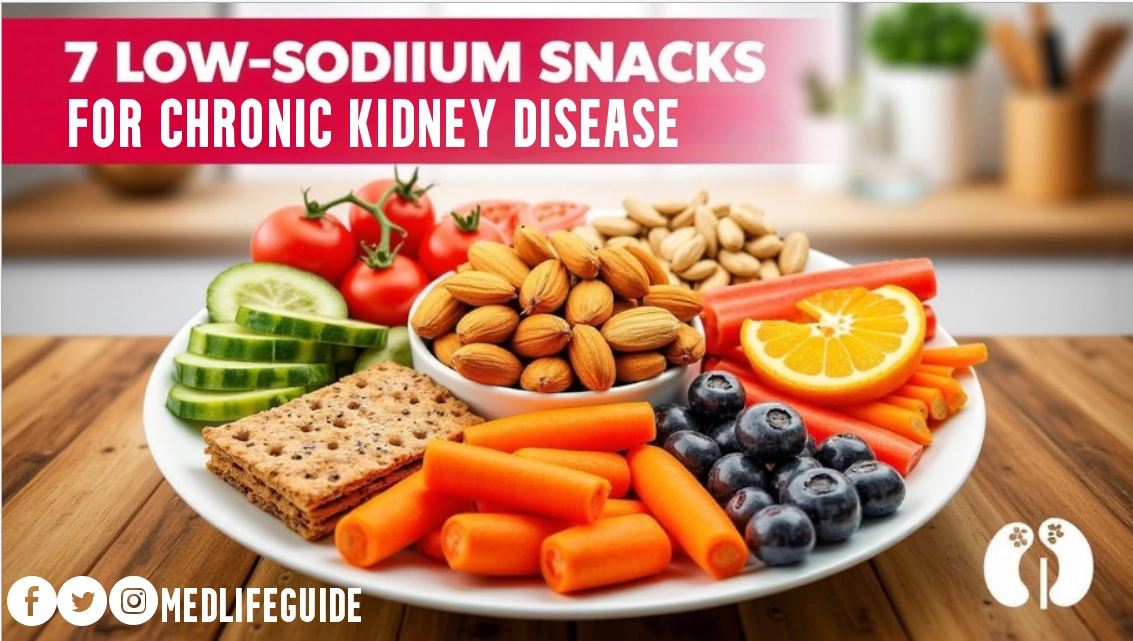
Fresh Fruits
Most fresh fruits are naturally low in sodium.
Good options:
- Apples
- Grapes
- Blueberries
- Strawberries
- Pineapple
These are typically under 5 mg sodium per serving.
Note: Advanced CKD patients must monitor potassium. The American Kidney Fund advises checking potassium levels before increasing fruit intake.
Fresh Vegetables (Raw or Steamed)
Examples:
- Carrot sticks
- Cucumber slices
- Bell peppers
- Green beans
Avoid adding salt. Use lemon juice or herbs for flavor.
Unsalted Air-Popped Popcorn
Air-popped popcorn without butter or salt can be under 5 mg sodium per cup.
Avoid:
- Microwave popcorn with seasoning packets
- Pre-buttered varieties
Unsalted Nuts (Small Portions)
Examples:
- Almonds
- Walnuts
- Pecans
Choose raw or dry roasted without salt. Portion control matters due to phosphorus and potassium content.
Plain Rice Cakes (Unsalted)
Check labels carefully. Some brands add salt.
Choose varieties with 0–20 mg sodium per serving.
Hard-Boiled Egg (No Salt)
One egg contains about 60–70 mg sodium naturally. It provides protein, which may need monitoring depending on CKD stage.
Greek Yogurt (Plain, Low Sodium)
Some plain yogurts contain under 100 mg sodium per serving. Check for added sodium in flavored varieties.
Homemade Trail Mix (Kidney-Safe)
Mix:
- Unsalted nuts
- Dried cranberries (low potassium)
- Unsweetened coconut flakes
Avoid salted mixes or chocolate with high phosphorus additives.
Snacks to Avoid in CKD
The CDC reports that more than 70% of sodium intake in the U.S. comes from processed foods.
Avoid:
- Potato chips
- Salted crackers
- Pretzels
- Processed meats
- Canned soups
- Frozen meals
These can contain 300–700 mg sodium per serving.
Reading Food Labels Correctly
Step 1: Check Serving Size
Manufacturers often list small serving sizes.
Step 2: Look at Sodium (mg)
Aim for under 140 mg per serving.
Step 3: Check Ingredients
Watch for hidden sodium words:
- Sodium phosphate
- Monosodium glutamate (MSG)
- Baking soda
- Sodium nitrate
Unique Clinical Takeaways
This section provides advanced, practical insights beyond basic snack lists.
1. Sodium Sensitivity Varies by CKD Stage
Not all CKD patients respond the same way to sodium.
Patients in Stage 3–4 CKD often experience greater sodium sensitivity due to reduced nephron function. Even moderate sodium intake can significantly raise blood pressure.
Clinical Insight:
- Patients with diabetes-related CKD may have increased salt sensitivity.
- Individual sodium targets should be personalized by a nephrologist.
2. Hidden Sodium from “Kidney-Friendly” Packaged Foods
Some products labeled “renal diet friendly” still contain moderate sodium levels.
Example scenario:
A patient switches from regular crackers (300 mg sodium) to “baked whole grain crackers” (220 mg sodium). While reduced, intake remains high if multiple servings are eaten.
Actionable Strategy:
- Multiply sodium by number of servings consumed.
- Choose items under 100 mg per serving for safer margins.
3. Sodium and Fluid Overload Misinterpretation
Many patients assume weight gain means fat gain. In CKD, rapid weight increase often signals fluid retention.
Clinical red flags:
- 2–3 pound weight gain in 24–48 hours
- Ankle swelling
- Shortness of breath
Reducing sodium in snacks can quickly reduce fluid retention.
4. Differential Diagnosis: Edema Not Always Sodium
While sodium contributes to swelling, edema in CKD may also result from:
- Low albumin levels
- Heart failure
- Nephrotic syndrome
If swelling persists despite sodium restriction, further evaluation is required.
5. Sodium Reduction Improves Medication Effectiveness
Certain blood pressure medications like ACE inhibitors work better when sodium intake is controlled. High sodium can blunt their effectiveness.
This is supported by clinical nephrology guidelines from the Kidney Disease: Improving Global Outcomes (KDIGO) foundation.
Sample One-Day Low Sodium Snack Plan
Morning Snack:
Apple slices + 10 unsalted almonds
Afternoon Snack:
Carrot sticks with homemade yogurt dip (no salt)
Evening Snack:
Air-popped popcorn (3 cups)
Total sodium from snacks: Under 150 mg (approximate, based on standard nutritional databases).
Practical Tips for Reducing Sodium
- Cook snacks at home
- Avoid seasoning blends unless sodium-free
- Use garlic powder (not garlic salt)
- Flavor with lemon, herbs, or vinegar
- Rinse canned vegetables (can reduce sodium by up to 40%)
When to Consult a Kidney Dietitian
Consult a renal dietitian if:
- You are on dialysis
- You have high potassium levels
- You experience persistent swelling
- Your blood pressure remains uncontrolled
The Academy of Nutrition and Dietetics recommends individualized meal planning for CKD patients.
Frequently Asked Questions
Most baked chips still contain 150–250 mg sodium per serving. They are not ideal for frequent snacking.
No. Both contain similar sodium amounts.
Most cheeses are high in sodium. Small portions may be allowed depending on lab results.
References and Citations
- National Kidney Foundation. Sodium and Chronic Kidney Disease.
- National Institute of Diabetes and Digestive and Kidney Diseases (NIDDK). Eating Right for Chronic Kidney Disease.
- Centers for Disease Control and Prevention (CDC). Sodium and Blood Pressure.
- Kidney Disease: Improving Global Outcomes (KDIGO) Clinical Practice Guidelines.
- Journal of the American Society of Nephrology. Sodium Intake and Proteinuria Research.
- American Kidney Fund. Nutrition and CKD Guidance.
- Academy of Nutrition and Dietetics. Renal Nutrition Recommendations.
Medical Disclaimer
This article is for educational purposes only and does not replace medical advice. Always consult your physician or a licensed nephrologist for diagnosis and treatment of Chronic Kidney Disease