
Medically Reviewed and Compiled by Dr. Adam N. Khan, MD.
Quick Summary
The Influenza Symptoms Chart 2026 outlines early, moderate, and severe flu symptoms, high-risk warning signs, and when emergency care is required. Influenza is a contagious respiratory illness caused by influenza A and B viruses. According to the Centers for Disease Control an
Medically Reviewed and Compiled by Dr. Adam N. Khan, MD.
Quick Summary
The Influenza Symptoms Chart 2026 outlines early, moderate, and severe flu symptoms, high-risk warning signs, and when emergency care is required. Influenza is a contagious respiratory illness caused by influenza A and B viruses. According to the Centers for Disease Control and Prevention (CDC), flu seasons vary yearly in severity but consistently lead to significant outpatient visits, hospitalizations, and deaths in the United States. Early recognition reduces complications.
What Is Influenza?
Influenza is an acute viral infection of the respiratory tract. It spreads mainly through droplets when infected individuals cough, sneeze, or talk. The World Health Organization (WHO) confirms that seasonal influenza epidemics occur annually, especially in fall and winter in temperate climates.
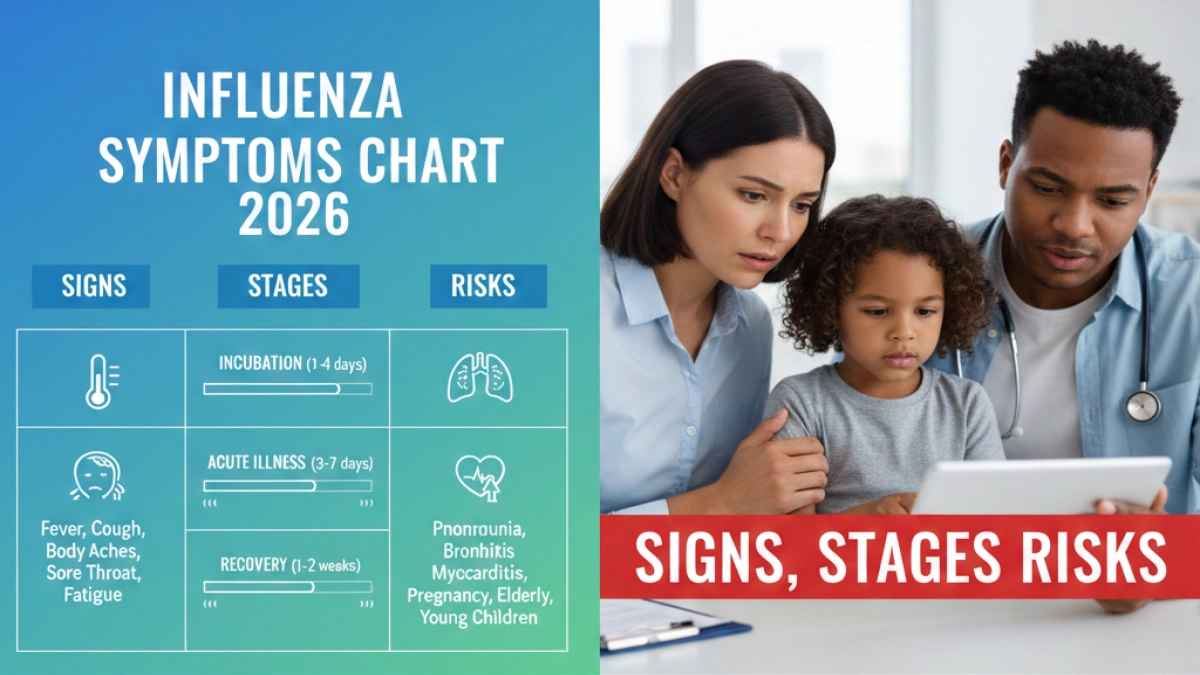
Incubation Period
- 1 to 4 days (average: 2 days)
- Patients may be contagious 1 day before symptoms appear
Duration
- Most cases resolve in 3 to 7 days
- Cough and fatigue may last 2 weeks or longer
Source data: CDC; WHO; National Institute of Allergy and Infectious Diseases (NIAID)
Influenza Symptoms Chart 2026
The following chart categorizes symptoms by severity and urgency based on CDC and peer-reviewed infectious disease data.
| Symptom Category | Common Symptoms | Clinical Notes | Urgency Level |
|---|---|---|---|
| Early Symptoms | Sudden fever (≥100.4°F), chills, headache, body aches | Rapid onset distinguishes flu from common cold | Monitor |
| Respiratory Symptoms | Dry cough, sore throat, nasal congestion | Cough often persistent | Monitor |
| Systemic Symptoms | Fatigue, weakness, loss of appetite | Fatigue can be severe | Monitor |
| Gastrointestinal (more common in children) | Nausea, vomiting, diarrhea | Not universal | Monitor |
| Moderate Complications | Worsening cough, chest discomfort | Possible viral pneumonia | Seek medical advice |
| Severe / Emergency | Shortness of breath, chest pain, confusion, bluish lips | Signs of respiratory distress | Emergency care |
Sources: CDC; WHO; Mayo Clinic
Early Influenza Symptoms
1. Sudden High Fever
Flu typically begins abruptly. Fever often exceeds 100.4°F. Unlike the common cold, fever appears early and intensely.
2. Muscle and Body Aches
Diffuse muscle pain is characteristic. The Johns Hopkins Medicine reports that systemic inflammation contributes to these symptoms.
3. Headache and Chills
Headache is frequent and often severe. Chills occur due to rapid temperature elevation.
Respiratory Symptoms
Persistent Dry Cough
The flu cough is usually dry and may last weeks.
Sore Throat
Often mild to moderate.
Nasal Congestion
Present but less dominant than in the common cold.
Systemic Symptoms
Severe Fatigue
Extreme tiredness is a hallmark of influenza. Patients may be unable to perform routine activities.
Loss of Appetite
Common in both adults and children.
Weakness
May persist after fever resolves.
Influenza in High-Risk Groups
According to CDC data, certain populations have higher complication risk:
- Adults ≥65 years
- Children under 5 (especially <2 years)
- Pregnant individuals
- Chronic lung disease (asthma, COPD)
- Heart disease
- Diabetes
- Immunocompromised patients
The National Institutes of Health confirms increased hospitalization rates among these groups.
Emergency Warning Signs (Adults and Children)
Adults
- Difficulty breathing
- Persistent chest pain
- Confusion
- Seizures
- Severe weakness
Children
- Fast breathing
- Bluish skin color
- Dehydration
- No tears when crying
Immediate evaluation is required. These signs may indicate pneumonia or acute respiratory failure.
Sources: CDC; WHO
Influenza vs Common Cold: Symptom Comparison
| Feature | Influenza | Common Cold |
|---|---|---|
| Onset | Sudden | Gradual |
| Fever | Common, high | Rare |
| Body Aches | Severe | Mild |
| Fatigue | Severe | Mild |
| Sneezing | Sometimes | Common |
| Complications | Possible | Rare |
Clinical distinction reduces unnecessary antibiotic use.
Complications of Influenza
Viral Pneumonia
Direct viral lung infection.
Secondary Bacterial Pneumonia
Often caused by Streptococcus pneumoniae.
Myocarditis
Inflammation of the heart muscle.
Encephalitis
Brain inflammation (rare).
The CDC and WHO confirm pneumonia as the leading cause of flu-related death.
Unique Clinical Takeaways
1. Sudden Functional Decline as an Early Red Flag
Beyond symptom presence, a rapid inability to perform basic activities (walking, eating, concentrating) predicts higher complication risk. Clinical studies cited by the NIH show functional status is a stronger hospitalization predictor than fever alone. Patients reporting abrupt severe fatigue within 24 hours require closer observation.
2. Misclassification Risk with COVID-19 and RSV
Respiratory viruses share overlapping features. Differential diagnosis requires:
- PCR testing
- Exposure history
- Symptom clustering
The Centers for Disease Control and Prevention confirms co-circulation of influenza, COVID-19, and RSV during respiratory virus seasons. Coinfection increases severity risk. Providers must not rely solely on symptom pattern.
3. Cardiovascular Risk Amplification
Influenza increases short-term risk of myocardial infarction. Peer-reviewed studies referenced by the NIH show elevated heart attack risk within one week of flu infection, particularly in older adults. Patients with heart disease should seek evaluation earlier than general population guidelines suggest.
4. Dehydration as a Silent Severity Marker
Older adults may not report thirst. Confusion or dizziness may signal dehydration rather than neurological disease. Monitoring oral intake and urine output is critical in outpatient care.
Diagnostic Approach
Clinical Evaluation
- Symptom history
- Fever documentation
- Risk factor assessment
Laboratory Testing
- Rapid influenza diagnostic tests
- PCR assays
CDC recommends antiviral treatment within 48 hours for high-risk patients, even before confirmation.
Treatment Overview
Antiviral Medications
Oseltamivir and related antivirals reduce severity when started early.
Supportive Care
- Hydration
- Rest
- Fever management
Antibiotics are not effective against influenza virus unless bacterial complications develop.
Sources: CDC; WHO; Mayo Clinic
Prevention Strategies
Annual Vaccination
The CDC identifies vaccination as the most effective prevention tool.
Hand Hygiene
Frequent hand washing reduces transmission.
Respiratory Etiquette
Cover coughs and stay home when symptomatic.
When to Seek Immediate Care
Seek emergency evaluation if:
- Oxygen saturation drops
- Chest pain develops
- Confusion appears
- Symptoms improve then suddenly worsen
These patterns suggest secondary complications.
Frequently Asked Questions
Typically 1 day before symptoms and up to 5–7 days after onset.
Yes. Post-viral fatigue can persist weeks.
More common in children than adults.
Sources: CDC; WHO; Johns Hopkins Medicine
Medical Disclaimer
This article is for educational purposes only and does not substitute for professional medical diagnosis, treatment, or individualized clinical judgment. Patients experiencing severe symptoms should seek immediate medical evaluation.