
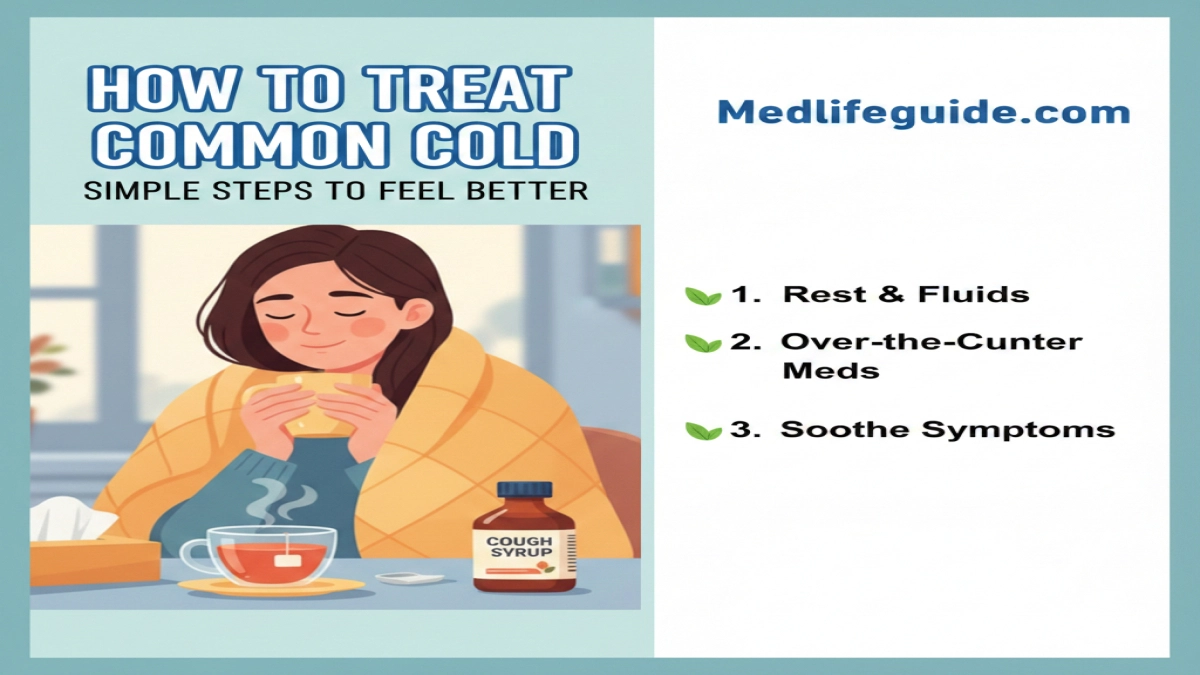
Medically Reviewed and Compiled by Dr. Adam N. Khan, MD.
Quick Summary
The common cold is usually mild, but the symptoms can drain your energy and slow you down. The best treatment is a mix of rest, hydration, targeted symptom relief, and smart prevention. This guide walks you through clear steps to feel better faster and avoid commo
Medically Reviewed and Compiled by Dr. Adam N. Khan, MD.
Quick Summary
The common cold is usually mild, but the symptoms can drain your energy and slow you down. The best treatment is a mix of rest, hydration, targeted symptom relief, and smart prevention. This guide walks you through clear steps to feel better faster and avoid common mistakes.
What a Common Cold Really Is
A cold is a viral infection of the upper respiratory tract. Most cases come from rhinoviruses, and symptoms peak within two to three days. You cannot “kill” the virus with antibiotics, but you can treat the symptoms and support your immune system while it clears the infection.
Main Symptoms
- Stuffy or runny nose
- Sore throat
- Sneezing
- Mild cough
- Low fever
- Head pressure
- Fatigue
Best Ways to Treat a Common Cold

1. Rest
Your immune system works harder when you are asleep. Take short naps, avoid heavy activity, and give your body space to recover.
2. Hydration
Drink water, warm tea, broth, or electrolyte drinks. Staying hydrated helps loosen mucus and prevents dehydration from fever.
3. Warm Fluids
Warm liquids soothe the throat and help with congestion. Ginger tea, honey tea, and chicken soup are useful choices.
4. Over-the-Counter Medicines
- Pain relievers: Acetaminophen or ibuprofen for fever and body aches.
- Decongestants: Reduce nasal swelling.
- Antihistamines: Helpful if allergies worsen symptoms.
- Cough suppressants or expectorants: Choose based on dry or productive cough.
5. Humidifier
Moist air reduces nasal irritation and throat dryness. Clean the device daily to prevent bacterial buildup.
6. Saline Nasal Spray or Rinse
Saltwater helps clear mucus and soothe swollen nasal passages.
7. Honey for Cough
One teaspoon before bed may reduce nighttime coughing (not for children under 1 year).
When to See a Doctor
- Fever above 101.5°F lasting more than three days
- Shortness of breath or wheezing
- Severe sinus pain
- Ear pain
- Symptoms lasting longer than ten days
- Symptoms getting worse instead of better
Unique Clinical Takeaways
1. How to Distinguish a Cold from Flu or COVID
Here’s the thing: people often mistake early flu or COVID for a cold because all three start with congestion and fatigue. A cold usually stays mild with no major body aches or high fever. If symptoms escalate fast, or you feel full-body chills or difficulty breathing, you may be dealing with something more serious. This difference guides better care decisions.
2. Nasal Congestion Timing Matters
What this really means is the pattern of your congestion tells a story. Morning congestion may point to allergies stacking on top of a cold. All-day heavy pressure that worsens over a week may signal sinus infection. Tracking this helps avoid unnecessary antibiotics and improves treatment accuracy.
3. High-Risk Groups Need a Different Plan
Infants, older adults, pregnant women, and people with asthma or heart disease often experience more complications. Even a mild cold can trigger asthma flare-ups or dehydration. For these groups, early symptom control, close monitoring, and lower thresholds for medical review make a real difference.
Prevention Tips
- Wash your hands often
- Avoid touching your face
- Use hand sanitizer in crowded places
- Clean high-touch surfaces
- Boost indoor ventilation