
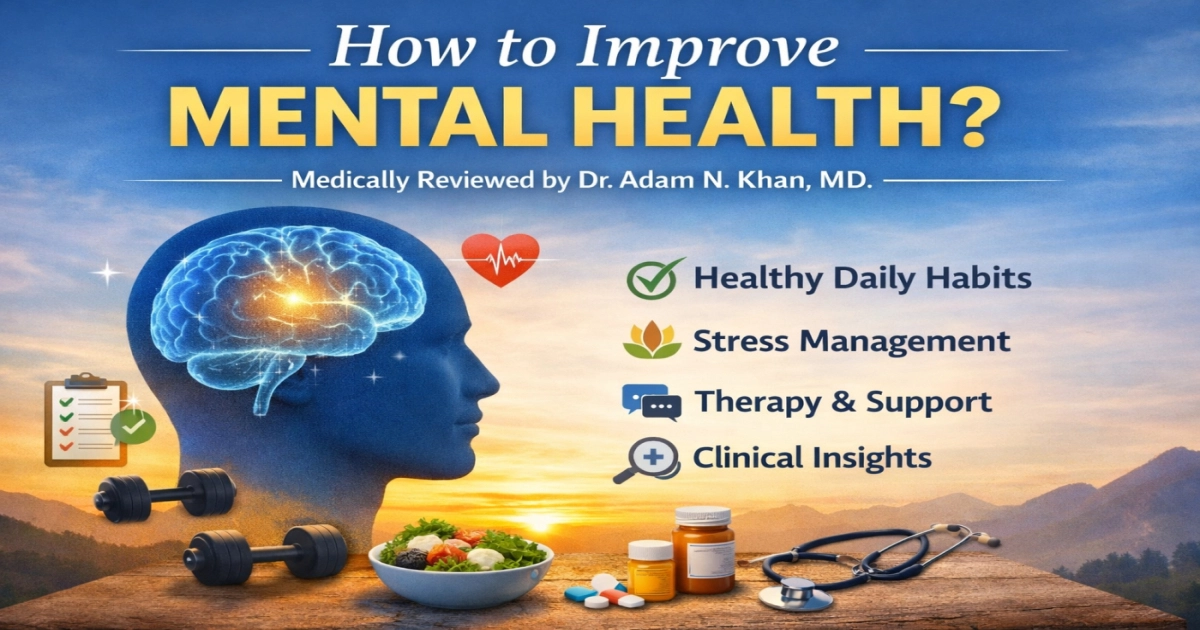
Medically Reviewed and Compiled by Dr. Adam N. Khan, MD.
Mental health shapes how you think, feel, act, and handle stress. It affects relationships, work, sleep, physical health, and how you move through everyday life. When mental health is strong, life feels manageable. When it slips, even simple tasks can feel heavy.
Here is the key point upfront
Medically Reviewed and Compiled by Dr. Adam N. Khan, MD.
Mental health shapes how you think, feel, act, and handle stress. It affects relationships, work, sleep, physical health, and how you move through everyday life. When mental health is strong, life feels manageable. When it slips, even simple tasks can feel heavy.
Here is the key point upfront. Improving mental health is not about fixing everything at once. It is about steady, realistic changes that support your brain, body, and emotional balance over time. Small actions matter more than big promises.
This guide breaks down how to improve mental health in a clear, practical way. You will learn what mental health really means, why it declines, what helps at home, when professional care matters, and how to build habits that last. Clinical insights and real-world guidance are woven throughout to keep this grounded and useful.
What Mental Health Really Means
Mental health is more than the absence of mental illness. It includes emotional well-being, psychological resilience, social connection, and the ability to cope with stress and change.
Core Elements of Mental Health
Good mental health usually involves:
- Stable mood and emotional control
- Clear thinking and decision-making
- Healthy relationships
- A sense of purpose or meaning
- The ability to recover after setbacks
Poor mental health does not always look dramatic. It often shows up as chronic stress, irritability, low motivation, poor sleep, or emotional numbness.
Mental Health Exists on a Spectrum
Mental health is not binary. You are not either “fine” or “ill.” People move along a spectrum based on life events, physical health, hormones, sleep, nutrition, and stress load. Understanding this reduces shame and helps people seek support earlier.
Why Mental Health Declines
Before learning how to improve mental health, it helps to understand what weakens it.
Chronic Stress and Burnout
Long-term stress keeps cortisol levels high. Over time, this affects memory, mood regulation, sleep, and immune function. Many people normalize stress until their mental health quietly erodes.
Poor Sleep Quality
Sleep and mental health are tightly linked. Inadequate or irregular sleep increases anxiety, worsens depression, and reduces emotional regulation. Even one week of poor sleep can shift mood significantly.
Social Isolation
Humans are social by biology. Lack of meaningful connection increases the risk of depression, anxiety, and cognitive decline. Digital contact does not fully replace real human interaction.
Unaddressed Trauma
Past trauma, including childhood adversity, medical trauma, or long-term emotional neglect, can surface years later as anxiety, mood disorders, or physical symptoms.
Physical Health Conditions
Chronic pain, hormonal disorders, thyroid disease, autoimmune illness, and nutritional deficiencies often contribute to mental health symptoms and are frequently overlooked.
How to Improve Mental Health Through Daily Habits
Daily habits are the foundation. They are not glamorous, but they are powerful.
Build a Stable Sleep Routine
Sleep is one of the fastest ways to improve mental health.
Practical steps:
- Go to bed and wake up at the same time daily
- Avoid screens one hour before sleep
- Keep the bedroom dark and cool
- Limit caffeine after midday
Consistent sleep improves mood regulation, focus, and stress tolerance.
Eat for Brain Health
Your brain needs fuel. Diets low in nutrients increase inflammation and worsen mood disorders.
Focus on:
- Omega-3 fatty acids from fish or seeds
- Complex carbohydrates for steady energy
- Protein to support neurotransmitters
- Hydration throughout the day
Highly processed foods and sugar spikes are linked to worsened anxiety and depressive symptoms.
Move Your Body Regularly
Exercise improves mental health through multiple pathways. It increases endorphins, improves sleep, reduces inflammation, and supports neuroplasticity.
You do not need intense workouts. Walking, stretching, swimming, or light strength training all count. Consistency matters more than intensity.
Limit Alcohol and Substance Use
Alcohol is a depressant. While it may reduce anxiety briefly, it worsens sleep, mood stability, and long-term mental health. Reducing intake often leads to noticeable improvement within weeks.
How to Improve Mental Health by Managing Stress
Stress itself is not the enemy. Chronic, unmanaged stress is.
Learn to Recognize Early Stress Signals
Common early signs include:
- Jaw tension or headaches
- Shallow breathing
- Irritability
- Difficulty concentrating
Noticing stress early prevents escalation.
Practice Mindfulness and Grounding
Mindfulness is not about emptying your mind. It is about noticing without judgment.
Simple grounding techniques:
- Slow breathing with longer exhales
- Naming five things you can see
- Brief body scans
These techniques calm the nervous system and reduce anxiety spikes.
Set Boundaries Without Guilt
Overcommitment fuels burnout. Protecting your time is not selfish. It is preventive care for your mental health.
How to Improve Mental Health Through Emotional Skills
Mental health improves when emotional skills improve.
Learn Emotional Regulation
Emotional regulation means responding rather than reacting. Skills include pausing, naming emotions, and choosing actions intentionally.
People who learn emotional regulation experience fewer mood swings and better relationships.
Practice Self-Compassion
Harsh self-criticism increases anxiety and depression. Self-compassion supports resilience and motivation.
Replace “What is wrong with me?” with “What do I need right now?”
Build Psychological Flexibility
Psychological flexibility allows you to adapt to change without rigid thinking. This is strongly linked to better mental health outcomes.
How to Improve Mental Health Through Social Connection
Connection is medicine.
Strengthen Existing Relationships
Quality matters more than quantity. One supportive relationship can buffer against depression and stress.
Small actions help:
- Regular check-ins
- Honest conversations
- Shared activities
Seek Community
Group settings such as volunteer work, faith communities, hobby groups, or support groups provide belonging and meaning.
Address Loneliness Directly
Loneliness is not a personal failure. It is a signal. Addressing it improves both mental and physical health.
Professional Support for Mental Health Improvement
Self-care helps, but professional care is essential for many people.
When to Seek Professional Help
Consider professional support if you experience:
- Persistent low mood or anxiety
- Thoughts of self-harm
- Functional impairment at work or home
- Symptoms lasting more than two weeks
Early treatment improves outcomes.
Types of Mental Health Professionals
- Psychiatrists manage medications and diagnosis
- Psychologists provide therapy and assessments
- Licensed therapists offer structured counseling
- Primary care physicians often provide first-line support
Therapy Options That Work
Evidence-based therapies include:
- Cognitive Behavioral Therapy
- Acceptance and Commitment Therapy
- Trauma-informed therapies
- Interpersonal therapy
Therapy is not about weakness. It is about skill-building.
Medications and Mental Health
Medication is not always needed, but it can be life-changing when appropriate.
When Medication Helps
Medication may be helpful when symptoms are moderate to severe, persistent, or disabling.
Important Considerations
- Medication works best combined with therapy
- Side effects should be monitored
- Regular follow-up matters
Medication decisions should always be individualized.
Mental Health Across Different Life Stages
Mental health needs change with age and life context.
Children and Adolescents
Key factors include:
- Emotional safety
- Consistent routines
- School stress
- Social development
Early intervention matters.
Adults
Work stress, caregiving, financial pressure, and relationship challenges are common triggers.
Older Adults
Isolation, grief, cognitive changes, and medical illness impact mental health and require tailored support.
Unique Clinical Takeaways
This section focuses on deeper, often overlooked clinical insights that meaningfully affect mental health outcomes.
Mental Health Symptoms May Signal Medical Conditions
Depression and anxiety are sometimes the first signs of underlying medical issues such as thyroid disorders, vitamin B12 deficiency, anemia, sleep apnea, or autoimmune disease.
Clinical takeaway:
Patients with new or treatment-resistant mental health symptoms should receive basic medical screening. Treating the underlying condition can significantly improve mental health without escalating psychiatric treatment.
Trauma History Changes Treatment Response
People with unresolved trauma often respond differently to standard therapy or medication. Symptoms may include emotional numbness, hypervigilance, or somatic complaints rather than classic anxiety or depression.
Clinical takeaway:
Trauma-informed care improves outcomes. Rushing treatment without addressing trauma history can lead to frustration and dropout.
Chronic Stress Alters the Nervous System
Long-term stress shifts the nervous system into a constant threat state. This affects digestion, sleep, immune response, and mood regulation.
Clinical takeaway:
Interventions that calm the nervous system, such as breathing techniques, body-based therapies, and sleep regulation, are not optional extras. They are core treatment tools.
Mental Health Improvement Is Non-Linear
Setbacks do not mean failure. Recovery often includes progress, relapse, and recalibration.
Clinical takeaway:
Patients who understand the non-linear nature of healing are more likely to stay engaged in treatment and avoid self-blame.
How to Maintain Mental Health Long Term
Improvement is one thing. Maintenance is another.
Create a Personal Mental Health Plan
Include:
- Sleep routine
- Stress management tools
- Support contacts
- Warning signs
This turns awareness into action.
Monitor Changes Early
Early response prevents crises. Pay attention to changes in sleep, mood, and behavior.
Normalize Ongoing Care
Mental health care is like dental care. Maintenance prevents emergencies.
Frequently Asked Questions About Improving Mental Health
Some changes are felt within weeks. Others take months. Consistency matters more than speed.
Yes. Lifestyle changes significantly affect brain chemistry, inflammation, and stress response.
Not always, but it is highly effective and often underused.
Many people improve without medication. Others benefit from a combined approach.
(Internal linking recommended to relevant educational pages within medlifeguide.com for each source topic.)
Medical Disclaimer
This article is for informational and educational purposes only. It does not replace professional medical advice, diagnosis, or treatment. Always consult a qualified healthcare provider regarding mental health concerns or treatment decisions.
Author Note:
Dr. Adam N. Khan, MD, is a licensed physician with experience in clinical medicine and evidence-based patient education. His work focuses on translating complex medical topics into clear, practical guidance that supports informed health decisions.