
Medically Reviewed and Compiled by Dr. Adam N. Khan, MD.
Quick Answer: How is COPD Diagnosed?
Doctors diagnose Chronic Obstructive Pulmonary Disease (COPD) through a combination of your medical history, a physical exam, and a breathing test called spirometry. This test measures how much air you can breathe out and how fast you can do it. If you
Medically Reviewed and Compiled by Dr. Adam N. Khan, MD.
Quick Answer: How is COPD Diagnosed?
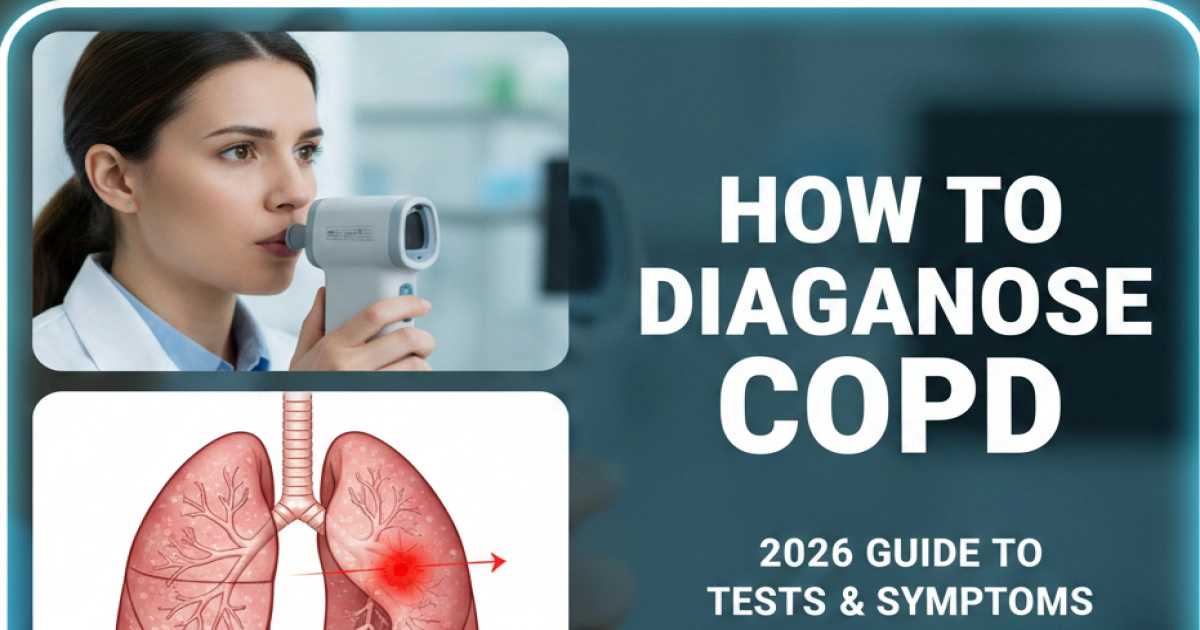
Doctors diagnose Chronic Obstructive Pulmonary Disease (COPD) through a combination of your medical history, a physical exam, and a breathing test called spirometry. This test measures how much air you can breathe out and how fast you can do it. If your results show narrowed airways that don’t fully clear up with medicine, and you have symptoms like a chronic cough or shortness of breath, a COPD diagnosis is likely.
Understanding the Journey to a COPD Diagnosis
If you find yourself getting winded just walking to the mailbox or dealing with a cough that simply won’t quit, it is natural to feel a bit worried. You might be wondering if your lungs are just “getting older” or if something more serious, like COPD, is going on.
COPD isn’t just one disease; it is a term used for lung conditions like chronic bronchitis and emphysema. The good news is that in 2026, medical technology and American Lung Association guidelines make getting an answer faster and more accurate than ever before.
Step 1: The Conversation with Your Doctor
Diagnosis always starts with a talk. Your doctor isn’t just being chatty; they are looking for specific “red flags.” They will likely ask:
- Do you smoke or have you ever smoked? This remains the leading cause.
- What do you do for work? Exposure to dust, chemicals, or heavy fumes can damage lungs over time.
- When do you feel short of breath? Is it only during a workout, or while getting dressed?
- Do you have a “smoker’s cough”? A cough that produces mucus (sputum) for months at a time is a major hint.
Step 2: The Physical Exam
During the exam, the doctor will use a stethoscope to listen to your lungs. They are listening for wheezing (a whistling sound) or “crackles.” They might also check your fingernails for a blue tint (cyanosis) or look at your chest shape. People with advanced COPD sometimes develop a “barrel chest” because their lungs stay over-inflated with trapped air.
Step 3: The “Gold Standard” Test (Spirometry)
You cannot be 100% sure it’s COPD without a Spirometry test. It sounds fancy, but it’s quite simple. You take a deep breath and blow as hard as you can into a tube connected to a machine.
The machine measures two main things:
- FVC (Forced Vital Capacity): The total amount of air you can breathe out.
- FEV1 (Forced Expiratory Volume): How much air you can push out in just one second.
If your FEV1/FVC ratio is less than 70%, it typically confirms that your airways are obstructed. According to the GOLD (Global Initiative for Chronic Obstructive Lung Disease), this is the definitive way to categorize how mild or severe the condition is.
Step 4: Supporting Tests
Sometimes, a doctor needs a clearer “picture” of what is happening inside.
- Chest X-ray: This helps rule out other problems like heart failure or pneumonia.
- CT Scan: This gives a high-definition view of the lungs, helping doctors see emphysema more clearly or screen for lung cancer.
- Blood Gas Test: This measures how well your lungs are moving oxygen into your blood and removing carbon dioxide.
- Alpha-1 Antitrypsin Testing: In some cases, COPD is caused by a genetic protein deficiency rather than smoking. The Alpha-1 Foundation recommends all COPD patients get tested for this at least once.
Why Early Diagnosis Matters
Living with COPD is a challenge, but it is not a “game over.” By catching it early through these diagnostic steps, you can start treatments—like inhalers, pulmonary rehab, or lifestyle changes—that keep you active. Modern medicine in 2026 focuses on “personalized biologicals,” which are treatments tailored to your specific type of lung inflammation.
Summary of What to Expect
If you are headed to the clinic, expect to blow into a machine, answer questions about your history, and perhaps get some blood work. It is a straightforward process designed to get you back to breathing easier.