
Nipah virus (NiV) is a zoonotic virus carried by fruit bats (genus Pteropus) and capable of causing severe disease in humans after spillover from animals or contaminated food. Human‑to‑human transmission has been documented through close contact with bodily fluids of infected patients. There is no licensed vaccine or specific antiviral therapy for Nipa
Nipah virus (NiV) is a zoonotic virus carried by fruit bats (genus Pteropus) and capable of causing severe disease in humans after spillover from animals or contaminated food. Human‑to‑human transmission has been documented through close contact with bodily fluids of infected patients. There is no licensed vaccine or specific antiviral therapy for Nipah virus infection; clinical management is supportive.
Incubation Period
The incubation period—the time from exposure to symptom onset—is generally 4–14 days but can extend to up to 45 days in rare cases, depending on outbreak circumstances and exposure route.
Clinical Presentation
Nipah virus infection may range from asymptomatic or mild illness to severe respiratory disease and fatal encephalitis. Early symptoms commonly include fever, headache, muscle pain, sore throat, and vomiting; progression to altered consciousness and neurological deficits can occur.
Defining “Contagious” in Nipah Virus
“Contagious” refers to the period during which an infected individual can transmit the pathogen to others. For NiV, specific human infectious period data are limited. Precise measurement of the duration of contagiousness in humans is not fully established.
What Is Known About Nipah Virus Transmission
- NiV can be transmitted through direct contact with infected persons’ secretions (e.g., respiratory droplets, blood, urine), contact with contaminated surfaces, or through exposure to contaminated biological fluids.
- Person‑to‑person transmission has been documented in family and healthcare settings.
Transmission Timeline and Infectious Period Estimates
- Onset of Symptoms to Infectiousness: It is generally assumed that individuals may begin spreading NiV around the time symptoms develop, since shedding of virus in respiratory secretions and other bodily fluids increases with symptom severity.
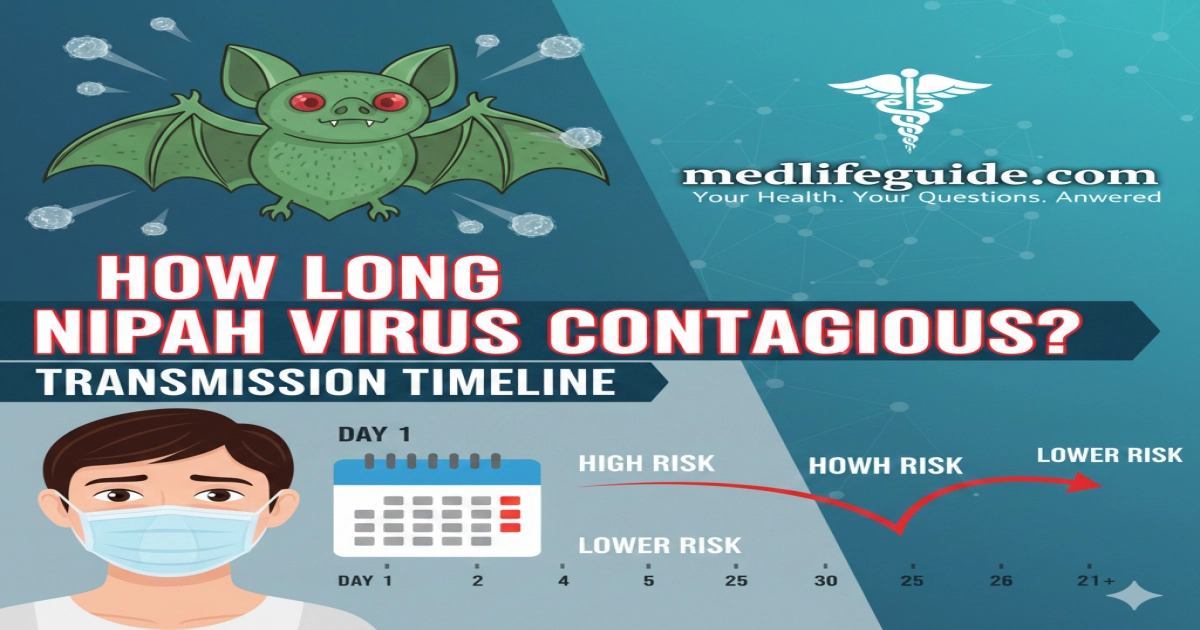
- Duration After Symptom Onset: According to data synthesized by the European Centre for Disease Prevention and Control (ECDC), infected individuals are presumed to remain infectious up to approximately 21 days after symptom onset.
- Pre‑symptomatic Infectiousness: There is limited evidence on how much NiV is shed before symptoms appear; this remains an area of active research. General outbreak data suggest transmission occurs primarily when patients are symptomatic.
- Post‑Recovery Shedding: Data on viral shedding after clinical recovery are inadequate. Cases of delayed or relapse encephalitis have been reported, but their relationship to contagiousness is not clearly defined.
Detailed Transmission Dynamics
Transmission risk varies with virus shedding intensity, the type of contact, and the clinical stage of infection. Key factors include:
Close Contact with Body Fluids
Transmission primarily occurs via direct contact with infected bodily fluids including respiratory secretions, blood, urine, and saliva. This is especially relevant in caregiving and healthcare settings.
Respiratory Exposure
Respiratory droplets are implicated in NiV person‑to‑person spread, particularly when patients exhibit cough or respiratory distress. Proximity and duration of contact influence risk.
Environmental Contamination
Virus stability in the environment can prolong potential exposure risk. Experimental data suggest NiV can survive on contaminated surfaces for several days depending on conditions, but direct human transmission from environment outside fluid contact is not well quantified.
Unique Clinical Takeaways
1. Infectious Period Is Best Understood in Context of Clinical Severity
Patients with severe respiratory symptoms tend to shed more virus in respiratory secretions, increasing transmissibility. The duration of contagiousness correlates with the clinical course, rather than a fixed number of days. In outbreaks, secondary transmission clusters have occurred in caregivers and family contacts where close, prolonged exposure to symptomatic patients exists.
2. Outbreak Patterns Suggest Variable Infectious Windows
Epidemiologic data from recurrent outbreaks (e.g., Bangladesh) indicate that secondary cases often arise within the first two weeks after the index case’s symptom onset, consistent with assumptions about peak viral shedding early in disease progression. However, rare long incubation and delayed presentations complicate predictions and outbreak response planning.
3. Healthcare Settings Require Prolonged Precautions
Healthcare workers exposed to Nipah patients must follow strict contact and droplet precautions for at least 21 days after symptom onset in the index patient, based on current outbreak control practices. This timeline encompasses the period when contagiousness is most likely, even though exact infectiousness endpoints are not definitively measured.
Differential Diagnosis Considerations
Nipah virus presents with non‑specific early symptoms (fever, headache, sore throat) that overlap with other viral or bacterial illnesses. Differential diagnosis should include:
- Viral encephalitides (e.g., Japanese encephalitis virus)
- Severe respiratory infections (e.g., influenza, RSV)
- Other zoonotic infections in endemic areas
Laboratory confirmation via RT‑PCR and serology is essential, especially given the implications for transmission control.
Public Health Implications of Contagious Period Uncertainty
Uncertainty about the exact infectious period necessitates conservative infection control measures:
- Isolation of confirmed and suspected cases until clinical improvement and additional criteria are met.
- Use of personal protective equipment (PPE) by caregivers and healthcare workers.
- Quarantine of close contacts for at least the maximum typical incubation period (up to 45 days in some protocols).
Summary of Current Evidence
- Incubation period: 4–14 days (occasionally up to 45 days).
- Contagious period: Exact duration unknown; presumed to start at symptom onset and extend up to ~21 days post‑symptom onset based on outbreak control data and expert analysis.
- Transmission modes: Close contact with bodily fluids, respiratory droplets, contaminated environments.
- Asymptomatic transmission: Not well documented; evidence insufficient to confirm significant pre‑symptomatic contagiousness.
Medical Disclaimer
All content published on medlifeguide is intended for informational and educational purposes only and does not substitute professional medical advice, diagnosis, or treatment. Always consult a qualified healthcare provider regarding any medical condition, symptoms, or treatment decisions.