
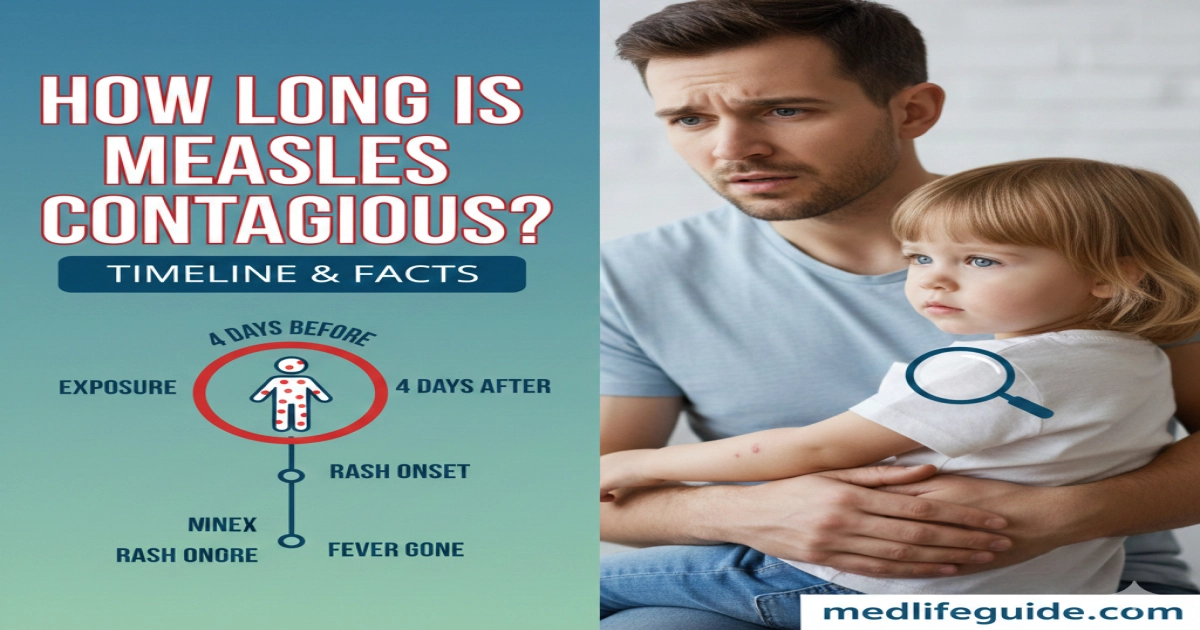
Measles is one of the most contagious viral infections known in medicine. Understanding how long measles is contagious is critical for protecting family members, preventing outbreaks, and following correct isolation guidance. This article explains the full contagious timeline, how measles spreads, who is most at risk, and what actions reduce transmission—using clear, evidence-based medical information.
What Is Measles?
Measles (also called rubeola) is a viral respiratory illness caused by the measles virus. It spreads easily through the air and can cause serious complications, especially in young children, pregnant individuals, and people with weakened immune systems.
Key Characteristics
- Caused by a single-stranded RNA virus
- Spreads through airborne droplets
- Remains infectious in the air for extended periods
- Preventable through vaccination (MMR vaccine)
How Long Is Measles Contagious?
Standard Contagious Period
A person with measles is contagious for about 8 days total:
- 4 days before the rash appears
- 4 days after the rash appears
This means measles can spread before someone knows they are sick, which is why outbreaks happen quickly.
Timeline Overview
| Stage | Contagious? |
|---|---|
| Incubation (7–14 days) | No |
| Prodromal phase (fever, cough) | Yes |
| Rash onset | Yes |
| 4 days after rash | Yes |
| After day 4 post-rash | No (in most cases) |
Why Measles Is So Contagious
Measles has a very high transmission rate.
Airborne Spread
- Virus spreads through coughing, sneezing, or breathing
- Can remain in the air up to 2 hours after an infected person leaves
- No direct contact required
Contagiousness Comparison
- Measles infects 9 out of 10 unvaccinated people exposed
- More contagious than influenza, COVID-19, and chickenpox
Measles Symptoms and Infectious Stages
Early Symptoms (Highly Contagious)
- High fever
- Dry cough
- Runny nose
- Red, watery eyes
- Koplik spots (white spots inside the mouth)
Rash Stage
- Begins on face, spreads downward
- Coincides with peak viral shedding
- Still contagious during this phase
When Does Measles Stop Being Contagious?
A person is generally no longer contagious after the fourth day following rash onset, provided:
- Fever has resolved
- No immune system disorders
- No complications prolonging illness
Exceptions
- Immunocompromised individuals may remain contagious longer
- Hospitalized patients may require extended isolation
Isolation Guidelines for Measles
Recommended Isolation Period
- Isolate from others until at least 4 days after rash begins
- Avoid public places, schools, and workplaces
- Use a separate room and bathroom if possible
Healthcare Settings
- Airborne isolation rooms
- N95 respirators for healthcare workers
Unique Clinical Takeaways
1. Measles Can Spread Before Any Rash Appears
Many patients assume measles is only contagious when the rash is visible. In reality, viral shedding peaks before the rash, during the fever and cough stage. This leads to delayed isolation and accidental exposure, especially in schools and clinics.
Actionable Insight: Any patient with fever, cough, and known exposure should isolate immediately—even without rash.
2. Vaccinated Individuals Can Rarely Transmit Modified Measles
Vaccinated people can still develop a milder form called modified measles. Symptoms may be subtle, and rash may be faint, but limited transmission is still possible.
Actionable Insight: Do not dismiss mild symptoms in vaccinated individuals after known exposure.
3. Immunocompromised Patients Have Extended Infectious Periods
Patients undergoing chemotherapy, organ transplant recipients, or those with HIV may shed the virus longer and lack the classic rash, making diagnosis harder.
Actionable Insight: These patients require longer isolation and early lab confirmation rather than symptom-based clearance.
High-Risk Groups for Measles Transmission
- Unvaccinated children
- Infants under 12 months
- Pregnant individuals
- Immunocompromised patients
- Healthcare workers without immunity
How Long Is Measles Contagious in Children?
Children follow the same contagious timeline as adults:
- Infectious 4 days before rash
- Infectious 4 days after rash
However, children often spread measles more easily due to:
- Close contact in schools
- Difficulty maintaining isolation
- Delayed symptom recognition
Measles Exposure: What to Do
If You Are Exposed
- Check vaccination status
- Monitor symptoms for 21 days
- Contact healthcare provider immediately
- Avoid contact with high-risk individuals
Post-Exposure Prevention
- MMR vaccine within 72 hours may prevent illness
- Immune globulin within 6 days for high-risk patients
Complications Linked to Measles
Measles is not a harmless childhood illness.
Possible Complications
- Pneumonia
- Encephalitis
- Severe diarrhea and dehydration
- Vision loss
- Death (especially in malnourished children)
Role of Vaccination in Reducing Contagious Spread
MMR Vaccine Effectiveness
- 1 dose: ~93% effective
- 2 doses: ~97% effective
Vaccination does not just protect individuals—it breaks transmission chains, shortening outbreak duration.
How Long Does Measles Virus Live Outside the Body?
- Survives up to 2 hours in air or on surfaces
- Disinfectants and sunlight reduce viability
- Poor ventilation increases exposure risk
Measles vs Other Rash Illnesses
| Condition | Contagious Period |
|---|---|
| Measles | 4 days before to 4 days after rash |
| Chickenpox | 1–2 days before rash until crusting |
| Rubella | 7 days before to 7 days after rash |
| Roseola | Mostly before rash |
Public Health Impact of Contagious Period
Because measles spreads before diagnosis:
- Contact tracing is complex
- Quarantine measures are broad
- Outbreaks escalate rapidly in low-vaccination areas
Understanding how long measles is contagious helps limit community spread and protects vulnerable populations.
Frequently Asked Questions
Yes. People are contagious before the rash appears.
Yes, until 4 days after rash onset.
Rarely, but possible in modified measles cases.
Medical Disclaimer
This content is for informational purposes only and does not substitute professional medical advice, diagnosis, or treatment. Always consult a qualified healthcare provider regarding medical conditions or health decisions