
Medically Reviewed and Compiled by Dr. Adam N. Khan, MD.
Quick Answer: How Long Are You Contagious?
Most adults with Influenza B are contagious from one day before symptoms appear until five to seven days after they start feeling sick. Children and people with weakened immune systems can remain infectious for 10 days or longer. T
Medically Reviewed and Compiled by Dr. Adam N. Khan, MD.
Quick Answer: How Long Are You Contagious?
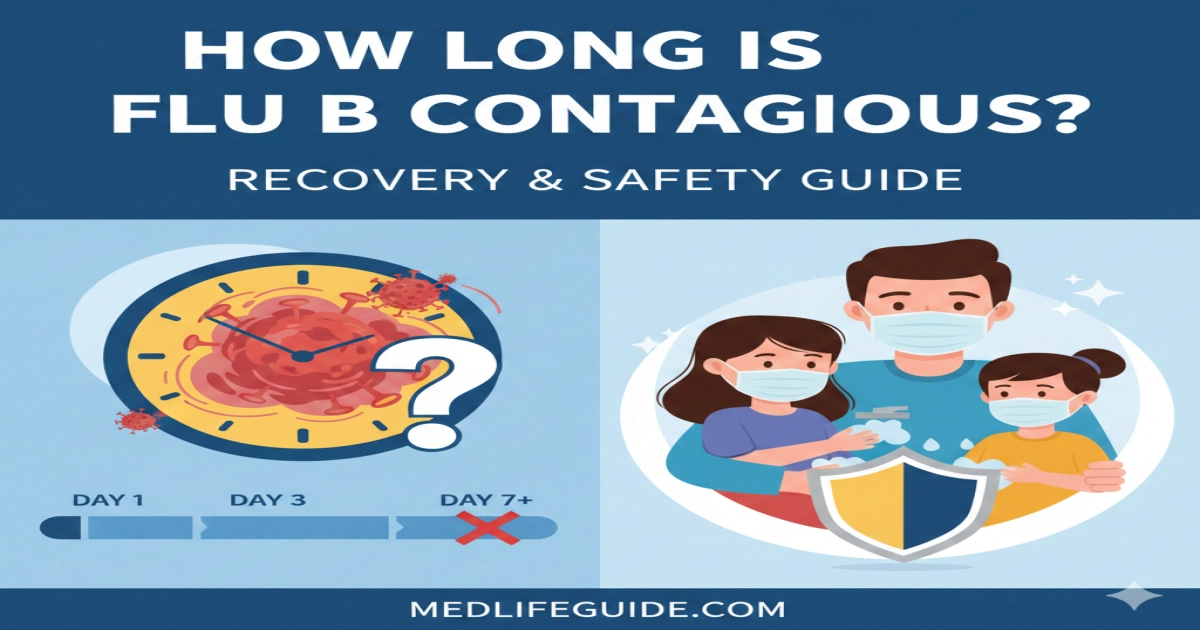
Most adults with Influenza B are contagious from one day before symptoms appear until five to seven days after they start feeling sick. Children and people with weakened immune systems can remain infectious for 10 days or longer. To be safe, stay home until your fever has been gone for at least 24 hours without the use of fever-reducing medication.
Understanding Influenza B: More Than Just a Cold
When the “flu season” hits, we often hear about different strains. While Influenza A often makes headlines for causing pandemics, Influenza B is a common culprit for seasonal outbreaks. It can hit just as hard, leaving you with body aches, a high fever, and exhaustion.
One of the most stressful parts of getting sick isn’t just the symptoms—it’s the worry about passing it to your kids, coworkers, or elderly parents. Knowing the exact window of contagion is the best way to stop the cycle of infection.
The Timeline of Contagion
The tricky thing about Flu B is that you are a walking germ-spreader before you even know you’re sick.
- The Incubation Period: After the virus enters your body, it takes about 1 to 4 days for symptoms to show up.
- The Pre-Symptomatic Phase: You can spread the virus about 24 hours before your first cough or sneeze. This is why the flu travels so fast through schools and offices.
- The Peak Window: You are most contagious during the first 3 to 4 days of your illness. This is when your viral load (the amount of virus in your body) is at its highest.
- The Tapering Phase: For most healthy adults, the ability to infect others drops significantly after day five. However, if you are still coughing heavily or have a fever, you are likely still shedding the virus.
Who Stays Contagious Longer?
Not everyone follows the same “seven-day rule.” According to the Centers for Disease Control and Prevention (CDC), two specific groups tend to be “super-spreaders” for longer periods:
- Children: Kids’ immune systems are still learning how to fight off invaders. Because of this, they can shed the Flu B virus for 10 days or more.
- Immuno-compromised Individuals: If you have an underlying health condition or are undergoing treatments like chemotherapy, your body may take weeks to fully clear the virus, extending the contagious period.
When Is It Truly Safe to Go Back to Work or School?
The gold standard for ending your “home jail” stint isn’t based on a calendar, but on your body temperature.
The CDC recommends staying home until at least 24 hours after your fever is gone. Important note: This 24-hour clock only starts once you stop taking Tylenol, Advil, or Motrin. If your fever is gone only because you took a pill, you are likely still contagious.
How Flu B Actually Spreads
Influenza B travels primarily through respiratory droplets. When an infected person talks, coughs, or sneezes, tiny droplets fly through the air and land in the mouths or noses of people nearby.
It can also live on hard surfaces—like doorknobs, keyboards, and phone screens—for up to 24 hours. If you touch a contaminated surface and then touch your eyes or mouth, you’ve given the virus a front-door entry to your system.
Practical Steps to Protect Your Household
If someone in your house tests positive for Flu B, don’t panic. You can minimize the spread by following these human-centered tips:
- The “Sick Room”: If possible, keep the ill person in one room and have them use a separate bathroom.
- Airflow: Open windows for a few minutes a day to circulate fresh air and dilute the concentration of viral particles.
- Disinfect “High-Touch” Areas: Use EPA-approved disinfectants on fridge handles, light switches, and remote controls.
- Hydration & Rest: The faster the body recovers, the sooner the viral shedding slows down. Focus on electrolytes and sleep.
The Role of Antivirals
If you catch the flu early, a doctor might prescribe an antiviral like Tamiflu. These medications don’t kill the virus instantly, but they do prevent it from replicating quickly. This can shorten your sickness by about a day and, more importantly, may reduce how much virus you shed, potentially making you less contagious sooner.
Final Thoughts on Recovery
Flu B is a grueling experience, but it is manageable. Respecting the contagious window isn’t just about your own health—it’s a service to your community. By staying home and practicing good hygiene, you protect the most vulnerable people around you.
Medical Disclaimer: The information provided in this article is for educational purposes only and is not intended as medical advice. Always seek the advice of your physician or other qualified health provider with any questions you may have regarding a medical condition. Never disregard professional medical advice or delay in seeking it because of something you have read here.