
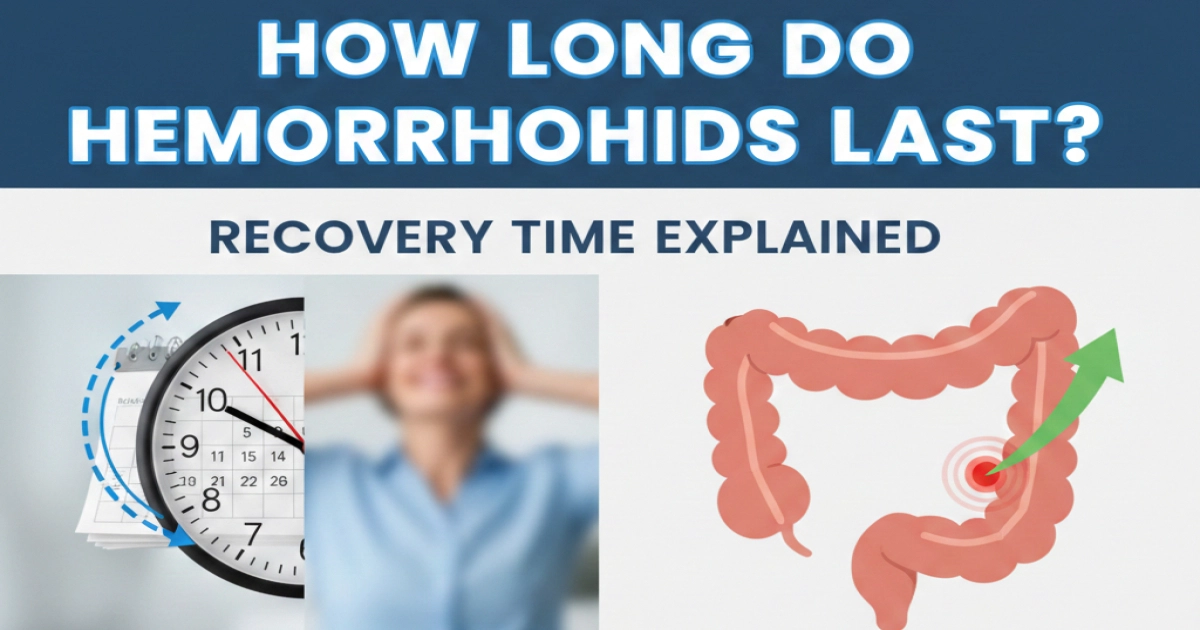
Hemorrhoids are swollen veins in the lower rectum or anus. They are common and usually not dangerous. Duration varies based on type, severity, and treatment. Many cases resolve within days to weeks. Others persist longer or recur.
This article explains typical timelines, factors that affect healing, treatment options, warning signs, and clinical insight
Hemorrhoids are swollen veins in the lower rectum or anus. They are common and usually not dangerous. Duration varies based on type, severity, and treatment. Many cases resolve within days to weeks. Others persist longer or recur.
This article explains typical timelines, factors that affect healing, treatment options, warning signs, and clinical insights that matter for patients.
What Are Hemorrhoids?
Hemorrhoids are classified by location.
Internal Hemorrhoids
- Located inside the rectum
- Usually painless
- May cause bright red bleeding during bowel movements
External Hemorrhoids
- Located under the skin around the anus
- Can be painful, itchy, or swollen
Thrombosed Hemorrhoids
- A blood clot forms in an external hemorrhoid
- Causes severe pain and swelling
- Often improves as the clot reabsorbs
How Long Do Hemorrhoids Last?
Duration depends on type and management.
Mild Hemorrhoids
- Timeline: A few days to 1 week
- Details: Often caused by short-term constipation or straining. Symptoms improve with home care.
Moderate Hemorrhoids
- Timeline: 1 to 2 weeks
- Details: Swelling and discomfort last longer but usually resolve with conservative treatment.
Severe or Chronic Hemorrhoids
- Timeline: Several weeks to months
- Details: May persist or recur. Medical procedures may be required.
Thrombosed Hemorrhoids
- Timeline: Pain peaks at 48–72 hours; swelling improves over 2–3 weeks
- Details: Skin tags may remain after healing.
Factors That Affect Healing Time
Several variables influence how long hemorrhoids last.
Bowel Habits
- Chronic constipation or diarrhea prolongs symptoms
- Straining increases venous pressure
Diet and Hydration
- Low fiber intake slows recovery
- Dehydration hardens stool
Physical Activity
- Prolonged sitting delays healing
- Regular movement improves blood flow
Pregnancy
- Increased abdominal pressure extends duration
- Many pregnancy-related hemorrhoids improve after delivery
Age and Vascular Health
- Weaker vein walls may slow resolution
- Recurrent episodes are more common with age
Treatment Options and Their Impact on Duration
Home Care (First-Line)
- High-fiber diet (20–30 g/day): Shortens duration
- Adequate fluids: Softens stool
- Warm sitz baths: Reduces pain and spasm
- Avoid straining: Prevents worsening
Expected improvement: 3–7 days for mild cases
Over-the-Counter Treatments
- Topical hydrocortisone (short-term use)
- Witch hazel pads
- Local anesthetics
Expected improvement: Symptom relief within days; does not cure underlying cause
Prescription Medications
- Stronger topical steroids (short courses)
- Venotonic agents in selected cases
Expected improvement: 1–2 weeks depending on severity
Office Procedures
- Rubber band ligation
- Infrared coagulation
- Sclerotherapy
Expected improvement: Symptoms resolve within days to weeks after procedure
Surgery (Hemorrhoidectomy)
- Reserved for severe or refractory cases
- Recovery time: 2–4 weeks
When Hemorrhoids Do Not Go Away
Persistent symptoms beyond 2–3 weeks need evaluation.
Possible Reasons
- Ongoing constipation or diarrhea
- Incorrect diagnosis
- Advanced hemorrhoidal disease
Conditions That Mimic Hemorrhoids
- Anal fissures
- Rectal prolapse
- Inflammatory bowel disease
- Colorectal cancer
Bleeding that continues or occurs without pain requires medical assessment.
Unique Clinical Takeaways
1. Symptom Duration Is Often Driven by Behavior, Not Size
Small hemorrhoids can last longer than large ones if bowel habits remain unchanged. Continued straining and prolonged toilet sitting are major drivers of chronic symptoms.
2. Pain Severity Does Not Predict Healing Time
Thrombosed hemorrhoids cause intense pain but often resolve faster than less painful chronic internal hemorrhoids. Pain level alone should not guide treatment expectations.
3. Recurrent “Hemorrhoids” May Signal Misdiagnosis
Patients with repeated short-lived relief and frequent bleeding may have fissures or rectal inflammation rather than hemorrhoids. Early differentiation reduces prolonged symptoms.
4. Pregnancy-Related Hemorrhoids Follow a Different Timeline
Symptoms may persist throughout pregnancy due to sustained venous pressure but commonly improve within weeks postpartum without invasive treatment.
Prevention of Prolonged or Recurrent Hemorrhoids
- Maintain regular bowel movements
- Increase dietary fiber gradually
- Drink water consistently
- Avoid delaying defecation
- Limit time on the toilet
- Engage in daily physical activity
Frequently Asked Questions
Yes. Many mild cases resolve within a week with no medical intervention.
No. Persistent cases usually indicate ongoing risk factors or require procedural treatment.
Mild cases may improve in days. Moderate to severe cases can last weeks or longer.
Not always. Internal hemorrhoids bleed easily even when small. Persistent bleeding needs evaluation.
Medical Disclaimer
All content published on medlifeguide is intended for informational and educational purposes only and does not substitute professional medical advice, diagnosis, or treatment. Always consult a qualified healthcare provider regarding any medical condition, symptoms, or treatment decisions.