
Medically Reviewed and Compiled by Dr. Adam N. Khan, MD.
Quick Answer
The Nipah virus spreads primarily through fruit bats (the natural hosts), which contaminate food like raw date palm sap or fruits with their saliva and urine. It can also spread to humans through infected animals, particularly pigs, or via close contact with an infected person’
Medically Reviewed and Compiled by Dr. Adam N. Khan, MD.
Quick Answer
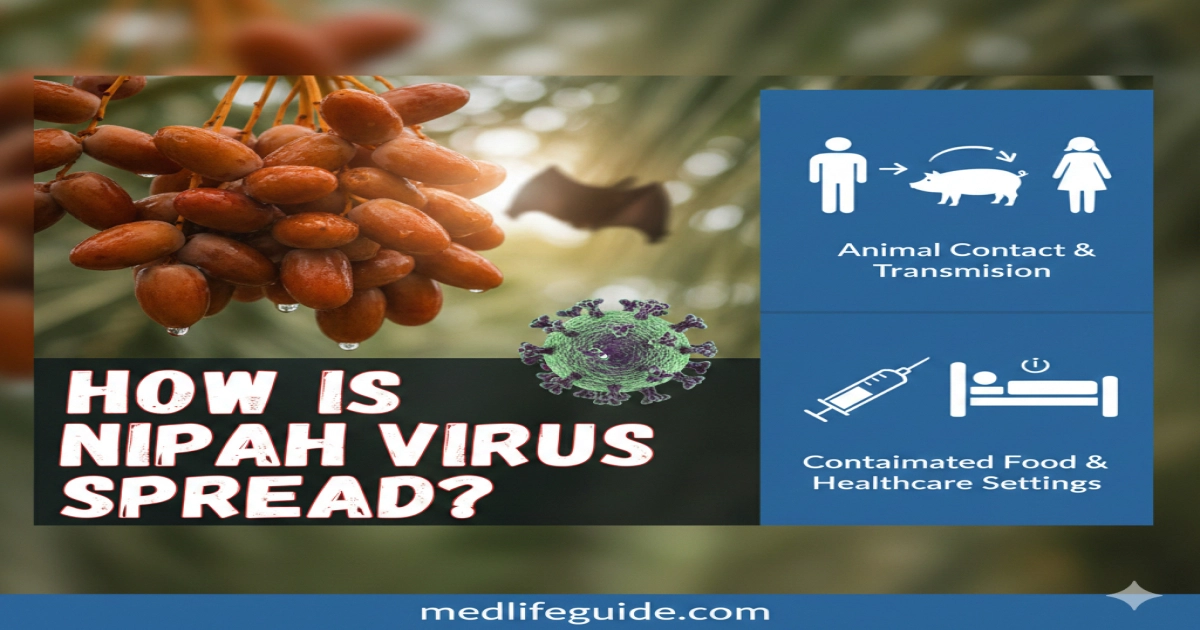
The Nipah virus spreads primarily through fruit bats (the natural hosts), which contaminate food like raw date palm sap or fruits with their saliva and urine. It can also spread to humans through infected animals, particularly pigs, or via close contact with an infected person’s bodily fluids (saliva, respiratory droplets, or urine).
How is Nipah Virus Spread? A Deep Look at How It Moves
The Nipah virus is a serious health threat that experts watch closely. It is known as a zoonotic virus, which means it jumps from animals to humans. Unlike a common cold that might spread through a simple sneeze in a crowded room, Nipah has specific “pathways” it travels. Understanding these paths is the first step in staying safe.
1. The Starting Point: Fruit Bats
The natural home of the Nipah virus is the fruit bat (also called the “flying fox”). These bats carry the virus in their bodies but do not get sick from it. They act like a permanent reservoir.
The virus is found in the bat’s:
- Saliva
- Urine
- Excreta (droppings)
When bats fly over farms or orchards, they may eat a piece of fruit and leave saliva behind, or urinate while resting in trees. This is often how the “spillover” to humans begins.
2. Contaminated Food and Drink
In many parts of South Asia, people enjoy drinking raw date palm sap. This is a sweet liquid collected from trees overnight. Because bats also love this sweet sap, they often visit the collection pots.
If a bat licks the sap or urinated into the container, the virus enters the liquid. People who drink this raw sap the next morning can become infected. Similarly, eating fruit that has “bat bites” or visible stains from bat droppings is a major risk factor.
3. The Role of Intermediate Animals (Like Pigs)
Sometimes, the virus doesn’t go straight from a bat to a person. Instead, it uses a “middleman.” In the first major Nipah outbreak in Malaysia, pigs were the bridge.
Pigs can catch the virus if they eat fruit dropped by bats or live in pens near bat colonies. Once a pig is infected, it becomes a “viral factory,” shedding large amounts of the virus. Farmers or workers who touch the pigs, or are sprayed by their coughs, can easily catch the disease.
4. Human-to-Human Spread
Once a person has Nipah, they can pass it to others. However, this usually requires very close contact. It is not considered “airborne” in the way the flu is, but it travels through bodily fluids.
Common ways it spreads between people include:
- Caregiving: Family members or nurses touching a patient’s sweat, saliva, or vomit without protection.
- Respiratory Droplets: When a very sick patient coughs, they release droplets. If someone is standing very close, they can breathe these in.
- Healthcare Settings: In some hospitals, if “Infection Control” (like wearing masks and gloves) is not strict, the virus can spread from one patient to another or to the staff.
How the Virus Enters Your Body
The virus typically enters through the mouth or nose. Once inside, it attaches to specific receptors in your cells. From there, it moves into the bloodstream and can travel to the lungs and the brain. This is why the symptoms often involve both breathing trouble and “brain fog” or confusion.
Why Is This Important in 2026?
As of early 2026, we have seen small clusters of cases in places like West Bengal, India. Because the virus has a high “case fatality rate” (meaning it can be very deadly), health officials use contact tracing to find every person who may have touched an infected individual.
Summary of Prevention
To stop the spread, the rules are simple but vital:
- Boil the Sap: Never drink raw date palm juice; boiling it kills the virus.
- Wash and Peel: Always wash fruits thoroughly and peel them. If a fruit looks bitten, throw it away.
- Protective Gear: If you are around sick animals or people, use masks, gloves, and wash your hands frequently with soap.
- Avoid Bat Areas: Stay away from trees where fruit bats are known to sleep.
Medical Disclaimer: This article is for informational purposes only and does not constitute medical advice, diagnosis, or treatment. Always seek the advice of your physician or other qualified health provider with any questions you may have regarding a medical condition. Never disregard professional medical advice or delay in seeking it because of something you have read here.