
Medically Reviewed and Compiled by Dr. Adam N. Khan, MD.
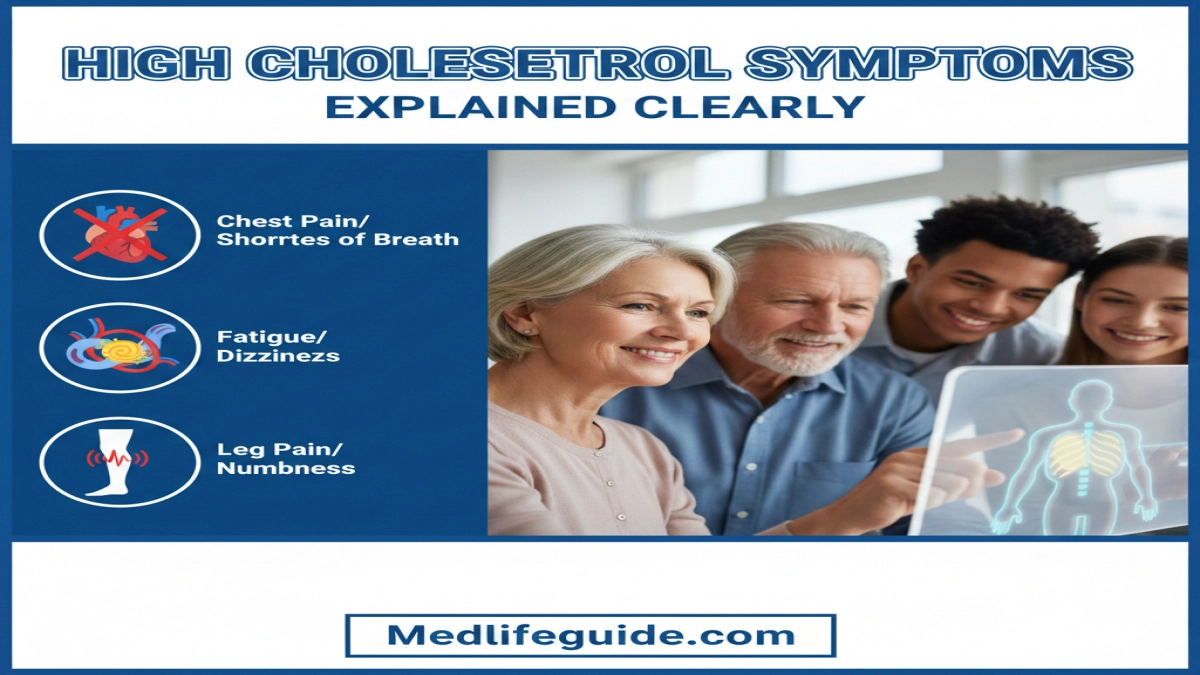
High cholesterol rarely causes problems at first. It builds slowly and quietly. Most people feel normal until it starts to affect blood vessels, the heart, or the brain. This is why understanding the signs, risk clues, and the way it shows up in daily life matters.
High cholesterol rarely causes problems at first. It builds slowly and quietly. Most people feel normal until it starts to affect blood vessels, the heart, or the brain. This is why understanding the signs, risk clues, and the way it shows up in daily life matters.
Let’s break it down in a simple, clear way.
What High Cholesterol Really Means
High cholesterol happens when there is too much LDL in your bloodstream. Over time, this extra cholesterol settles inside the walls of your arteries. These walls become narrow and stiff, which makes it harder for blood to move.
You won’t usually feel this happening, but the body does send signals once the arteries reach a certain level of stress.
Early Signs You Might Miss
Here are the quiet changes many people ignore:
1. Unusual Fatigue
You may feel tired even after rest. When arteries narrow, the heart has to push harder. This extra work can leave you low on energy.
2. Shortness of Breath During Simple Tasks
If you get winded faster than before, it may be a clue that your heart is not getting enough oxygen-rich blood.
3. Mild Chest Pressure on Activity
It might feel like someone is pressing on your chest for a few seconds. This often appears when cholesterol buildup starts affecting blood flow to the heart.
Visible Physical Signs
Some signs show up outside the body.
1. Xanthomas
These are yellow, soft bumps under the skin. They often show on elbows, knees, and eyelids. They come from fat deposits.
2. Corneal Arcus
This looks like a white or gray ring around the cornea. It is more common in older adults but can be a warning sign in younger people.
3. Leg Pain While Walking
If your legs hurt when you walk but feel better when you stop, the arteries in your legs may be blocked. This is called claudication.
Symptoms Linked to Dangerous Complications
These signs show up later and mean cholesterol may already be causing damage.
1. Chest Pain or Tightness
This can mean the heart is not getting enough blood. This is a medical emergency if it gets worse or doesn’t stop with rest.
2. Sudden Numbness or Weakness
This may be a sign of a stroke. High cholesterol raises the risk of clots in brain arteries.
3. Severe Headache With Vision Changes
This can also point to a stroke caused by clogged blood vessels.
Unique Clinical Takeaways
Here’s the part most symptom guides skip. These are deeper insights that matter in real-world practice.
1. Symptoms Often Come From Damage, Not From Cholesterol Itself
Cholesterol does not hurt, burn, or swell. It only causes signs when it starts blocking arteries. By the time symptoms appear, plaque may already be building for years. This is why routine screening matters more than symptom-watching.
2. Younger Adults Can Have Silent, Fast-Growing Cholesterol Problems
You can have high cholesterol even if you are thin, active, or young. Genetics, thyroid problems, kidney disease, and PCOS can raise LDL without obvious signs. Many young adults first learn about it only after chest pain or a health exam for work.
3. Different Body Systems Show Different Signals
The symptoms you feel depend on which arteries are affected first.
- If heart arteries narrow, you may feel chest pressure.
- If leg arteries narrow, you may feel calf pain when walking.
- If brain arteries narrow, you may get brief numbness episodes called TIAs.
This system-by-system pattern helps doctors figure out where plaque is building and what tests you need next.
When to See a Doctor
You should get checked if:
- You have a family history of heart disease.
- You smoke or have diabetes.
- You feel any chest discomfort, even mild.
- You notice xanthomas or a gray ring around the eyes.
- You get tired easily and the cause is unclear.
A simple blood test called a lipid profile can detect high cholesterol early.
How High Cholesterol Is Diagnosed
Your doctor may order:
- A full lipid panel (LDL, HDL, total cholesterol, triglycerides).
- Liver tests before starting treatment.
- Thyroid tests if the numbers look unusual.
- A coronary calcium scan if symptoms raise concern.
Simple Lifestyle Changes That Help
- Choose more fruits, vegetables, beans, and whole grains.
- Cut back on fried foods, processed meats, and sugary snacks.
- Add 30 minutes of walking five days a week.
- Avoid smoking and manage stress.
- Take medication if your doctor prescribes it. Many people need both diet and medicines to reach safe levels.