
By MedLifeGuide Editorial Team Medically Reviewed by: Published: March 2026 | Updated: March 2026
High blood pressure, or hypertension, affects nearly half of adults worldwide and remains one of the leading causes of heart disease, stroke, and kidney problems. Often called the “silent killer” because it shows few obvious signs, managing i
By MedLifeGuide Editorial Team Medically Reviewed by: Published: March 2026 | Updated: March 2026
High blood pressure, or hypertension, affects nearly half of adults worldwide and remains one of the leading causes of heart disease, stroke, and kidney problems. Often called the “silent killer” because it shows few obvious signs, managing it effectively can add years to your life. At MedLifeGuide, we’re your partner in navigating health with evidence-based, easy-to-understand guidance.
In this comprehensive guide, learn the key facts about hypertension, how to recognize it, and practical steps to lower your numbers naturally and medically.
Introduction
Blood pressure measures the force of blood against artery walls. It’s recorded as two numbers: systolic (top number, pressure during heartbeats) over diastolic (bottom number, pressure between beats). Normal blood pressure is below 120/80 mmHg.
Hypertension is diagnosed when readings consistently hit 130/80 mmHg or higher (per updated 2017 ACC/AHA guidelines, still standard in 2026). Stage 1 is 130-139/80-89; Stage 2 is 140+/90+.
Left uncontrolled, it damages arteries, strains the heart, and raises risks for heart attack, stroke, vision loss, and dementia. The good news? Lifestyle changes and treatment work wonders for most people.
Key Takeaway: Regular checks are essential — many don’t know they have it until complications arise.
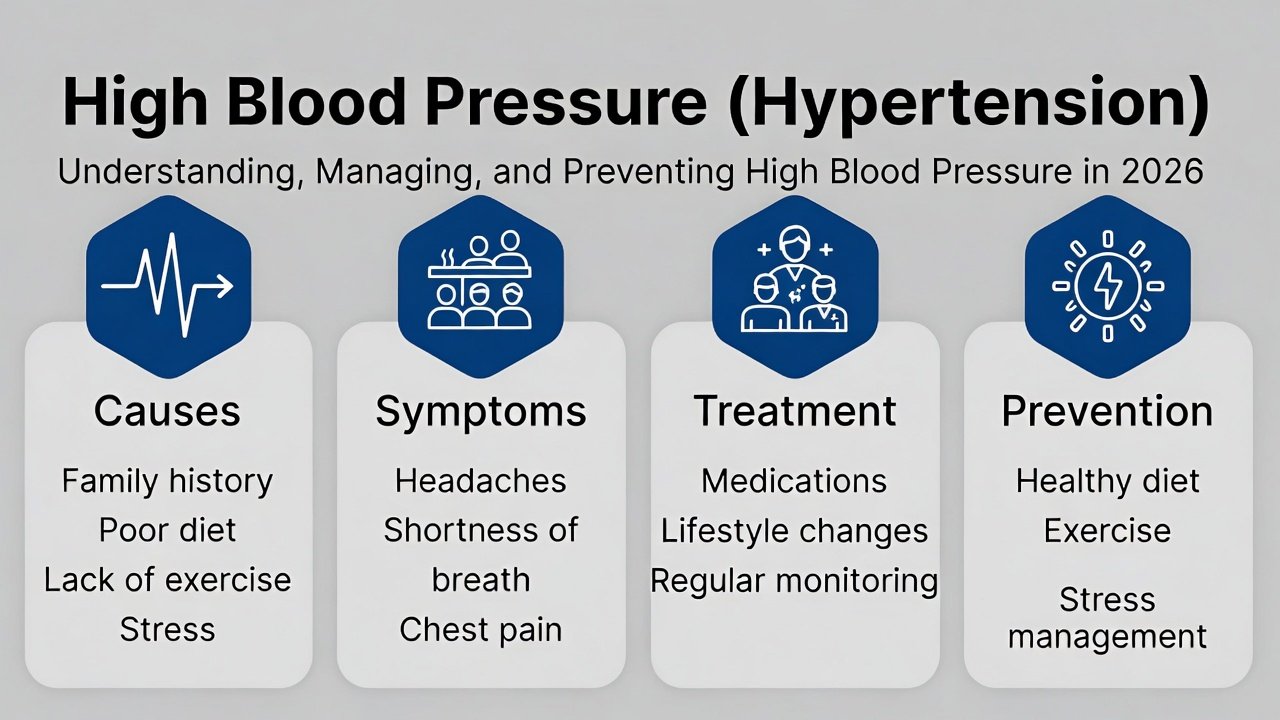
Symptoms / Signs
Hypertension is often symptomless, earning its “silent” nickname. Most people feel fine even with dangerously high readings.
When symptoms do appear (usually in severe or sudden cases), they may include:
- Severe headaches
- Shortness of breath
- Nosebleeds
- Dizziness or lightheadedness
- Chest pain
- Vision changes
- Fatigue or confusion
These signs often indicate a hypertensive crisis (180/120+ mmHg) — seek emergency care immediately.
Pro Tip: Don’t wait for symptoms. Get screened regularly, especially if you’re over 40 or have risk factors.
Causes / Reasons
Hypertension falls into two main types:
- Primary (Essential) Hypertension — Develops gradually over years with no single identifiable cause. It accounts for ~90-95% of cases and links to:
- Genetics
- Aging (arteries stiffen)
- Poor diet (high salt, low potassium)
- Lack of physical activity
- Obesity
- Chronic stress
- Secondary Hypertension — Caused by an underlying condition. Examples:
- Kidney disease
- Sleep apnea
- Thyroid problems
- Adrenal gland tumors
- Certain medications (e.g., birth control pills, decongestants)
- Illegal drugs like cocaine
In 2026, research highlights gut microbiome imbalances and chronic inflammation as emerging contributors to primary hypertension.
Risk Factors
Certain factors increase your likelihood of developing high blood pressure:
- Age — Risk rises after 65.
- Family history — Genetic predisposition.
- Race/Ethnicity — Higher prevalence in Black individuals.
- Obesity — Excess weight strains the heart.
- Sedentary lifestyle — Inactivity weakens cardiovascular health.
- Diet high in sodium — Over 2,300 mg/day (ideally <1,500 mg for hypertensives).
- Excess alcohol — More than 1-2 drinks/day.
- Smoking — Damages blood vessels.
- Chronic stress — Triggers hormone surges.
- Diabetes or high cholesterol — Often cluster together.
Diagnosis / Detection
Diagnosis involves multiple readings over time, not a single high measurement.
Common methods:
- In-office blood pressure checks
- Home monitoring (recommended devices: Omron or similar validated models)
- Ambulatory blood pressure monitoring (24-hour tracking)
- Blood and urine tests to rule out secondary causes
- ECG or echocardiogram for heart damage assessment
Target: Keep readings below 130/80 mmHg for most adults (or <140/90 for some older patients per personalized guidelines).
Treatment / Solutions
Treatment combines lifestyle changes and medications when needed.
Lifestyle Modifications (First-Line):
- Adopt the DASH diet — Rich in fruits, vegetables, whole grains, lean proteins; low in salt and processed foods.
- Reduce sodium to <1,500 mg/day.
- Exercise 150 minutes/week of moderate activity (brisk walking, cycling).
- Maintain healthy weight — Losing 5-10% body weight can drop BP significantly.
- Limit alcohol and quit smoking.
- Manage stress with meditation, yoga, or therapy.
- Get 7-9 hours of quality sleep.
Medications (if lifestyle isn’t enough):
- ACE inhibitors (e.g., lisinopril)
- ARBs (e.g., losartan)
- Calcium channel blockers
- Diuretics (e.g., hydrochlorothiazide)
- Beta-blockers
Many need 2+ meds. Follow your doctor’s plan closely.
Prevention / Tips
Prevent or control hypertension with these evidence-based strategies:
- Eat potassium-rich foods (bananas, spinach, sweet potatoes).
- Limit processed foods and read labels for hidden sodium.
- Stay active — even short daily walks help.
- Monitor BP at home weekly.
- Schedule annual check-ups.
- Reduce caffeine if sensitive.
- Maintain social connections to lower stress.
Bold Highlight: Small, consistent changes beat drastic overhauls for long-term success.
When to See a Doctor
Contact a healthcare provider if:
- You have repeated high readings at home.
- You experience symptoms like severe headache or chest pain.
- You’re pregnant (preeclampsia risk).
- You have diabetes, kidney issues, or heart disease.
Seek emergency help for readings 180/120+ with symptoms.
FAQ
What is considered high blood pressure in 2026?
High blood pressure starts at 130/80 mmHg or higher, per current guidelines.
Can high blood pressure be cured?
Primary hypertension isn’t “cured” but can be effectively managed — often without meds through lifestyle alone.
What foods lower blood pressure quickly?
Beets, leafy greens, berries, oats, and garlic show fast benefits due to nitrates and antioxidants.
Is high blood pressure hereditary?
Yes, genetics play a role, but lifestyle heavily influences whether it develops.
How often should I check my blood pressure?
At least yearly if normal; daily or weekly if diagnosed or at risk.
Conclusion
High blood pressure is manageable and often preventable. Prioritize heart-healthy habits, monitor regularly, and partner with your doctor for personalized care.
Key Takeaways:
- Know your numbers — check BP routinely.
- Embrace DASH eating and regular movement.
- Control what you can: diet, weight, stress, smoking.
- Medications work when combined with lifestyle.
- Early action prevents serious complications.
Stay empowered with MedLifeGuide — your trusted partner in health navigation.
Health Disclaimer: This article is for informational purposes only and not a substitute for professional medical advice. Consult a qualified healthcare provider for diagnosis or treatment. MedLifeGuide does not provide medical services.
6. External References to Trusted Sources
- Mayo Clinic – High Blood Pressure (Hypertension): https://www.mayoclinic.org/diseases-conditions/high-blood-pressure/symptoms-causes/syc-20373410
- Centers for Disease Control and Prevention (CDC) – High Blood Pressure Facts: https://www.cdc.gov/bloodpressure/facts.htm
- National Heart, Lung, and Blood Institute (NHLBI/NIH) – High Blood Pressure: https://www.nhlbi.nih.gov/health/high-blood-pressure