
Medically Reviewed and Compiled by Dr. Adam N. Khan, MD.
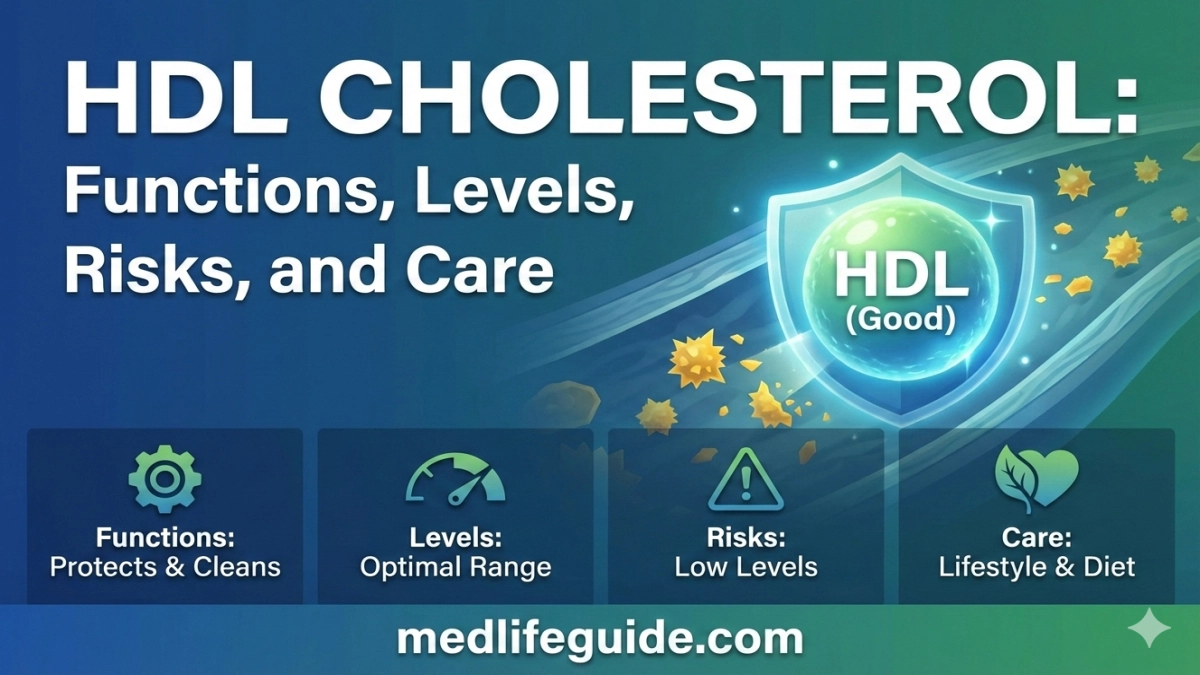
HDL cholesterol, commonly called “good cholesterol,” is a lipid fraction in the blood associated with reduced cardiovascular risk in population studies. HDL stands for high-density lipoprotein, a complex particle composed of cholesterol, phospholipids, and proteins known as apolipoproteins
Medically Reviewed and Compiled by Dr. Adam N. Khan, MD.
HDL cholesterol, commonly called “good cholesterol,” is a lipid fraction in the blood associated with reduced cardiovascular risk in population studies. HDL stands for high-density lipoprotein, a complex particle composed of cholesterol, phospholipids, and proteins known as apolipoproteins. Unlike low-density lipoprotein (LDL), which transports cholesterol to peripheral tissues, HDL participates in reverse cholesterol transport, moving excess cholesterol from tissues and blood vessel walls back to the liver for metabolism and excretion.
Despite its long-standing reputation as protective, modern research shows that HDL cholesterol is more complex than a simple “higher is better” marker. Clinical interpretation requires understanding HDL quantity, functionality, patient context, and comorbid risk factors.
What Is HDL Cholesterol?
HDL cholesterol refers to the cholesterol content carried by high-density lipoproteins in the bloodstream. HDL particles are smaller and denser than LDL particles and contain a higher proportion of protein relative to lipid.
Composition of HDL
HDL particles contain:
- Cholesterol and cholesterol esters
- Phospholipids
- Apolipoproteins, mainly ApoA-I and ApoA-II
ApoA-I is critical for HDL’s role in cholesterol efflux from cells, particularly macrophages in arterial walls.
Reverse Cholesterol Transport
The primary physiological role of HDL is reverse cholesterol transport:
- HDL accepts free cholesterol from peripheral cells.
- Cholesterol is esterified by the enzyme LCAT (lecithin–cholesterol acyltransferase).
- HDL delivers cholesterol to the liver directly or transfers it to other lipoproteins for hepatic clearance.
HDL Cholesterol Levels and Reference Ranges
HDL cholesterol is measured as part of a fasting or non-fasting lipid panel.
Standard Reference Ranges (Adults)
- Low HDL:
- <40 mg/dL (men)
- <50 mg/dL (women)
- Acceptable / Average: 40–59 mg/dL
- Traditionally considered high: ≥60 mg/dL
These thresholds are based on epidemiologic associations, not direct causation.
Why HDL Cholesterol Matters
Historically, higher HDL levels were associated with lower rates of coronary heart disease. HDL has several proposed protective mechanisms beyond cholesterol transport.
Anti-Atherosclerotic Effects
HDL may:
- Reduce cholesterol accumulation in arterial plaques
- Improve endothelial function
- Inhibit oxidation of LDL particles
Anti-Inflammatory and Antioxidant Roles
HDL particles can modulate inflammation by:
- Reducing expression of adhesion molecules on endothelial cells
- Neutralizing oxidized lipids
These properties depend more on HDL function than HDL concentration alone.
Causes of Low HDL Cholesterol
Low HDL cholesterol is common and often multifactorial.
Lifestyle-Related Factors
- Physical inactivity
- Cigarette smoking
- Diets high in refined carbohydrates and trans fats
- Excess body weight, especially central obesity
Medical Conditions
- Type 2 diabetes mellitus
- Metabolic syndrome
- Chronic kidney disease
- Chronic inflammatory states
Genetic Influences
Inherited disorders such as familial hypoalphalipoproteinemia can lead to very low HDL levels due to ApoA-I abnormalities or impaired HDL synthesis.
Causes of High HDL Cholesterol
High HDL cholesterol may be due to physiologic, genetic, or secondary factors.
Genetic Variants
Certain genetic polymorphisms result in elevated HDL levels without necessarily providing cardiovascular protection.
Secondary Causes
- Regular physical activity
- Moderate alcohol intake
- Estrogen therapy
Extremely high HDL levels (>90–100 mg/dL) have been associated in some studies with increased cardiovascular or all-cause mortality, suggesting a U-shaped risk relationship.
HDL Cholesterol vs LDL Cholesterol
HDL and LDL differ in structure, function, and clinical interpretation.
| Feature | HDL Cholesterol | LDL Cholesterol |
|---|---|---|
| Density | High | Low |
| Primary role | Cholesterol removal | Cholesterol delivery |
| Cardiovascular association | Inversely associated | Directly associated |
| Treatment target | Not a primary target | Primary treatment target |
Current cardiovascular prevention guidelines prioritize lowering LDL cholesterol rather than raising HDL cholesterol.
Can HDL Cholesterol Be Increased?
Several interventions can raise HDL cholesterol levels, but not all improve outcomes.
Lifestyle Interventions
- Aerobic exercise increases HDL modestly
- Smoking cessation improves HDL within weeks
- Weight loss raises HDL in overweight individuals
Dietary Factors
- Unsaturated fats (olive oil, nuts)
- Omega-3 fatty acids (fish)
Medications
Drugs such as niacin significantly raise HDL levels but have not shown cardiovascular benefit when added to statin therapy in large randomized trials.
HDL Function vs HDL Quantity
Recent research emphasizes HDL function rather than absolute HDL cholesterol concentration.
Cholesterol Efflux Capacity
This measures HDL’s ability to remove cholesterol from macrophages. Studies show efflux capacity predicts cardiovascular risk independently of HDL levels.
Dysfunctional HDL
In chronic inflammatory conditions, HDL can lose its protective properties and become pro-inflammatory, despite normal or high measured HDL cholesterol.
HDL Cholesterol in Special Populations
Diabetes Mellitus
Patients with type 2 diabetes often have low HDL and small, dense LDL particles, increasing cardiovascular risk even when HDL is within normal range.
Chronic Obstructive Pulmonary Disease (COPD)
Systemic inflammation in COPD can alter lipid metabolism. Some studies show altered HDL functionality, which may contribute to increased cardiovascular risk in COPD patients.
Chronic Kidney Disease
HDL particles in kidney disease often exhibit impaired antioxidant and anti-inflammatory functions.
Unique Clinical Takeaways
1. Extremely High HDL Is Not Universally Protective
HDL levels above traditional “protective” thresholds may reflect altered particle composition or impaired function. Clinicians should not assume reduced risk based solely on very high HDL values.
2. HDL Should Not Override Global Risk Assessment
Patients with high HDL but elevated LDL, hypertension, diabetes, or smoking history remain at significant cardiovascular risk. Treatment decisions should be based on total risk profiles rather than isolated HDL values.
3. Inflammatory States Can Convert HDL Into a Risk Marker
In chronic inflammatory diseases, HDL particles may lose their protective properties. In such cases, HDL cholesterol may function more as a marker of metabolic disturbance than cardiovascular protection.
Clinical Evaluation of HDL Cholesterol
HDL cholesterol should be interpreted as part of a complete lipid panel and overall cardiovascular risk assessment.
Recommended Assessments
- Total cholesterol
- LDL cholesterol or non-HDL cholesterol
- Triglycerides
- Blood pressure and glycemic status
Routine measurement of HDL function is not yet part of standard clinical practice.
Management Approach
Current evidence-based guidelines do not recommend pharmacologic therapy solely to raise HDL cholesterol.
Focus Areas
- LDL cholesterol reduction
- Blood pressure control
- Glycemic management
- Lifestyle modification
HDL cholesterol remains a useful biomarker but not a primary therapeutic target.