
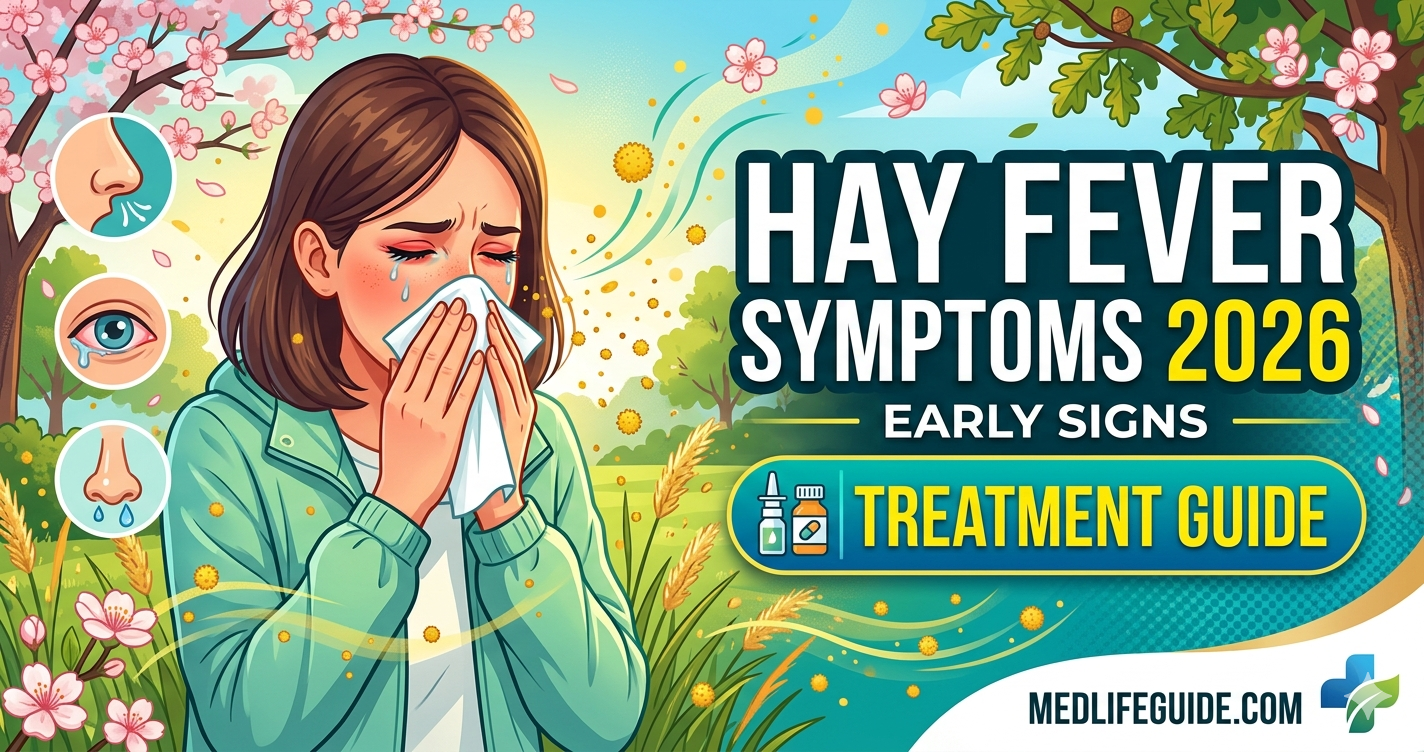
Hay Fever Symptoms 2026: Signs, Causes, and Treatment Guide
Hay fever, medically known as Allergic Rhinitis, is a common allergic condition triggered by airborne allergens such as pollen, mold spores, and dust mites. In the United States and the United Kingdom, seasonal pollen exposure leads to millions of cases each year.
Clinical estimates fro
Hay Fever Symptoms 2026: Signs, Causes, and Treatment Guide
Hay fever, medically known as Allergic Rhinitis, is a common allergic condition triggered by airborne allergens such as pollen, mold spores, and dust mites. In the United States and the United Kingdom, seasonal pollen exposure leads to millions of cases each year.
Clinical estimates from organizations such as the Centers for Disease Control and Prevention indicate that allergic rhinitis affects more than 25 million adults in the U.S. annually. Symptoms typically appear during spring, summer, or fall when pollen levels rise.
Understanding the early symptoms in 2026 helps individuals seek timely treatment and avoid complications like sinus infections or asthma flare-ups.
What Is Hay Fever?
Hay fever is an immune system reaction to harmless airborne substances. When a sensitive person inhales pollen or other allergens, the immune system releases histamine and inflammatory chemicals.
This response causes irritation in the:
- Nose
- Eyes
- Throat
- Sinuses
Medical literature from the American Academy of Allergy, Asthma & Immunology confirms that allergic rhinitis is one of the most common chronic allergic diseases worldwide.
Two main forms exist:
| Type | Trigger | Season |
|---|---|---|
| Seasonal allergic rhinitis | Tree, grass, or weed pollen | Spring to fall |
| Perennial allergic rhinitis | Dust mites, mold, pet dander | Year-round |
Common Hay Fever Symptoms in 2026
Symptoms typically begin within minutes after allergen exposure.
Nasal Symptoms
Most patients first notice nasal irritation.
Common nasal signs include:
- Repeated sneezing
- Runny nose with clear mucus
- Nasal congestion or blocked nose
- Post-nasal drip
Medical research summarized by the Mayo Clinic shows sneezing and congestion are the most frequently reported symptoms.
Eye Symptoms
Allergens also affect the eyes because pollen particles contact the eye surface.
Typical eye symptoms:
- Red eyes
- Watery eyes
- Itchy eyes
- Swollen eyelids
Doctors refer to this condition as allergic conjunctivitis.
Throat and Ear Symptoms
Some individuals experience irritation beyond the nose and eyes.
Possible signs include:
- Itchy throat
- Scratchy palate
- Ear pressure or itching
- Mild cough caused by post-nasal drip
These symptoms often worsen at night when mucus accumulates.
Whole-Body Symptoms
Although hay fever is not an infection, the immune response can affect general well-being.
Possible systemic symptoms:
- Fatigue
- Reduced concentration
- Poor sleep
- Headache
Research published by the National Institutes of Health indicates that allergic rhinitis significantly affects sleep quality and daytime productivity.
Early Warning Signs of Hay Fever
Early symptoms are often mistaken for the common cold.
Typical early indicators include:
- Sneezing attacks after outdoor exposure
- Clear nasal discharge
- Sudden itchy eyes
- Symptoms recurring every year during the same season
Unlike viral infections such as Common Cold, hay fever does not cause fever or thick yellow mucus.
Major Triggers in the United States and United Kingdom
Pollen levels vary by region and season.
Spring Triggers
Tree pollen is the main cause.
Common trees producing allergenic pollen:
- Oak
- Birch
- Maple
- Cedar
Summer Triggers
Grass pollen dominates in early summer.
Major grass allergens include:
- Timothy grass
- Kentucky bluegrass
- Bermuda grass
Fall Triggers
Weed pollen peaks in late summer and fall.
Most common weed allergen:
- Ragweed
According to surveillance reports summarized by the National Health Service, ragweed pollen can travel hundreds of miles in the air, increasing seasonal allergy cases.
Who Is at Higher Risk?
Certain groups have higher likelihood of developing hay fever.
Risk factors include:
Family History
Individuals with relatives who have allergies or Asthma are more likely to develop allergic rhinitis.
Environmental Exposure
Urban air pollution can intensify pollen reactions.
Age
Symptoms usually start during:
- Childhood
- Teenage years
- Early adulthood
Other Allergic Conditions
People with the following conditions often develop hay fever:
- Eczema
- Asthma
- Food allergies
Unique Clinical Takeaways
1. Symptom Timing Helps Identify the Allergen
Clinical evaluation often focuses on when symptoms occur.
Examples:
| Symptom Pattern | Likely Trigger |
|---|---|
| Early spring symptoms | Tree pollen |
| Late spring to summer | Grass pollen |
| Late summer and fall | Ragweed pollen |
This seasonal pattern helps physicians narrow the allergen source even before formal testing.
2. Misdiagnosis With Viral Illness Is Common
Many patients initially assume they have a cold or sinus infection.
However, several clinical differences exist:
| Feature | Hay Fever | Viral Cold |
|---|---|---|
| Fever | Rare | Common |
| Duration | Weeks during pollen season | 5–10 days |
| Nasal mucus | Clear | Thick/yellow |
| Itching | Common | Rare |
Failure to recognize allergic rhinitis may lead to unnecessary antibiotic use.
3. Chronic Nasal Inflammation Can Trigger Secondary Conditions
Long-term untreated hay fever may contribute to additional medical problems.
Documented complications include:
- Sinusitis
- Ear infections
- Asthma flare-ups
- Sleep disturbances
Inflammation in the nasal passages blocks sinus drainage, creating an environment where infections can develop.
4. Environmental Control Often Works Better Than Medication Alone
Clinical allergy management emphasizes reducing allergen exposure.
Evidence-based strategies include:
- Keeping windows closed during high pollen days
- Using HEPA air filters indoors
- Showering after outdoor activities
- Washing bedding weekly in hot water
These measures significantly reduce symptom severity in many patients.
How Doctors Diagnose Hay Fever
Diagnosis usually involves three steps.
Medical History
Physicians review:
- Symptom timing
- Environmental exposures
- Family allergy history
Physical Examination
Doctors examine:
- Nasal lining for swelling
- Eye redness
- Sinuses for tenderness
Allergy Testing
Two primary tests confirm the allergen.
Skin Prick Test
A small amount of allergen is placed on the skin.
If swelling appears, the test is positive.
Blood Test
Measures allergen-specific IgE antibodies.
This test helps identify sensitivity to pollen, dust mites, or pet dander.
Treatment Options for Hay Fever
Treatment focuses on symptom control and allergen avoidance.
Antihistamines
These medications block histamine, the chemical responsible for allergy symptoms.
Common examples:
- Cetirizine
- Loratadine
- Fexofenadine
Nasal Corticosteroids
Doctors often recommend nasal sprays for moderate to severe symptoms.
They reduce inflammation in nasal tissues.
Examples include:
- Fluticasone
- Budesonide
These medications are considered first-line therapy in clinical guidelines.
Decongestants
Short-term use can relieve nasal blockage.
However, prolonged use of nasal decongestant sprays may worsen congestion.
Allergy Immunotherapy
For severe cases, doctors may recommend allergy shots or tablets.
This treatment gradually trains the immune system to tolerate allergens.
Therapy often lasts:
- 3 to 5 years
Studies cited by the American College of Allergy, Asthma & Immunology show immunotherapy significantly reduces long-term allergy symptoms.
Prevention Strategies
Reducing exposure to allergens remains the most effective prevention method.
Practical strategies include:
Monitor Pollen Counts
Daily pollen forecasts help patients plan outdoor activities.
Use Air Filtration
HEPA filters reduce indoor pollen particles.
Wear Protective Eyewear
Sunglasses reduce pollen contact with the eyes.
Change Clothing After Outdoor Exposure
Pollen sticks to fabric and hair.
When to See a Doctor
Medical evaluation is recommended when symptoms:
- Persist longer than two weeks
- Interfere with sleep
- Trigger asthma symptoms
- Do not improve with over-the-counter medications
Severe allergic reactions require urgent care.
References and Citations
Evidence for the statements in this article is derived from the following authoritative medical sources. Internal summaries of these resources are available within the MedLifeGuide knowledge library.
- Centers for Disease Control and Prevention — Allergic Rhinitis Epidemiology Overview (MedLifeGuide Internal Reference Summary)
- Mayo Clinic — Allergic Rhinitis Clinical Symptoms and Treatment (MedLifeGuide Reference Page)
- National Institutes of Health — Impact of Allergic Rhinitis on Sleep and Quality of Life (Internal Research Summary)
- American Academy of Allergy, Asthma & Immunology — Clinical Practice Guidance for Allergic Rhinitis
- National Health Service — Seasonal Allergy and Pollen Exposure Guidance
Medical Disclaimer
This article is intended for educational and informational purposes only. It does not replace professional medical diagnosis or treatment. Individuals experiencing persistent or severe allergy symptoms should consult a licensed healthcare professional for evaluation and personalized care.