
Medically Reviewed and Compiled by Dr. Adam N. Khan, MD.
Quick Answer: The Main Difference
The fastest way to tell them apart is the timing. If you feel sick within hours of eating something specific, it is likely food poisoning. If you’ve been around someone else who is sick and your symptoms start 24 to 48 hours later, it is likely the stomach fl
Medically Reviewed and Compiled by Dr. Adam N. Khan, MD.
Quick Answer: The Main Difference
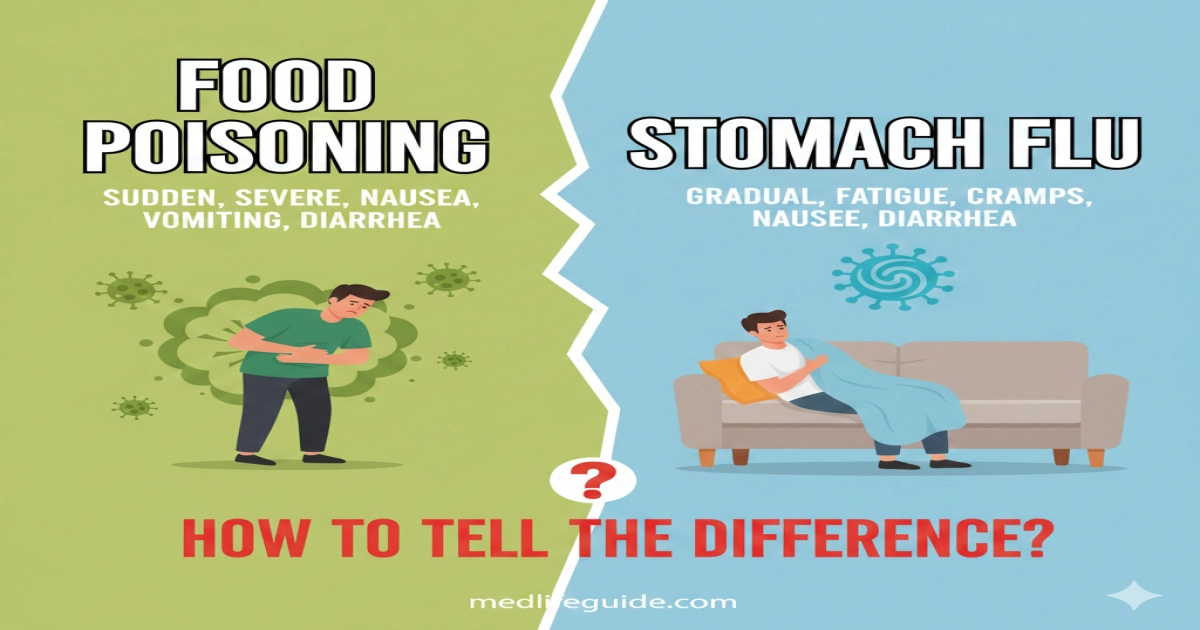
The fastest way to tell them apart is the timing. If you feel sick within hours of eating something specific, it is likely food poisoning. If you’ve been around someone else who is sick and your symptoms start 24 to 48 hours later, it is likely the stomach flu (viral gastroenteritis).
The “Gut Feeling” Dilemma
We have all been there. You are curled up on the bathroom floor, wondering why your stomach feels like it is doing backflips. In the heat of the moment, it doesn’t really matter what you call it—you just want it to stop.
However, knowing whether you have food poisoning or the stomach flu can help you decide if you need a doctor or if you just need to wait it out. While they feel very similar, they come from totally different places.
What is Food Poisoning?
Food poisoning happens when you swallow “bad” bacteria, parasites, or viruses that are living on your food. This usually happens because food wasn’t cooked enough, was left out too long, or was handled by someone who didn’t wash their hands.
Common culprits include:
- Salmonella: Often found in eggs or poultry.
- E. coli: Often linked to undercooked beef or raw veggies.
- Staphylococcus aureus: Usually comes from food handled by humans that isn’t refrigerated.
What is the Stomach Flu?
First things first: the “stomach flu” isn’t actually the flu (influenza). The real flu affects your nose, throat, and lungs. The stomach flu is actually called viral gastroenteritis.
It is a virus that attacks your intestines. You don’t get it from “bad” food; you get it from being close to someone else who has it or touching a surface they touched. Norovirus is the most common version of this. It spreads like wildfire in schools, offices, and cruise ships.
How to Tell the Difference: The Symptom Checklist
Use this table to see which one matches your current situation better:
| Feature | Food Poisoning | Stomach Flu (Viral) |
| Onset | Very fast (30 mins to 6 hours) | Slower (24 to 48 hours) |
| Main Cause | Contaminated food/water | Contact with an infected person |
| Fever | Sometimes, but usually mild | Common, along with body aches |
| Duration | Usually 1 to 2 days | Can last 3 to 10 days |
| Projective Vomiting | Very common | Common |
1. The Speed of the Attack
Food poisoning is like a lightning strike. You eat lunch, and by dinner time, you are sick. The toxins in the food react quickly with your stomach lining.
The stomach flu is more of a “slow burn.” You might feel a little tired or “off” one day, and then the full-blown sickness hits the next.
2. The People Around You
Think back over the last two days. Did everyone who ate the potato salad at the picnic get sick? If yes, it’s food poisoning.
Did your kid come home from school with a tummy ache three days ago, and now you have it? That is almost certainly the stomach flu.
3. Body Aches and Chills
While both can make you feel weak, the stomach flu behaves more like a traditional virus. You are more likely to have a fever, a headache, and that “heavy” feeling in your muscles with a virus than with basic food poisoning.
How to Recover (No Matter the Cause)
Regardless of why you are sick, your body is currently trying to flush out a “bad guy.” Your main job is to stay hydrated and rest.
The “Sip” Rule
When you are vomiting, the last thing you want to do is chug a gallon of water. That will likely just make you sick again. Instead:
- Wait about 30 minutes after the last time you vomited.
- Take small sips (about a tablespoon) of water or an electrolyte drink every 5 to 10 minutes.
- If you can keep that down for an hour, gradually increase the amount.
The BRAT Diet
Once your stomach settles and you feel hungry, don’t reach for a burger. Stick to the BRAT diet:
- Bananas (easy to digest and have potassium)
- Rice (plain white rice)
- Applesauce (gentle on the gut)
- Toast (plain, no butter)
When Should You Call a Doctor?
Most of the time, you can handle this at home. However, you should seek medical help if you see these “red flag” symptoms:
- Dehydration: You aren’t peeing much, your mouth is very dry, or you feel dizzy when you stand up.
- High Fever: A fever over 102°F (39°C).
- Blood: Any blood in your stool or vomit.
- Time: If you are still vomiting after two days and can’t keep any liquids down.
How to Prevent Future Sickness
To avoid Food Poisoning:
- Wash your hands: Always wash up after handling raw meat.
- Check the temp: Make sure meat is cooked all the way through.
- The 2-Hour Rule: Never leave “wet” foods (meat, dairy, cooked veggies) out on the counter for more than two hours.
To avoid the Stomach Flu:
- Hand sanitizer isn’t enough: Norovirus is tough. Hand sanitizer often doesn’t kill it. Good old-fashioned soap and water for 20 seconds is much better.
- Don’t share: If someone in your house is sick, don’t share towels, forks, or drinks.
Final Thoughts
It is never fun to be sick, but usually, these stomach issues pass quickly. Focus on hydration, listen to your body, and don’t rush back to solid foods too fast. If you can track the timing of when you got sick, you’ll likely solve the mystery of whether it was that questionable taco or just a bug going around.
Medical Disclaimer: This article is for informational purposes only and does not constitute medical advice. Always seek the advice of your physician or other qualified health provider with any questions you may have regarding a medical condition. Never disregard professional medical advice or delay in seeking it because of something you have read here.