
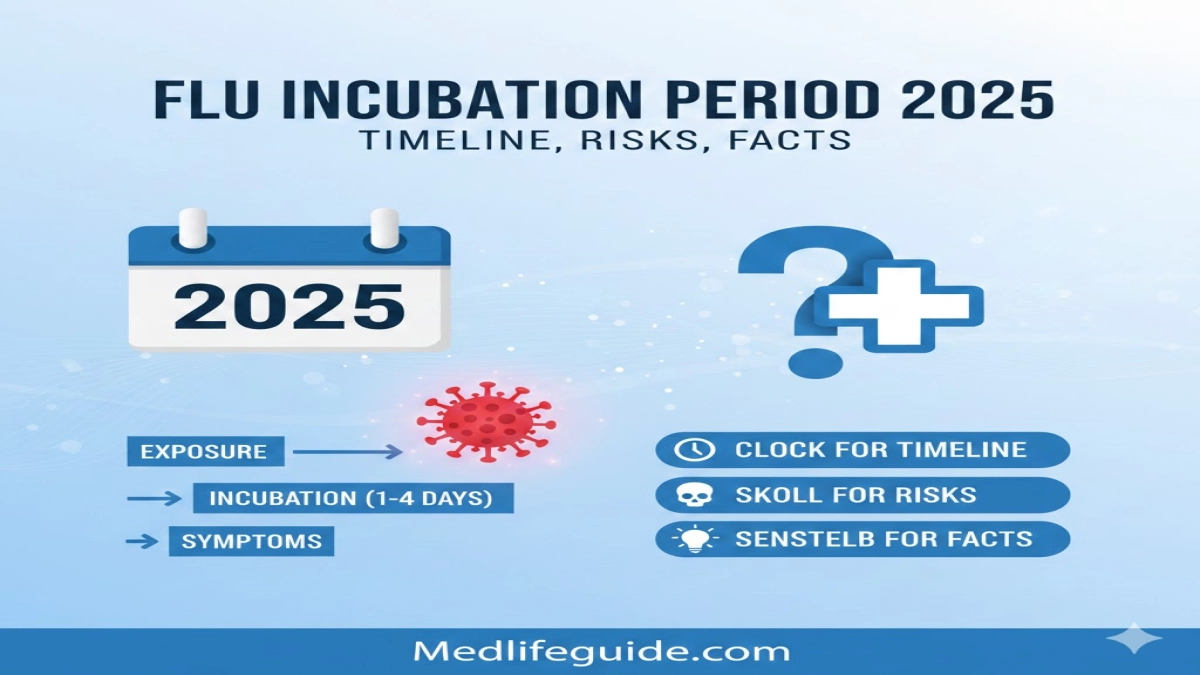
The flu incubation period refers to the time between exposure to the influenza virus and the appearance of the first clinical symptoms. In 2025, understanding the flu incubation period remains clinically significant due to ongoing viral mutation, seasonal strain variation, post-pandemic immune shifts, and overlapping respiratory infections. Accurat
The flu incubation period refers to the time between exposure to the influenza virus and the appearance of the first clinical symptoms. In 2025, understanding the flu incubation period remains clinically significant due to ongoing viral mutation, seasonal strain variation, post-pandemic immune shifts, and overlapping respiratory infections. Accurate knowledge of incubation timelines directly impacts isolation decisions, early testing, antiviral effectiveness, workplace exposure management, and protection of high-risk populations.
This article provides an in-depth, medically accurate, and clinically practical explanation of the flu incubation period 2025, integrating virology, patient experience, public health guidance, and real-world diagnostic challenges.
What Is the Flu Incubation Period?
Definition
The flu incubation period is the interval between initial infection with the influenza virus and the onset of symptoms. During this phase, the virus replicates within the respiratory tract without producing noticeable clinical signs.
Standard Incubation Timeline
For most influenza infections:
- Typical range: 1 to 4 days
- Average incubation period: Approximately 2 days
This range remains consistent in 2025 across influenza A and B strains, based on long-standing epidemiological data.
Flu Incubation Period 2025: What Has Changed?

Viral Evolution and Host Immunity
While the biological incubation window has not fundamentally changed, several 2025-specific factors influence how incubation presents clinically:
- Increased population immunity variability due to inconsistent flu vaccination uptake
- Greater co-circulation of respiratory viruses (RSV, SARS-CoV-2, adenovirus)
- Faster symptom recognition due to widespread health literacy
These factors affect perceived incubation length rather than the virus’s intrinsic behavior.
Influenza Virus Types and Incubation Differences
Influenza A
- Most common cause of seasonal flu outbreaks
- Responsible for pandemics
- Incubation: 1–4 days, often closer to 2 days
Influenza B
- More common in children
- Typically less severe but longer-lasting symptoms
- Incubation period similar to influenza A
Influenza C
- Causes mild respiratory illness
- Rarely tested or diagnosed
- Short and clinically insignificant incubation
What Happens Inside the Body During Incubation?
Viral Entry and Replication
- Virus enters via respiratory droplets
- Attaches to epithelial cells in the nose or throat
- Rapid intracellular replication begins
- Immune response activation occurs before symptoms appear
Asymptomatic Contagiousness
Individuals can transmit influenza before symptoms begin, typically:
- 24 hours before symptom onset
- Peak contagiousness occurs in the first 3–4 days after symptoms start
Flu Incubation vs Other Respiratory Illnesses
Differential Incubation Comparison
| Illness | Incubation Period |
|---|---|
| Influenza | 1–4 days |
| COVID-19 (2025 variants) | 2–7 days |
| Common cold (rhinovirus) | 1–3 days |
| RSV | 2–8 days |
Short incubation strongly favors influenza when high fever and systemic symptoms appear rapidly.
Factors That Influence Flu Incubation Period
Age
- Children may show symptoms slightly sooner due to immature immune response
- Older adults may experience delayed symptom recognition
Immune Status
- Immunocompromised individuals may have atypical or prolonged incubation
- Vaccinated individuals may experience blunted or delayed symptoms
Viral Load at Exposure
- Higher exposure dose can shorten incubation
- Crowded indoor exposure increases viral inoculum
Flu Incubation Period in Vaccinated Individuals
Vaccination does not prevent exposure but can alter clinical presentation:
- Incubation period remains similar
- Symptoms may be milder or shorter
- Fever may be absent
- Viral shedding duration is often reduced
This can complicate early self-recognition but reduces severe outcomes.
Testing Accuracy During Incubation
Rapid Antigen Tests
- Often negative during incubation
- Accuracy improves after symptom onset
PCR Testing
- Can detect virus late in incubation
- Not routinely recommended before symptoms without exposure risk
Clinical judgment remains essential when testing asymptomatic exposed individuals.
Isolation and Public Health Implications
Exposure Without Symptoms
Current guidance in 2025 emphasizes:
- Monitoring for symptoms for 4 days post-exposure
- Masking in high-risk settings during incubation window
- Avoiding contact with immunocompromised individuals
Workplace and School Settings
Short incubation requires rapid response protocols to prevent outbreaks.
Unique Clinical Takeaways
1. Patient-Experience Lag Can Mask True Incubation
Many patients retrospectively misidentify exposure timing. Social recall bias and delayed symptom attribution can falsely extend perceived incubation. Clinicians should anchor timelines to known high-risk exposures, not subjective symptom memory.
2. High Fever Within 24 Hours Strongly Suggests Influenza
When fever >38.5°C develops within 24 hours of first mild symptoms, influenza is statistically more likely than COVID-19 or bacterial infections. This pattern remains one of the most reliable bedside indicators in 2025.
3. Antiviral Effectiveness Is Incubation-Dependent
Oseltamivir and baloxavir show maximum benefit when administered within 48 hours of symptom onset, which is directly tied to incubation recognition. Delayed recognition reduces efficacy, especially in high-risk patients.
4. Incubation Shortening Signals High Viral Exposure
Clusters with symptom onset under 24 hours often indicate high environmental viral load (household exposure, healthcare settings). This has implications for outbreak investigation and infection control.
Flu Incubation Period in High-Risk Populations
Pregnant Individuals
- Incubation similar to general population
- Higher risk of rapid progression after symptom onset
Chronic Disease Patients
- COPD, asthma, heart disease patients may notice respiratory symptoms earlier
- Systemic symptoms may appear delayed
Immunocompromised Patients
- Atypical incubation
- Prolonged viral shedding
- Lower fever response
Common Myths About Flu Incubation
- Myth: Symptoms start immediately after exposure
Fact: Incubation requires viral replication time - Myth: No symptoms means no contagion
Fact: Transmission can occur before symptoms - Myth: Vaccinated people don’t incubate flu
Fact: Vaccination does not eliminate incubation
When to Seek Medical Evaluation
Medical evaluation is advised if:
- Symptoms begin within 1–2 days of known exposure
- Fever exceeds 39°C
- High-risk conditions are present
- Symptoms worsen after initial improvement
Prevention Strategies Based on Incubation Knowledge
- Annual flu vaccination
- Early isolation after exposure
- Mask use during peak flu season
- Hand hygiene within first 4 days post-exposure
Understanding incubation allows proactive risk reduction rather than reactive treatment.