
Medically Reviewed and Compiled by Dr. Adam N. Khan, MD.
Quick Answer: Emphysema and COPD are not two different diseases. Instead, emphysema is a specific type of lung damage that falls under the “umbrella” of COPD (Chronic Obstructive Pulmonary Disease). While COPD is a broad term for conditions that block airflow, emphysem
Medically Reviewed and Compiled by Dr. Adam N. Khan, MD.
Quick Answer: Emphysema and COPD are not two different diseases. Instead, emphysema is a specific type of lung damage that falls under the “umbrella” of COPD (Chronic Obstructive Pulmonary Disease). While COPD is a broad term for conditions that block airflow, emphysema specifically refers to the destruction of the tiny air sacs (alveoli) in your lungs, which makes it hard for your body to get enough oxygen.
Understanding the Basics: Is it Emphysema or COPD?
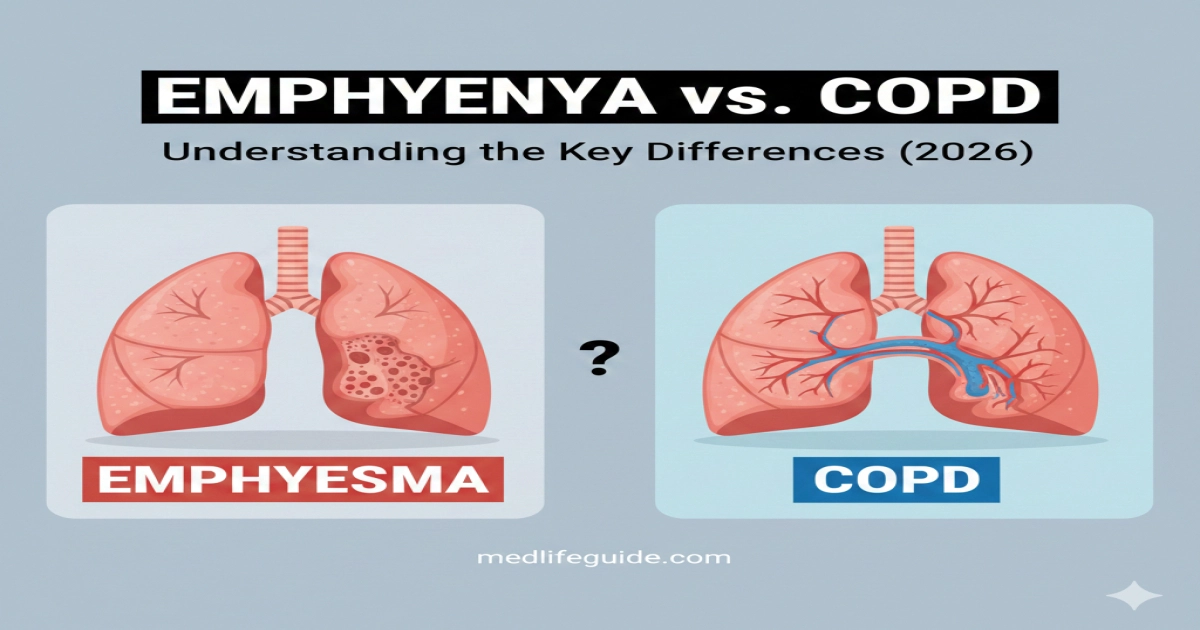
If you have been told you have a lung condition, you might feel confused by the different names doctors use. You may hear “COPD,” “emphysema,” or even “chronic bronchitis.” To understand the difference between emphysema vs COPD, it helps to think of a tree.
COPD is the tree. It stands for Chronic Obstructive Pulmonary Disease.
- “Chronic” means it is a long-term condition that does not go away.
- “Obstructive” means the airflow in your lungs is blocked.
- “Pulmonary Disease” simply means it is a disease of the lungs.
Emphysema is a branch on that tree. It is one specific way your lungs can become blocked. Most people who have COPD actually have a mix of both emphysema and chronic bronchitis.
What Happens Inside Your Lungs?
To breathe well, your lungs need to be stretchy, like a balloon. When you inhale, tiny air sacs called alveoli fill up with air. When you exhale, they shrink back down, pushing the air out.
In Emphysema:
The walls of these tiny air sacs are destroyed. Instead of having many tiny, bouncy sacs, the lungs develop fewer, larger, floppy “holes”.
- Air Trapping: Because the sacs lose their stretch, they cannot push air out effectively. “Old” air gets trapped inside, leaving no room for fresh, oxygen-rich air to come in.
- Low Oxygen: With fewer sacs, your lungs have less surface area to move oxygen into your blood. This is why the main symptom of emphysema is feeling very short of breath.
In COPD (The Umbrella):
While emphysema destroys the air sacs, other parts of COPD, like chronic bronchitis, focus on the “pipes” or airways. In those cases, the tubes become swollen and clogged with thick mucus. Whether the damage is in the sacs (emphysema) or the tubes (bronchitis), the result is the same: it is hard to move air in and out.
Comparing Symptoms: Emphysema vs. Other COPD Types
Since emphysema is a part of COPD, the symptoms often overlap. However, there are small clues that might point to one more than the other:
| Feature | Emphysema Focus | Chronic Bronchitis Focus |
|---|---|---|
| Main Symptom | Severe shortness of breath | Persistent, “wet” cough |
| Mucus/Phlegm | Usually very little | Lots of thick, colored mucus |
| Body Shape | Often lose weight (thin) | May experience more swelling |
| Chest Look | May develop a “barrel chest” | Often sounds congested |
Common Causes and Risk Factors
The biggest cause for both emphysema and COPD is long-term exposure to lung irritants.
- Smoking: This is responsible for up to 90% of cases. The chemicals in smoke damage both the air sacs and the airways.
- Pollution and Dust: Breathing in fumes or dust at work or in a city can also cause damage over many years.
- Genetics: A rare condition called Alpha-1 Antitrypsin Deficiency (AATD) can cause emphysema even in people who have never smoked.
How Doctors Find the Answer (2026 Guidelines)
In 2026, the Global Initiative for Chronic Obstructive Lung Disease (GOLD) updated their rules for finding and treating these conditions.
- Spirometry: This is the most important test. You breathe into a machine that measures how much air you can hold and how fast you can blow it out.
- Imaging: A CT scan or X-ray can show the physical holes in the lung tissue that signal emphysema.
- Blood Tests: Doctors now check for “biomarkers” to see what kind of inflammation is happening in your body.
Modern Treatment: What to Expect
While there is no “cure” that reverses lung damage, the goal in 2026 is “disease stability”—meaning you feel good, have no flare-ups, and can keep doing what you love.
- Inhalers: These help open the airways (bronchodilators) and reduce swelling (steroids).
- Biologics: For people who still have frequent “flare-ups” (exacerbations), new medicines called biologics, like dupilumab, are now used to calm the immune system.
- Pulmonary Rehab: This is a special exercise and education program. It is one of the best ways to improve your daily life and energy.
- Oxygen Therapy: If your blood oxygen is too low, using oxygen can help you stay active and protect your heart.
Summary of Key Differences
- COPD is the name for the whole group of diseases.
- Emphysema is the specific damage to the air sacs.
- Diagnosis usually involves finding a mix of symptoms.
- Early Detection is now the focus in 2026 to prevent heart problems and lung cancer.