
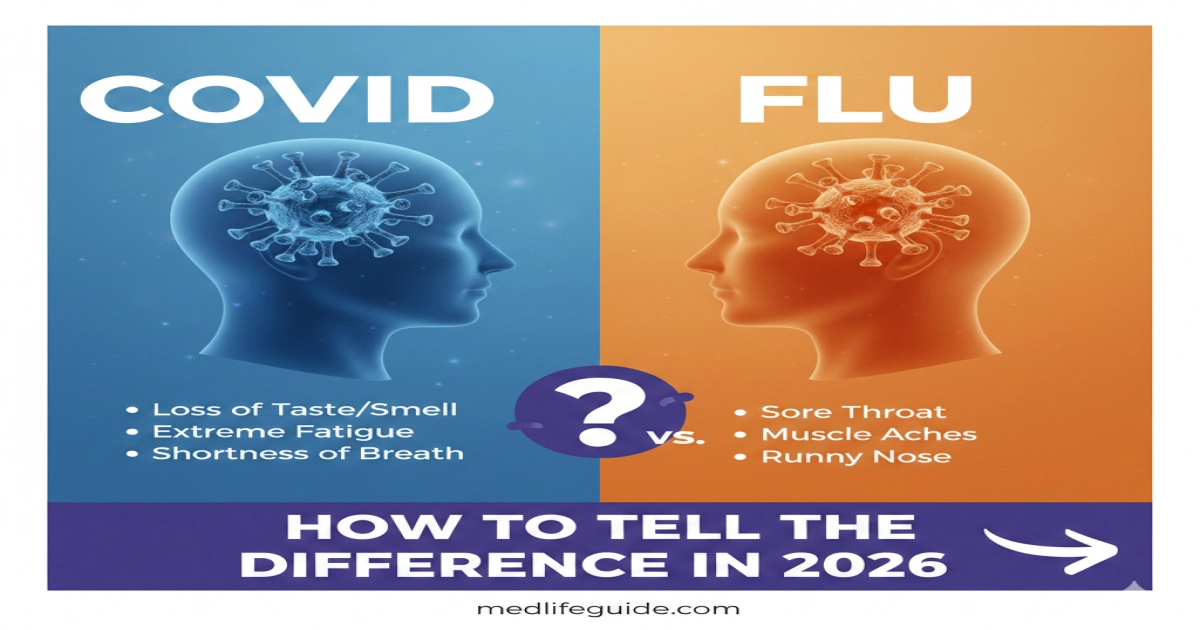
In 2026, COVID-19 and the flu (influenza) remain very similar, but a few key signs can help you tell them apart. COVID-19 often starts slowly, and you might lose your sense of taste or smell.
The flu usually hits you all at once with a high fever and body aches. The only way to be 100% sure is to take a “multiplex” home test that checks for both viruses at the same time.
Medically Reviewed and Compiled by Dr. Adam N. Khan, MD.
Understanding the Two Viruses
It is that time of year again. You wake up with a scratchy throat, a heavy head, and a bit of a cough. Your first thought is likely: “Is it a cold, the flu, or COVID?”
While we have lived with these viruses for years, they still cause confusion. Both are respiratory illnesses, meaning they attack your lungs, nose, and throat. However, they are caused by different viruses. The flu comes from influenza viruses, while COVID-19 comes from the SARS-CoV-2 virus.
In 2026, we are seeing new versions (variants) of both. This makes it harder to tell them apart just by how you feel.
Key Differences at a Glance
Even though they look alike, their “behavior” is different. Here is a simple breakdown of how they usually compare:
| Feature | COVID-19 | Seasonal Flu |
| Onset | Usually gradual (slow buildup) | Sudden (hits like a “ton of bricks”) |
| Fever | Common, but can be mild | Very common and usually high |
| Loss of Taste/Smell | Common with some variants | Very rare |
| Shortness of Breath | More common in severe cases | Rare, unless it leads to pneumonia |
| Contagious Period | Can spread for a longer time | Usually spreadable for about 1 week |
Looking at the Symptoms
To understand which one you might have, you need to look at the “big three” areas: how fast it started, how your body feels, and your breathing.
1. How Fast Did it Start?
This is often the best clue. Most people with the flu can tell you exactly when they started feeling sick. You might feel fine at noon and be stuck in bed by 4:00 PM.
COVID-19 is usually a “creeper.” You might feel “off” on Monday, have a slight cough on Tuesday, and not feel truly sick until Thursday or Friday.
2. The Famous “Loss of Smell”
While newer COVID variants don’t cause this as often as the original 2020 version, it still happens. If your coffee suddenly has no smell or your dinner has no flavor—and your nose isn’t even stuffed up—it is a very strong sign of COVID-19. This almost never happens with the flu.
3. Body Aches and Chills
The flu is famous for making your bones and muscles ache. It often comes with “the shakes” or chills. While COVID can cause these too, the “all-over body pain” is usually more intense with the flu.
How They Spread
Both viruses travel through the air in tiny drops when we talk, sneeze, or cough. However, the virus that causes COVID-19 is much “stickier” and spreads more easily than the flu.
In 2026, Google and health experts focus on “superspreader” events. COVID is much more likely to spread to a large group of people in a crowded room than the flu is. This is why testing is so important before you go to a party or a family dinner if you feel even slightly sick.
Recovery and Complications
Most healthy people will get over both viruses with rest and fluids. But the timeline is different.
- Flu Recovery: Most people feel better in 7 to 10 days.
- COVID Recovery: This can take 2 weeks or longer. Some people also deal with “Long COVID,” where symptoms like tiredness or “brain fog” last for months.
Testing in 2026: The Best Solution
We no longer have to guess. In 2026, “Combo Tests” are the gold standard. You can buy these at any pharmacy. You use one swab, and the test tells you if you have COVID, the Flu, or even RSV (another common virus).
Why test? Because the treatments are different. If you have the flu, your doctor might give you Tamiflu. If you have COVID and are at risk for getting very sick, they might give you Paxlovid. These medicines work best if you take them in the first two days of feeling sick.
When to Call a Doctor
Most of the time, you can stay home, drink soup, and sleep. But you should seek medical help immediately if you experience:
- Trouble breathing or gasping for air.
- Pain or pressure in your chest that doesn’t go away.
- Feeling confused or extra sleepy.
- Skin, lips, or nail beds looking blue or gray.
Final Thoughts
The “COVID vs. Flu” debate isn’t about which one is “worse”—both can be serious. It is about knowing your body and using the tools we have. Wash your hands, stay home when you are sick, and use a home test to get the right answers.
Medical Disclaimer: This article is for informational purposes only and does not constitute medical advice. Always seek the advice of your physician or other qualified health provider with any questions you may have regarding a medical condition. Never disregard professional medical advice or delay in seeking it because of something you have read here.
Explore Medlifeguide