
Medically Reviewed and Compiled by Dr. Adam N. Khan, MD.
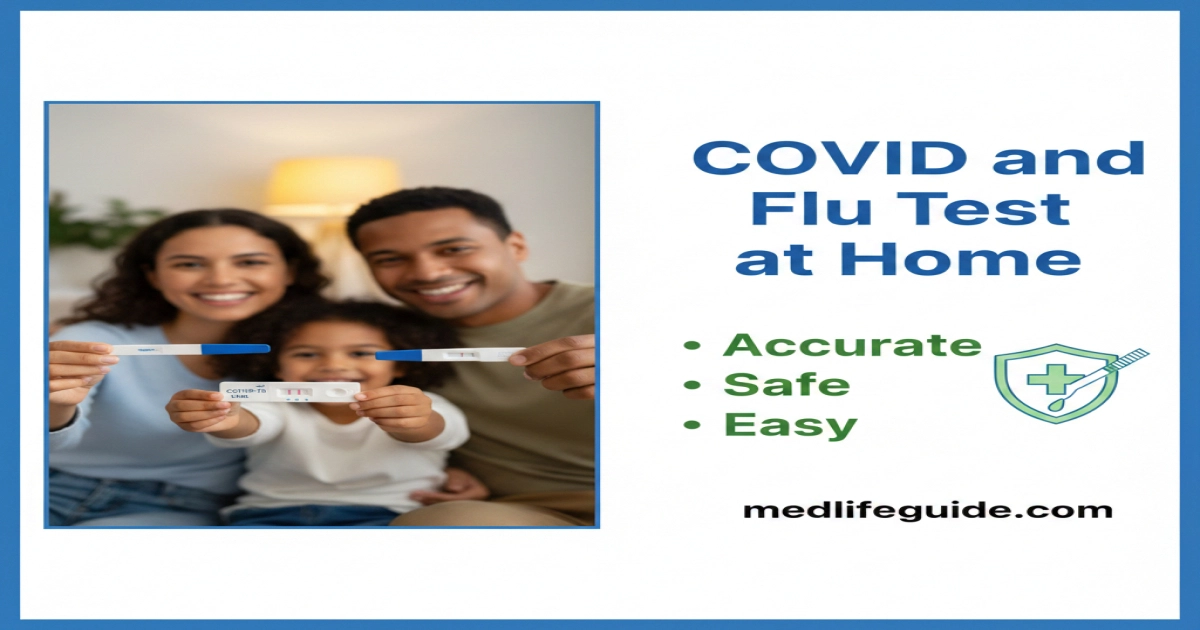
A COVID and Flu Test at Home allows you to check for COVID-19 and influenza without visiting a clinic. These tests use a nasal swab and give results in about 15–30 minutes. Health agencies such as the Centers for Disease Control and Prevention (CDC) confirm that at-home rapid antigen tests ca
Medically Reviewed and Compiled by Dr. Adam N. Khan, MD.
A COVID and Flu Test at Home allows you to check for COVID-19 and influenza without visiting a clinic. These tests use a nasal swab and give results in about 15–30 minutes. Health agencies such as the Centers for Disease Control and Prevention (CDC) confirm that at-home rapid antigen tests can help detect active infection, especially when symptoms are present.
This guide explains how these tests work, how accurate they are, who should use them, and what to do after you get results.
What Is a COVID and Flu Test at Home?
A COVID and Flu Test at Home is usually a rapid antigen test. It checks for proteins from:
- SARS-CoV-2 (the virus that causes COVID-19)
- Influenza A
- Influenza B
The U.S. Food and Drug Administration (FDA) has authorized several combination at-home tests for emergency use. These tests are designed for self-collection using a nasal swab.
According to the CDC, rapid antigen tests work best when viral levels are high, usually during the first few days of symptoms.
How Does an At-Home Combo Test Work?
Step-by-Step Process
- Collect Sample
You gently insert a swab into both nostrils. - Mix With Solution
The swab is placed into a tube with testing liquid. - Apply to Test Device
Drops are added to a test strip or cassette. - Wait for Results
Results appear in about 15–30 minutes.
The test detects viral antigens. If present, lines appear on the strip. Each line represents COVID-19, Flu A, or Flu B.
The FDA explains that these tests are qualitative. They show positive or negative results but do not measure viral load.
Who Should Use a COVID and Flu Test at Home?
The CDC recommends testing if you:
- Have fever, cough, sore throat, or body aches
- Have been exposed to someone with COVID-19 or flu
- Are at high risk for severe illness
- Need quick results before visiting vulnerable people
High-risk groups include:
- Adults age 65 and older
- People with chronic lung, heart, kidney, or liver disease
- People with diabetes
- Pregnant individuals
Symptoms of COVID-19 vs. Flu
COVID-19 and influenza share many symptoms.
Common Symptoms
- Fever or chills
- Cough
- Fatigue
- Headache
- Muscle aches
- Sore throat
Differences
COVID-19 may include:
- Loss of taste or smell
Flu may include:
- Sudden onset of high fever
- More severe body aches early
According to the CDC, symptoms alone cannot reliably tell the difference between COVID-19 and flu. Testing helps guide treatment.
Accuracy of a COVID and Flu Test at Home
Sensitivity and Specificity
Rapid antigen tests are:
- Highly specific (few false positives)
- Moderately sensitive (possible false negatives)
The FDA states that a negative antigen test does not rule out infection, especially if symptoms are present. The CDC recommends repeat testing 48 hours later if symptoms continue.
When Results Are Most Accurate
- Within first 5 days of symptoms
- When viral load is high
- When instructions are followed carefully
Improper swabbing can reduce accuracy.
How to Read Results
Each test kit includes a control line.
- Control line only: Negative
- Control + COVID line: COVID positive
- Control + Flu A line: Flu A positive
- Control + Flu B line: Flu B positive
- Multiple lines: Co-infection possible
If no control line appears, the test is invalid.
What to Do After a Positive Result
If COVID-19 Is Positive
The CDC recommends:
- Isolate at home
- Wear a mask around others
- Monitor symptoms
- Seek care if you have trouble breathing
Antiviral medications like nirmatrelvir/ritonavir (Paxlovid) may be prescribed for high-risk individuals within 5 days of symptom onset.
If Flu Is Positive
The CDC recommends:
- Stay home until fever-free for 24 hours
- Consider antiviral medication (oseltamivir) if high risk
- Drink fluids and rest
Antivirals work best within 48 hours of symptoms.
What If the Test Is Negative?
A negative result does not always mean you are infection-free.
You should:
- Repeat testing in 48 hours if symptoms continue
- Consider PCR testing if symptoms are severe
- Consult a healthcare provider if high risk
The CDC emphasizes repeat testing improves detection accuracy.
Unique Clinical Takeaways
1. Timing of Symptoms Strongly Affects Test Performance
Rapid antigen tests detect viral proteins. Viral levels peak early in both COVID-19 and influenza. Testing too early (within 24 hours of exposure) may produce false negatives. Testing too late may also reduce detection if viral load declines.
Clinical implication:
Patients with strong symptoms but negative tests should repeat testing after 48 hours or seek molecular PCR testing. Early antiviral therapy depends on timely detection.
2. Co-Infection Is Possible but Uncommon
Studies published in peer-reviewed journals report that co-infection with COVID-19 and influenza can occur. Though not common, co-infection may increase the risk of complications in high-risk individuals.
Clinical implication:
If both lines appear positive, medical consultation is advised. Dual antiviral therapy decisions require professional evaluation.
3. Risk Stratification Changes Testing Strategy
Not all patients need the same approach.
High-Risk Patients
- Age 65+
- Immunocompromised
- Chronic illness
These patients should seek medical care promptly even if the at-home test is negative but symptoms are significant.
Low-Risk Patients
- Healthy adults
- Mild symptoms
May manage at home with monitoring and repeat testing.
Clinical implication:
Test interpretation should consider age, medical history, and vaccination status.
4. Vaccination Status Influences Symptom Pattern
Vaccinated individuals may have milder or atypical symptoms. Lower viral load may reduce rapid test sensitivity early in illness.
Clinical implication:
Vaccinated individuals with exposure should repeat testing if initial results are negative.
When to Seek Emergency Care
Call emergency services if you have:
- Difficulty breathing
- Chest pain
- Confusion
- Bluish lips or face
These may indicate severe infection.
Storage and Expiration Considerations
The FDA warns that expired tests may give inaccurate results. Tests should be stored at recommended room temperatures. Avoid extreme heat or freezing.
Always check expiration date before use.
Benefits of Testing at Home
- Quick results
- Reduces spread
- No clinic visit required
- Early treatment decisions
The CDC states early detection helps reduce transmission and complications.
Limitations of At-Home Tests
- Lower sensitivity than PCR
- User error possible
- Cannot detect all variants equally
- Not ideal for asymptomatic screening without repeat testing
Molecular PCR testing remains the gold standard for diagnosis.
Preventive Measures After Testing
Regardless of result:
- Wash hands frequently
- Cover coughs
- Stay home if sick
- Keep vaccinations updated
CDC recommends annual flu vaccination and staying up to date with COVID-19 vaccines.
References and Citations
- Centers for Disease Control and Prevention (CDC) – COVID-19 Testing Overview
- Centers for Disease Control and Prevention (CDC) – Influenza Testing Guidance
- U.S. Food and Drug Administration (FDA) – At-Home COVID-19 and Flu Diagnostic Tests
- National Institutes of Health (NIH) – COVID-19 Treatment Guidelines
- World Health Organization (WHO) – Clinical Management of COVID-19
Medical Disclaimer
This article is for educational purposes only and does not replace professional medical advice, diagnosis, or treatment. Always consult a licensed healthcare provider regarding medical conditions or test interpretation