
Medically Reviewed and Compiled by Dr. Adam N. Khan, MD.
Chronic Obstructive Pulmonary Disease (COPD) remains one of the leading causes of morbidity worldwide. In 2025, clinical awareness of COPD symptoms has evolved, emphasizing earlier detection, symptom variability, and patient-centered assessment rather than late-stage diagnosis alone. COPD is not
Medically Reviewed and Compiled by Dr. Adam N. Khan, MD.
Chronic Obstructive Pulmonary Disease (COPD) remains one of the leading causes of morbidity worldwide. In 2025, clinical awareness of COPD symptoms has evolved, emphasizing earlier detection, symptom variability, and patient-centered assessment rather than late-stage diagnosis alone. COPD is not a single disease but a progressive spectrum, primarily including chronic bronchitis and emphysema, characterized by persistent airflow limitation and chronic respiratory symptoms.
This article provides an in-depth, evidence-based overview of COPD symptoms in 2025, integrating classic clinical signs with emerging insights from modern pulmonology and patient experience research.
What Is COPD?
COPD is a chronic, progressive lung disease marked by irreversible airflow obstruction. It develops primarily due to long-term exposure to harmful particles or gases, most commonly cigarette smoke, but also biomass fuel exposure, occupational dust, and environmental pollution.
Unlike asthma, COPD airflow limitation is not fully reversible and progressively worsens over time.
Why Understanding COPD Symptoms in 2025 Matters
Early COPD symptoms are frequently under-recognized or misattributed to aging, poor fitness, or recurrent infections. In 2025, clinical guidelines emphasize:
- Early symptom recognition
- Risk-based screening
- Symptom burden over spirometry alone
- Impact on daily function and quality of life
Timely recognition allows earlier intervention, slowing disease progression and reducing exacerbations.
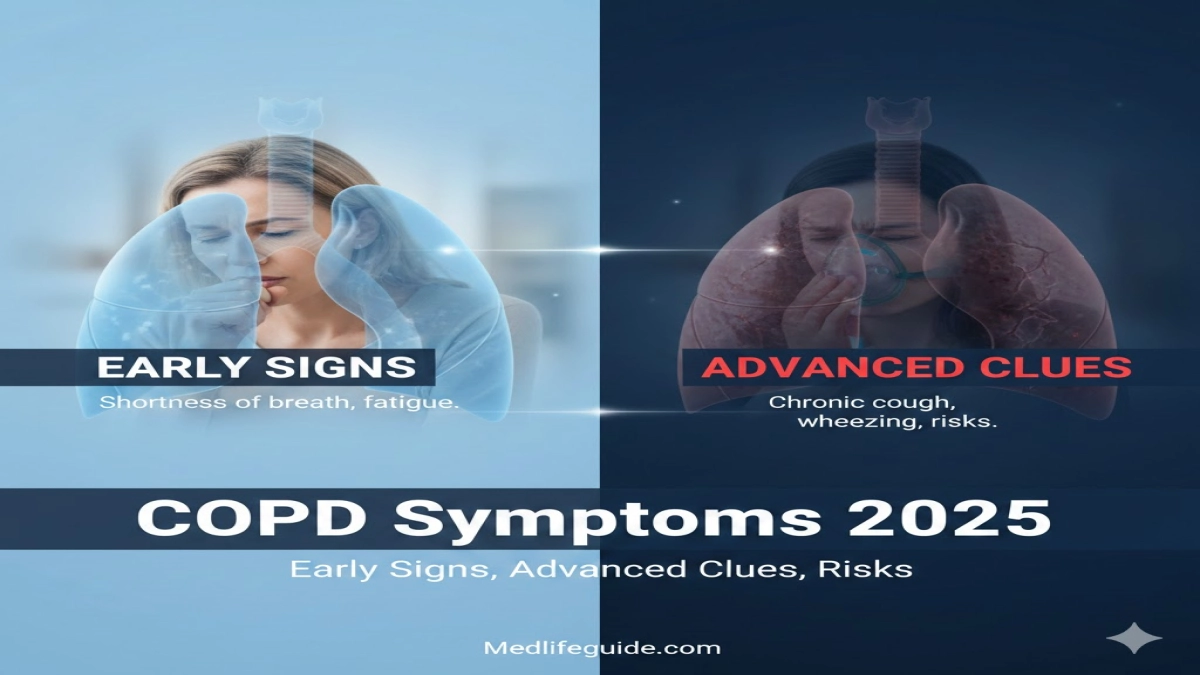
Early COPD Symptoms (Mild Stage)
Persistent Shortness of Breath
Initially noticeable during exertion such as climbing stairs or walking uphill. Patients often describe this as “getting out of breath faster than before.”
Chronic Cough
A daily cough lasting months or years, often dismissed as a “smoker’s cough.” It may be dry or productive.
Increased Mucus Production
Excess sputum, especially in the morning, reflects chronic airway inflammation.
Subtle Fatigue
Reduced oxygen efficiency leads to early tiredness, even with routine activities.
Frequent Respiratory Infections
Recurrent bronchitis or prolonged recovery from colds may be an early warning sign.
Moderate COPD Symptoms
As airflow limitation progresses, symptoms become more persistent and disruptive.
Worsening Dyspnea
Shortness of breath occurs with minimal activity and may limit daily tasks.
Wheezing and Chest Tightness
Airflow obstruction leads to audible wheezing, especially during exhalation.
Chronic Sputum Changes
Thicker, discolored mucus may indicate bacterial colonization or infection risk.
Reduced Exercise Tolerance
Patients avoid activity due to breathlessness, leading to deconditioning.
Advanced COPD Symptoms (Severe to Very Severe)
Breathlessness at Rest
Severe airflow obstruction results in dyspnea even while sitting or lying down.
Cyanosis
Bluish discoloration of lips or fingertips due to low blood oxygen levels.
Unintended Weight Loss
Increased energy expenditure for breathing leads to muscle wasting.
Swelling of Ankles or Legs
Right-sided heart strain (cor pulmonale) causes peripheral edema.
Chronic Hypoxemia Symptoms
Confusion, headaches, and sleep disturbances may occur.
COPD Exacerbation Symptoms (Flare-Ups)
COPD exacerbations are acute worsening episodes requiring urgent management.
- Sudden Increase in Breathlessness
- Sharp Rise in Sputum Volume or Purulence
- Fever or Flu-Like Symptoms
- Increased Wheezing or Chest Tightness
- Reduced Response to Inhalers
Frequent exacerbations accelerate lung function decline and increase mortality risk.
COPD Symptoms by Disease Type
Chronic Bronchitis-Dominant COPD
- Daily productive cough for at least three months over two years
- Thick mucus
- Frequent infections
- Cyanosis (“blue bloater” phenotype)
Emphysema-Dominant COPD
- Severe breathlessness
- Minimal cough
- Weight loss
- Barrel-shaped chest (“pink puffer” phenotype)
Unique Clinical Takeaways
1. Symptom Burden Often Precedes Spirometry Abnormalities
In 2025, research highlights that many patients experience significant COPD symptoms before spirometry confirms airflow obstruction. Chronic cough, dyspnea on exertion, and fatigue may appear years earlier. Clinicians increasingly rely on symptom questionnaires and exposure history rather than lung function alone for early detection.
Actionable Insight: Patients with risk factors and persistent respiratory symptoms should be evaluated even if initial spirometry appears near-normal.
2. COPD Symptoms Are Frequently Misdiagnosed as Cardiac or Aging Issues
Shortness of breath and fatigue in older adults are commonly attributed to heart disease or aging. Studies show delayed COPD diagnosis due to overlapping symptoms with heart failure, anemia, and obesity-related deconditioning.
Actionable Insight: Differential diagnosis using combined cardiopulmonary assessment reduces missed or late COPD diagnoses.
3. Women Experience Different Symptom Patterns
In 2025, sex-based research confirms that women with COPD often report:
- Greater breathlessness
- More frequent exacerbations
- Higher anxiety related to symptoms
Despite similar lung function, symptom severity may be higher compared to men.
Actionable Insight: Symptom perception and reporting should be weighted equally with objective measures, particularly in female patients.
4. Environmental and Indoor Pollution Are Rising Risk Modifiers
Beyond smoking, indoor air pollution from cooking fuels and urban particulate exposure increasingly contributes to COPD symptoms globally.
Actionable Insight: Non-smokers with chronic respiratory symptoms should still be evaluated for COPD if exposure history is present.
Psychological and Cognitive Symptoms of COPD
COPD is increasingly recognized as a systemic disease.
Anxiety and Depression
Chronic breathlessness triggers panic cycles and depressive symptoms.
Cognitive Impairment
Chronic hypoxia may impair memory, attention, and executive function.
Sleep Disturbances
Nocturnal hypoxia and coughing disrupt sleep architecture.
When to Seek Medical Evaluation
Immediate evaluation is warranted if any of the following occur:
- Rapid worsening of breathlessness
- Chest pain
- Confusion or drowsiness
- Blue lips or fingernails
- Swelling of legs with breathing difficulty
Early diagnosis significantly improves long-term outcomes.
How COPD Symptoms Are Diagnosed in 2025
Clinical Assessment
- Symptom history
- Exposure history
- Functional limitation scoring
Diagnostic Testing
- Spirometry
- Pulse oximetry
- Chest imaging
- Alpha-1 antitrypsin testing in selected cases
Living With COPD Symptoms
Modern COPD management focuses on symptom control and quality of life.
Symptom Monitoring
Daily symptom tracking reduces exacerbation severity.
Pulmonary Rehabilitation
Improves exercise tolerance and reduces breathlessness.
Vaccinations
Reduce infection-triggered symptom worsening.