
Medically Reviewed and Compiled by Dr. Adam N. Khan, MD.
Quick Answer: What is the Main Difference?
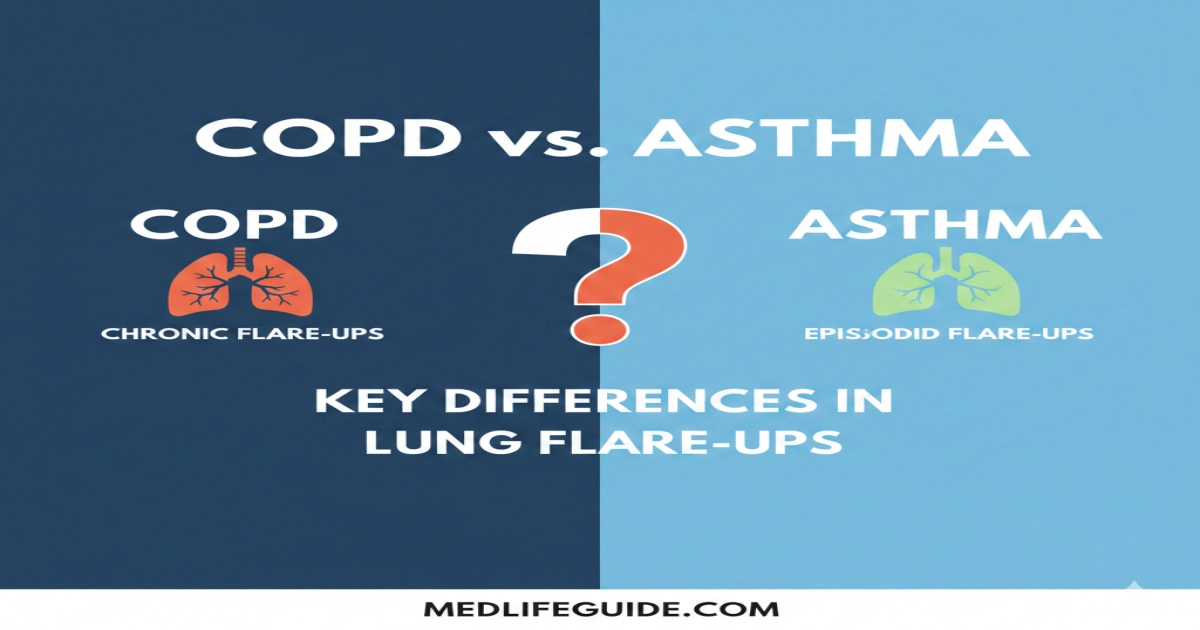
While both conditions make it hard to breathe, the main difference lies in recovery and cause. An asthma attack is usually a sudden reaction to a trigger (like pollen or dust), and lung function typically returns to normal after treatment. A COPD exacerbation is a sustained worsening of symptoms (like extra mucus and coughing) in people with permanent lung damage, often triggered by an infection, and it may lead to a new, lower “baseline” of health.
Understanding Your Breath: COPD vs. Asthma
When you can’t catch your breath, the labels don’t seem to matter as much as the relief. However, knowing whether you are dealing with a COPD exacerbation or an asthma attack is vital for getting the right care. Both involve the airways narrowing, but the “why” and “how” are quite different.
What is an Asthma Attack?
Think of an asthma attack like a “false alarm” that goes too far. Your immune system overreacts to something—smoke, cold air, or pet dander. The muscles around your airways tighten (bronchospasm), and the lining swells.
The hallmark of asthma is that it is reversible. Once the trigger is gone and the medicine kicks in, your lungs usually go back to feeling clear.
What is a COPD Exacerbation?
COPD (Chronic Obstructive Pulmonary Disease) is different because the damage to the lungs is permanent. An exacerbation isn’t just a bad day; it’s a “flare-up” where symptoms get significantly worse than your usual daily struggle.
Instead of just a quick tightening, COPD exacerbations often involve a massive increase in mucus production and a change in the color of that mucus. It takes much longer to recover from a COPD flare-up than an asthma attack—sometimes weeks.
Key Differences in Symptoms
While both cause wheezing and chest tightness, the “flavor” of the discomfort varies:
| Feature | Asthma Attack | COPD Exacerbation |
| Onset | Sudden (minutes to hours). | Gradual (days). |
| Mucus | Usually clear or none. | Thick, increased volume, often yellow/green. |
| Recovery | Quick with a “rescue” inhaler. | Slow; often requires steroids or antibiotics. |
| Cough | Often worse at night or early morning. | A constant “smoker’s cough” that gets heavier. |
Triggers: What Starts the Fire?
Understanding what sets off your lungs can help you identify which condition is acting up.
Common Asthma Triggers:
- Allergens: Pollen, mold, dust mites.
- Environment: Strong perfumes, cold weather, or exercise.
- Emotions: Stress or even laughing too hard can trigger a spasm.
Common COPD Triggers:
- Infections: The #1 cause is a viral or bacterial lung infection (like the flu or pneumonia).
- Air Pollution: Smog, wood smoke, or chemical fumes.
- Weather Changes: Extreme heat or high humidity.
How Doctors Treat the Two
Because the underlying causes differ, the “rescue” plan differs too.
Treating Asthma Attacks
The goal is to stop the muscle spasms. Doctors use short-acting bronchodilators (like Albuterol). If the attack is severe, a short burst of oral steroids helps bring down the swelling.
Treating COPD Exacerbations
Since many COPD flare-ups are caused by bacteria, antibiotics are frequently prescribed alongside steroids. Doctors also focus on clearing the thick mucus out of the lungs. Oxygen therapy is more common during a COPD flare than during a typical asthma attack.
Why the Distinction Matters for Your Future
If you have asthma, your goal is “zero symptoms.” With the right maintenance, you should be able to run, jump, and sleep without coughing.
If you have COPD, the goal is “stability.” Every time you have a major exacerbation, your lungs may lose a little bit of their power that they never get back. Preventing these flare-ups is the key to living a longer, more active life.
When to Seek Emergency Help
Regardless of your diagnosis, head to the ER if:
- You are struggling to speak in full sentences.
- Your fingernails or lips are turning blue/gray.
- Your rescue inhaler isn’t helping after 15 minutes.
- You feel confused or extremely sleepy.