
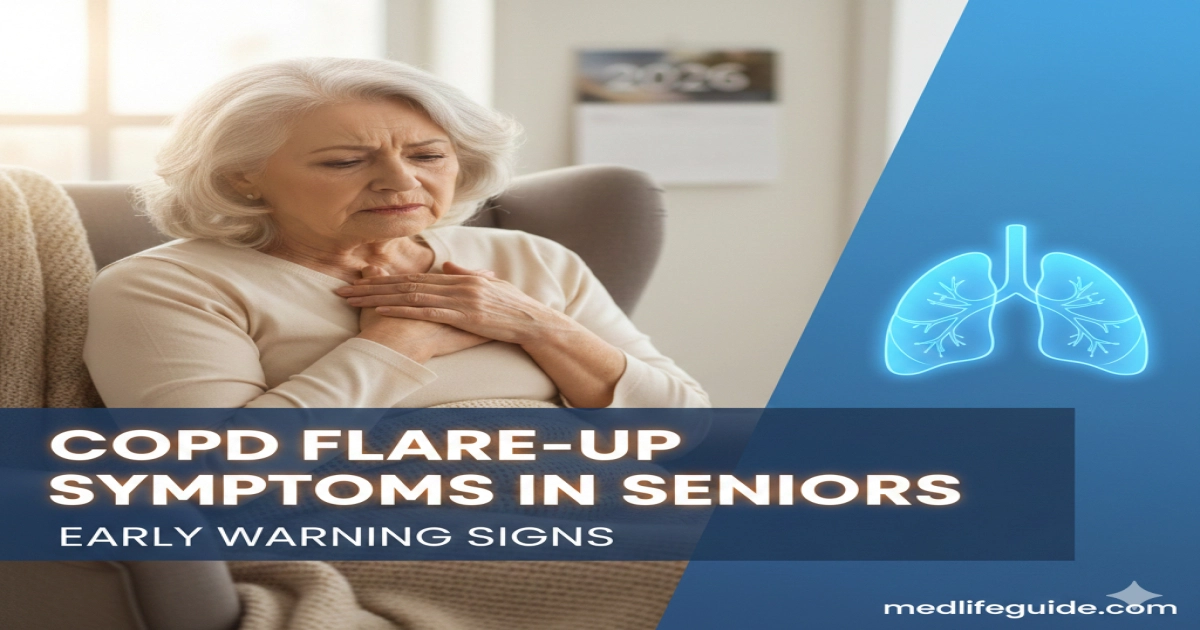
Medically Reviewed and Compiled by Dr. Adam N. Khan, MD.
Quick Answer: What is a COPD Exacerbation?
A COPD exacerbation, or “flare-up,” is a sudden worsening of your usual lung symptoms. For older adults, this usually means a sharp increase in shortness of breath, a cough that won’t quit, and a change in the color or thickness of mucus (phlegm). These flare-ups are serious because they can lead to permanent lung damage or hospital visits if not caught early.
Understanding COPD Flare-ups in Older Adults
If you or a loved one are living with Chronic Obstructive Pulmonary Disease (COPD), you know that some days are better than others. However, there is a big difference between a “bad day” and a true medical flare-up.
In the medical world, we call this an exacerbation. As we age, our bodies don’t bounce back as quickly as they once did. For a senior, a flare-up isn’t just an inconvenience; it’s a sign that the lungs are under heavy stress, often due to an infection, air pollution, or even a change in the weather.
In this guide, we will break down exactly what to look for, how to tell if it’s an emergency, and what you can do to keep your lungs as strong as possible in 2026.
The Early Warning Signs: What to Watch For
Early detection is the “secret sauce” to avoiding the hospital. Most flare-ups don’t happen out of nowhere; they leave breadcrumbs.
1. Changes in Your Breathing
The most common sign is feeling short of breath during activities that were easy just yesterday. If walking to the mailbox or getting dressed makes you huff and puff more than usual, your lungs are struggling.
2. The “Mucus” Factor
Pay attention to what you cough up. In 2026, doctors still emphasize that the “color code” of your phlegm is one of the best indicators of an infection:
- Normal: Clear or white.
- Warning: Yellow, green, or tan.
- Action Needed: If the mucus becomes thicker or you are producing much more of it than usual.
3. Frequent Coughing and Wheezing

You might notice a “whistling” sound when you breathe. This is called wheezing. If your cough becomes deeper, more frequent, or starts keeping you up at night, it is a clear sign of an impending exacerbation.
4. Unusual Tiredness (Fatigue)
For many seniors, the first sign isn’t breathing—it’s energy. If you feel like you’ve run a marathon just sitting in your chair, or if you find yourself needing extra naps, your body is likely using all its energy just to help you breathe.
Red Flags: When to Call Emergency Services
Sometimes, home care isn’t enough. If you see these “Red Flag” symptoms, do not wait for a doctor’s appointment. Call emergency services immediately:
- Blue Tint: Your lips or fingernails look blue or gray (this means you aren’t getting enough oxygen).
- Confusion: Feeling foggy, suddenly sleepy, or acting out of character. This can happen when carbon dioxide builds up in the blood.
- Chest Pain: Any sharp or heavy pain in the chest.
- Rapid Heartbeat: Feeling like your heart is racing or skipping beats.
- Failure of Rescue Meds: If you use your “quick-relief” inhaler and it doesn’t help within a few minutes.
Common Triggers for Seniors in 2026
Why do these flare-ups happen? For older adults, the environment plays a huge role.
| Trigger | Why it Matters |
| Infections | Colds, the flu, and COVID-19 are the #1 cause of flare-ups. |
| Air Quality | Smoke, strong perfumes, and even dust from cleaning can irritate fragile lungs. |
| Weather | Very cold air or high humidity makes it harder for the lungs to move air. |
| Missed Meds | Forgetting an inhaler dose allows inflammation to build up. |
How to Manage a Flare-Up at Home
If you catch it early, your doctor may give you a “COPD Action Plan.” This is a literal roadmap for what to do when things get rocky.
Follow the “Traffic Light” System
- Green Zone: You feel “normal.” Keep taking your daily meds and staying active.
- Yellow Zone: You have the symptoms mentioned above (more mucus, slight wheeze). Increase your rescue inhaler use as prescribed and call your doctor. They may start you on a 5-day course of steroids or antibiotics.
- Red Zone: You are struggling to speak or catch your breath. Get emergency help.
Pursed-Lip Breathing
This is a simple trick that helps get trapped air out of your lungs. Breathe in through your nose for two seconds. Then, pucker your lips (like you are going to blow out a candle) and breathe out slowly for four seconds.
Preventing Future Flare-Ups
The goal is to stay in the “Green Zone” as much as possible. Here is how seniors are staying healthy in 2026:
1. Stay Up-to-Date on Vaccines
Vaccines are your shield. Ensure you have your annual flu shot and the latest pneumonia and respiratory virus protections. These prevent the infections that lead to the most dangerous flare-ups.
2. Use a Spacer with Your Inhaler
Many seniors have a little trouble with the “spray and breathe” timing of inhalers. Using a spacer (a plastic tube that attaches to the inhaler) makes sure the medicine actually reaches your lungs instead of just hitting the back of your throat.
3. Keep the Air Clean
Use an air purifier at home and avoid being near wood-burning stoves or fireplaces. If it’s a “bad air day” outside, stay indoors with the windows closed.
4. Pulmonary Rehabilitation
Ask your doctor about a “Lung Rehab” program. It’s like a gym for people with lung issues. They teach you how to exercise safely, which makes your heart and muscles more efficient so your lungs don’t have to work as hard.
The Bottom Line
Living with COPD means being a detective. You have to watch for the small changes in your body. If you notice you are more tired, coughing more, or seeing darker mucus, take it seriously. Treating a flare-up on day one is much easier—and safer—than treating it on day five.
By staying active, using your inhalers correctly, and keeping your doctor in the loop, you can maintain your independence and keep your lungs as healthy as possible.