
Medically Reviewed and Compiled by Dr. Adam N. Khan, MD.
Quick Answer: How Long Does Recovery Take?
Most people hospitalized for a COPD exacerbation begin to feel better within 7 to 14 days, but a full recovery of lung function and energy levels usually takes 4 to 8 weeks. In some cases, especially if the flare-up was severe, it may take up to thre
Medically Reviewed and Compiled by Dr. Adam N. Khan, MD.
Quick Answer: How Long Does Recovery Take?
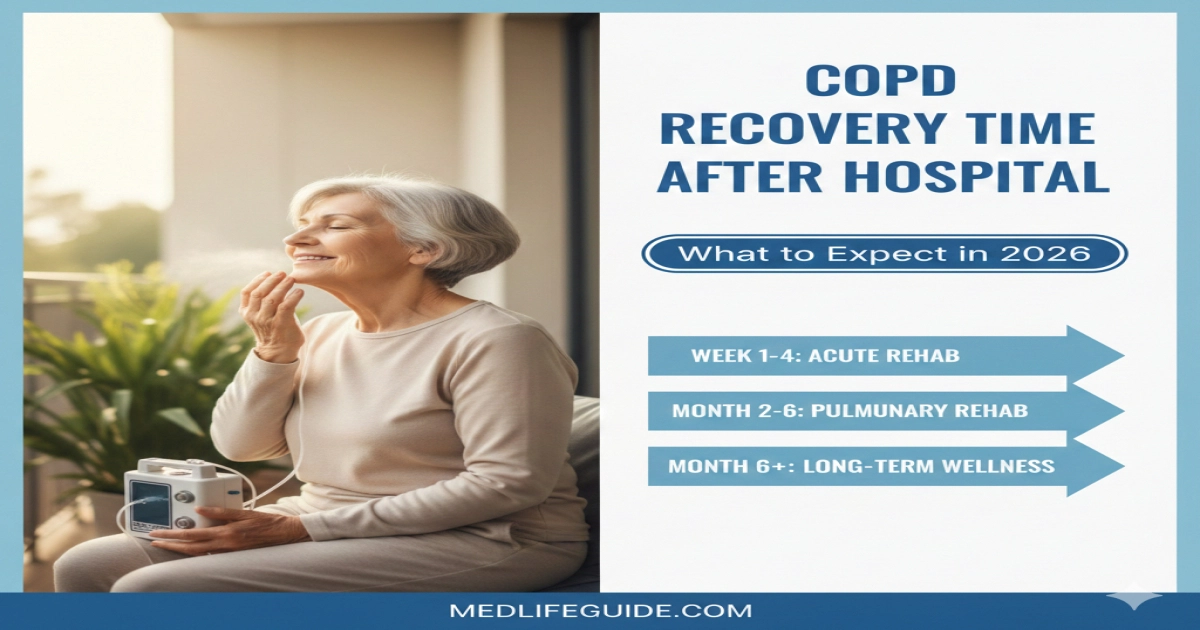
Most people hospitalized for a COPD exacerbation begin to feel better within 7 to 14 days, but a full recovery of lung function and energy levels usually takes 4 to 8 weeks. In some cases, especially if the flare-up was severe, it may take up to three months to return to your “baseline” or normal daily strength.
The Road Home: Understanding COPD Recovery
When you are discharged from the hospital after a COPD (Chronic Obstructive Pulmonary Disease) flare-up, it’s normal to feel a mix of relief and exhaustion. A flare-up, or exacerbation, is a major event for your body. Your lungs have been working overtime, and your heart has been under stress.
Recovery isn’t like a light switch that flips back to “on.” It’s more like a slow climb up a hill. Understanding the timeline and what affects your progress can help you stay patient and focused on getting better.
The First Two Weeks: The “Rest and Reset” Phase
The first 14 days after leaving the hospital are the most critical. This is the window where the risk of going back to the hospital is highest.
- Oxygen Levels: You might find that you need supplemental oxygen more often than usual, even if you didn’t need it much before.
- Fatigue: Expect to feel very tired. Doing simple things like showering or making a sandwich might leave you winded.
- Medication Management: You will likely be on a “tapering” dose of steroids (like prednisone) and increased nebulizer treatments. Following this schedule exactly is vital to keep inflammation down.
One Month In: Finding Your Strength
By the end of the first month, the “brain fog” and extreme tiredness usually start to lift.
- Physical Activity: This is often when doctors recommend starting Pulmonary Rehabilitation. This is a supervised exercise program that teaches you how to breathe more efficiently while moving.
- Sputum and Cough: Your cough should be less frequent, and any mucus you cough up should be clearer and easier to clear.
Two to Three Months: Reaching the Baseline
By the 8-to-12-week mark, most patients reach their “new normal.” While COPD is a chronic condition, the goal of recovery is to get back to the level of activity you had before the flare-up started.
Factors That Influence Your Recovery Time
Not everyone heals at the same speed. Several factors play a role in how quickly you’ll be back on your feet:
- The Severity of the Flare-up: If you required a ventilator or stayed in the ICU, your muscles (including your breathing muscles) will need much more time to regain strength.
- Age and General Health: If you have other conditions like heart disease or diabetes, your body has to divide its energy between healing your lungs and managing those other issues.
- Nutrition: Breathing with COPD burns a lot of calories. If you aren’t eating enough protein and healthy fats, your body won’t have the fuel it needs to repair lung tissue.
- Smoking Status: It goes without saying, but recovery is significantly slower—and sometimes impossible—if the lungs are still being exposed to smoke.
5 Essential Steps to Stay Out of the Hospital
The goal of recovery isn’t just to feel better today; it’s to prevent the next hospital stay. Here is what the latest medical data from 2026 suggests for long-term stability:
1. The “Golden” Follow-Up Appointment
See your primary doctor or pulmonologist within 5 to 7 days of leaving the hospital. They need to check if your lungs are clearing up and adjust your maintenance inhalers.
2. Master Your Inhaler Technique
Many people use their inhalers incorrectly without realizing it. Ask your nurse or pharmacist to watch you use it. If the medicine doesn’t reach your lower airways, it can’t help you heal.
3. Watch the Air Quality
In 2026, we have better tools than ever to track air quality. Use a weather app to check for high pollen, smog, or extreme humidity. On “bad air” days, stay indoors with filtered air to avoid irritating your healing lungs.
4. Stay Hydrated
Thinning out mucus is the best way to get it out of your lungs. Drink plenty of water (unless your doctor has told you to limit fluids for heart reasons) to keep that mucus from getting “stuck.”
5. Recognize Your “Red Flags”
Know the difference between a “bad day” and a “danger day.” If you have a fever, your mucus turns dark green or brown, or you can’t speak in full sentences, call your doctor immediately.
How to Eat for Recovery
Your diaphragm—the main muscle used for breathing—needs energy. When you have COPD, you might feel too full to eat big meals because your lungs are taking up more space in your chest.
- Small, Frequent Meals: Eat 5 or 6 small snacks instead of 3 large meals.
- High Protein: Include eggs, lean meats, or beans to help rebuild muscle.
- Limit Salt: Too much salt causes water retention, which can make breathing harder.
A Note on Mental Health
It is very common to feel anxious or depressed after a hospital stay. The feeling of “not being able to catch your breath” is scary. This anxiety can actually make your breathing shorter and faster. Don’t be afraid to talk to your doctor about these feelings; managing your stress is a huge part of physical recovery.
Summary Checklist for Home Recovery
| Timeline | Goal | Focus Area |
| Days 1-7 | Safety | Finish all antibiotics/steroids; avoid crowds. |
| Days 8-14 | Mobility | Walk short distances inside the house. |
| Weeks 3-6 | Strength | Start Pulmonary Rehab; focus on nutrition. |
| Months 2+ | Maintenance | Use daily inhalers; get your flu/pneumonia shots. |