
Medically Reviewed and Compiled by Dr. Adam N. Khan, MD.
Quick Summary
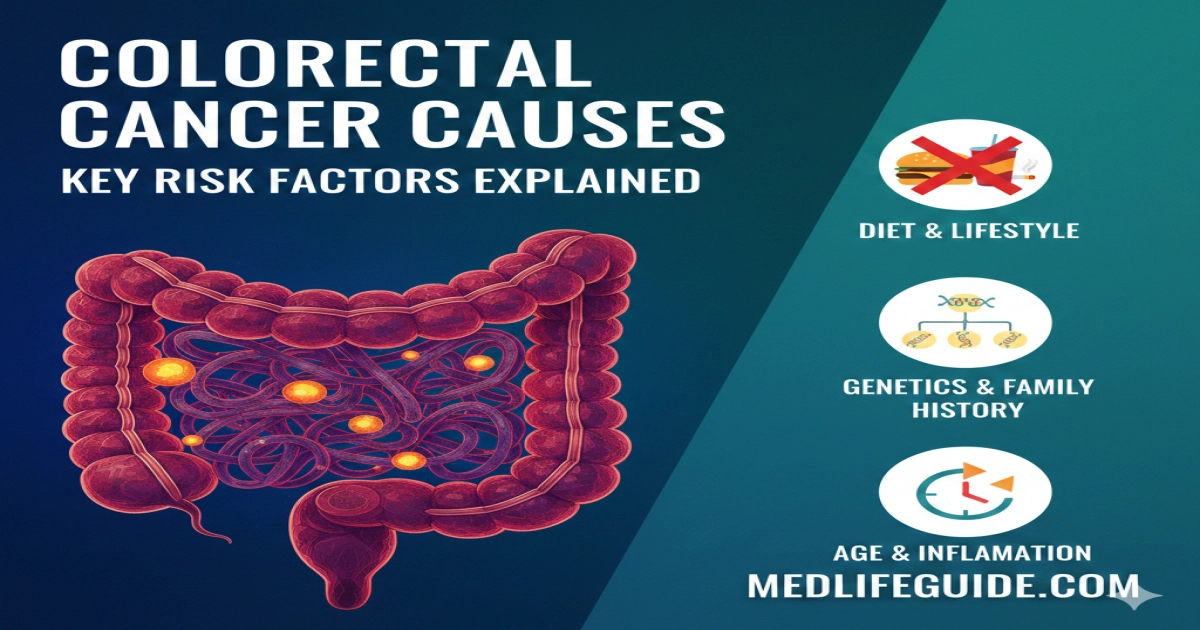
Colorectal cancer develops when abnormal cells grow uncontrollably in the colon or rectum. The primary colorectal cancer causes include genetic mutations, aging, inflammatory bowel disease, certain inherited syndromes, lifestyle factors such as diet and obesity, smoking, alcoho
Medically Reviewed and Compiled by Dr. Adam N. Khan, MD.
Quick Summary
Colorectal cancer develops when abnormal cells grow uncontrollably in the colon or rectum. The primary colorectal cancer causes include genetic mutations, aging, inflammatory bowel disease, certain inherited syndromes, lifestyle factors such as diet and obesity, smoking, alcohol use, and type 2 diabetes. Most cases begin as benign polyps that slowly transform into cancer over time. Early screening significantly reduces risk by detecting and removing precancerous growths.
Understanding Colorectal Cancer
Colorectal cancer refers to cancer that starts in the colon or rectum, which are parts of the large intestine. According to the American Cancer Society (ACS), it is one of the most common cancers in the United States for both men and women.
Most colorectal cancers begin as adenomatous polyps—small growths on the inner lining of the colon. Over several years, some polyps accumulate genetic mutations and develop into cancer.
Understanding colorectal cancer causes requires examining:
- Genetic mutations (inherited and acquired)
- Chronic inflammation
- Lifestyle and environmental exposures
- Age-related cellular changes
- Metabolic disorders
How Colorectal Cancer Develops
The Adenoma–Carcinoma Sequence
The majority of cases follow a well-established biological pathway called the adenoma–carcinoma sequence. According to the National Cancer Institute (NCI):
- Normal colon cells acquire mutations.
- These cells form adenomatous polyps.
- Additional mutations accumulate.
- The polyp becomes invasive cancer.
Key genes commonly involved:
- APC gene
- KRAS
- TP53
These mutations disrupt normal cell growth regulation and allow uncontrolled cell division.
Major Colorectal Cancer Causes and Risk Factors
1. Age
Age is the strongest risk factor.
- Risk increases significantly after age 45.
- Most cases occur in people over 50.
- However, recent data from the Centers for Disease Control and Prevention (CDC) show increasing cases in adults under 50.
Aging leads to accumulated DNA damage and reduced cellular repair mechanisms.
2. Inherited Genetic Syndromes
Certain hereditary conditions greatly increase risk.
Lynch Syndrome (Hereditary Nonpolyposis Colorectal Cancer)
- Caused by mutations in DNA mismatch repair genes.
- Increases risk of colon, endometrial, and other cancers.
- Responsible for about 3–5% of colorectal cancers (NCI).
Familial Adenomatous Polyposis (FAP)
- Caused by APC gene mutation.
- Leads to hundreds or thousands of colon polyps.
- Nearly 100% lifetime risk if untreated.
Genetic counseling is recommended for individuals with strong family history.
3. Family History Without Known Syndrome
Even without identified genetic syndromes:
- Having one first-degree relative with colorectal cancer doubles risk.
- Risk increases further if diagnosed before age 60.
This may reflect shared genetic and environmental factors.
4. Inflammatory Bowel Disease (IBD)
Chronic inflammation increases cancer risk.
- Ulcerative colitis
- Crohn’s disease involving the colon
Long-standing inflammation damages colon lining cells. According to the American College of Gastroenterology (ACG), risk rises with:
- Disease duration over 8–10 years
- Extensive colon involvement
- Poorly controlled inflammation
5. Diet and Nutrition
Dietary patterns strongly influence colorectal cancer causes.
High Red and Processed Meat Intake
The World Health Organization (WHO) classifies processed meat as a carcinogen and red meat as probably carcinogenic.
Mechanisms include:
- Formation of carcinogenic compounds during high-heat cooking
- Nitrites in processed meats
- Increased bile acid production
Low Fiber Intake
Fiber supports healthy gut bacteria and reduces colon transit time. Low fiber diets are associated with increased risk.
6. Obesity
Obesity increases colorectal cancer risk, particularly in men.
Mechanisms include:
- Chronic low-grade inflammation
- Insulin resistance
- Elevated insulin-like growth factor (IGF-1)
The National Institutes of Health (NIH) links excess body fat to higher rates of colorectal cancer incidence and mortality.
7. Physical Inactivity
Sedentary behavior independently raises risk.
Regular physical activity:
- Improves insulin sensitivity
- Reduces inflammation
- Enhances immune surveillance
The CDC recommends at least 150 minutes of moderate activity weekly.
8. Smoking
Tobacco use contributes to colorectal cancer development.
Long-term smokers are more likely to:
- Develop colon polyps
- Be diagnosed with colorectal cancer
- Die from colorectal cancer
Carcinogens in tobacco cause DNA mutations affecting colon cells.
9. Heavy Alcohol Use
Alcohol increases risk in a dose-dependent manner.
Mechanisms include:
- Acetaldehyde toxicity
- Oxidative stress
- Folate metabolism disruption
The American Cancer Society advises limiting alcohol intake to reduce cancer risk.
10. Type 2 Diabetes
Type 2 diabetes is associated with higher colorectal cancer risk.
Possible reasons:
- Hyperinsulinemia
- Insulin resistance
- Chronic inflammation
Research published in peer-reviewed medical journals confirms this association, particularly in men.
Unique Clinical Takeaways
1. Right-Sided vs. Left-Sided Tumor Risk Patterns
Clinical experience shows important differences between right-sided and left-sided colon cancers.
- Right-sided cancers are more often linked with Lynch syndrome and microsatellite instability.
- Left-sided cancers are more frequently associated with traditional adenoma progression and lifestyle factors.
This distinction affects screening strategy and genetic evaluation. Patients with right-sided tumors diagnosed under age 50 should be evaluated for hereditary syndromes.
2. The Role of Gut Microbiome Imbalance
Emerging research identifies specific bacterial patterns associated with colorectal cancer, including overrepresentation of Fusobacterium nucleatum.
Microbiome imbalance may:
- Promote inflammation
- Disrupt immune response
- Facilitate tumor growth
Although not yet a direct screening tool, this insight highlights diet, fiber intake, and antibiotic stewardship as preventive considerations.
3. Missed Polyps as a Modifiable Cause
Interval cancers—those diagnosed between scheduled screenings—are often linked to:
- Incomplete colonoscopy
- Poor bowel preparation
- Flat or serrated polyps
Serrated polyps are harder to detect but carry malignant potential.
Clinical implication:
- High-quality colonoscopy with adequate bowel prep is essential.
- Patients with inadequate prep should repeat colonoscopy sooner.
4. Chronic Inflammation as a Central Mechanism
Many colorectal cancer causes share one pathway: chronic inflammation.
- Obesity
- Smoking
- IBD
- Poor diet
These all promote inflammatory cytokines that damage DNA.
Managing systemic inflammation may reduce long-term risk.
Can Colorectal Cancer Be Prevented?
While not all causes are preventable, risk can be reduced.
Evidence-Based Prevention Strategies
- Routine screening starting at age 45 (ACS guidelines)
- Maintain healthy weight
- Eat high-fiber diet
- Limit processed meats
- Avoid smoking
- Limit alcohol
- Stay physically active
Screening methods include:
- Colonoscopy
- Stool-based tests
- CT colonography
Colonoscopy remains the gold standard because it allows removal of precancerous polyps.
When to Seek Medical Evaluation
Although this article focuses on colorectal cancer causes, early detection depends on recognizing warning signs:
- Rectal bleeding
- Persistent change in bowel habits
- Unexplained weight loss
- Iron deficiency anemia
Any of these symptoms require prompt medical evaluation.
Key Takeaways
- Most colorectal cancers begin as polyps.
- Genetic mutations and inflammation are central mechanisms.
- Lifestyle factors significantly influence risk.
- Inherited syndromes require early and aggressive screening.
- Screening saves lives by preventing cancer before it forms.
Medical Disclaimer:
This article is for educational purposes only and does not replace professional medical advice, diagnosis, or treatment. Always consult a qualified healthcare provider regarding medical concerns or screening decisions.