
Medically Reviewed and Compiled by Dr. Adam N. Khan, MD.
Understanding the Colon Cancer Survival Rate in 2026
If you or a loved one has recently been diagnosed with colon cancer, the first thing you likely want to know is the colon cancer survival rate. It is natural to look for a number that provides hope and clarity. In 2026, the news is mor
Medically Reviewed and Compiled by Dr. Adam N. Khan, MD.
Understanding the Colon Cancer Survival Rate in 2026
If you or a loved one has recently been diagnosed with colon cancer, the first thing you likely want to know is the colon cancer survival rate. It is natural to look for a number that provides hope and clarity. In 2026, the news is more encouraging than ever before. Thanks to breakthroughs in personalized medicine and a massive push for early screening, more people are surviving and thriving after a diagnosis.
A survival rate is a tool that doctors use to show the percentage of people who live for a certain amount of time (usually five years) after being diagnosed. While these numbers are based on large groups of people, they do not predict your individual journey. However, they do show a powerful trend: when caught early, colon cancer is one of the most treatable forms of cancer.
The Big Picture: 2026 Survival Statistics
As of January 2026, the American Cancer Society and other health organizations report that the overall 5-year relative survival rate for colon cancer is approximately 63% to 65%. This number includes every single person diagnosed, from those in the very earliest stages to those with advanced disease.
However, this “average” doesn’t tell the whole story. The most critical factor in your prognosis is how early the cancer is found.
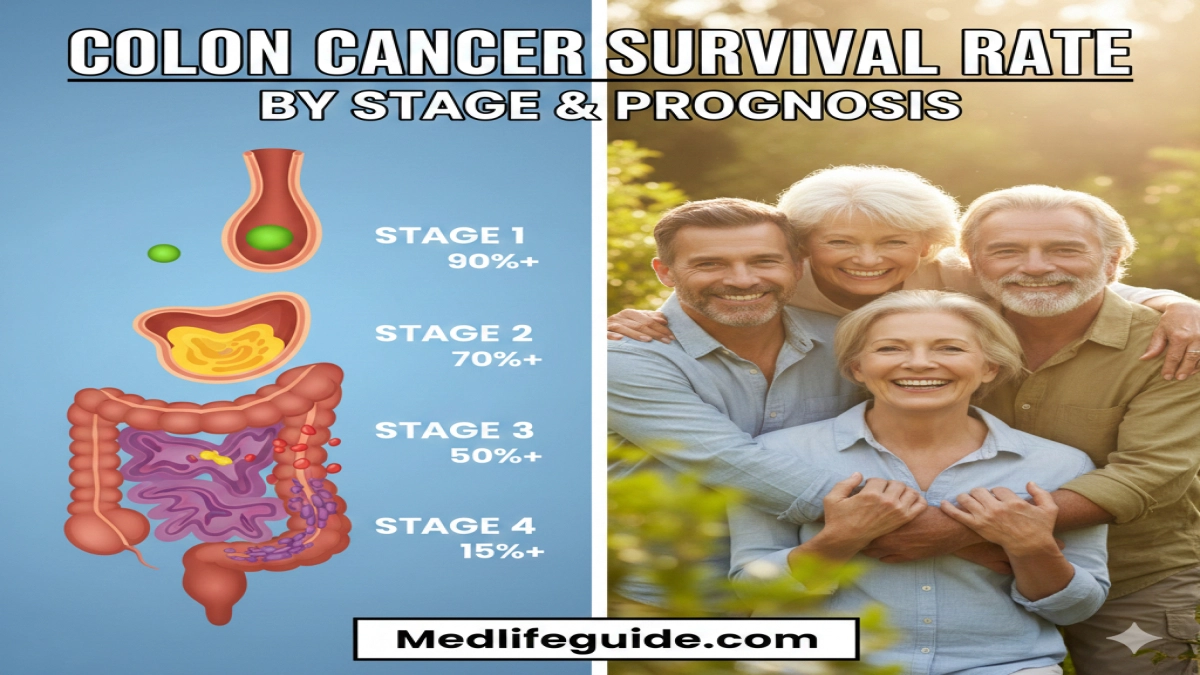
Survival Rates by Stage
Doctors use the SEER (Surveillance, Epidemiology, and End Results) database to group survival rates into three main categories:
| Stage Category | Description | 5-Year Survival Rate |
| Localized | The cancer has not spread outside the colon wall. | 91% |
| Regional | The cancer has spread to nearby lymph nodes or tissues. | 74% |
| Distant | The cancer has spread to distant organs (like the liver or lungs). | 13% to 15% |

These 2026 updates show a steady climb in survival for “Regional” and “Distant” stages compared to a decade ago. This is largely due to new “targeted” therapies that attack specific cancer cells without harming the rest of the body.
Why Early Detection Is the Ultimate Game Changer
The difference between a 91% survival rate and a 15% survival rate highlights why screening is so vital. In 2026, the medical community has shifted its focus heavily toward prevention.
The Power of the Colonoscopy
A colonoscopy is unique because it is one of the only medical tests that can actually prevent cancer before it starts. During the procedure, doctors find and remove “polyps”—small growths that could eventually turn into cancer. By removing a polyp, you effectively reset the clock.
Shifting Guidelines for Younger Adults
In 2026, we are seeing an unusual trend: while survival rates for older adults are improving, the number of younger people (under age 50) being diagnosed is rising. Because of this, the standard age to begin regular screening has been lowered to 45. If you have a family history of the disease, your doctor may suggest starting even earlier.
Factors That Influence Your Personal Outlook
While the colon cancer survival rate gives us a general idea, your specific health “blueprint” matters. Several factors influence how well a person responds to treatment:
- Age and General Health: Younger patients often have better survival rates because their bodies can handle more intensive treatments. However, older adults in good health also see excellent outcomes.
- Tumor Location: Whether the cancer is on the left or right side of the colon can actually change which treatments work best.
- Genetic Markers: In 2026, doctors look at the “DNA” of the tumor. Markers like KRAS, NRAS, and BRAF help doctors choose the exact drug that will be most effective for you.
- Surgical Success: Being able to surgically remove the entire tumor is a major factor in long-term survival.
Breakthroughs Boosting Survival in 2026
We are currently in the “clinical decade” of cancer treatment. Several new advancements are pushing the survival rates higher this year:
1. Immunotherapy
This treatment trains your own immune system to recognize and kill cancer cells. For patients with a specific genetic trait called “MSI-High,” immunotherapy has been a miracle, often shrinking tumors that didn’t respond to traditional chemotherapy.
2. Liquid Biopsies
Instead of painful tissue samples, doctors can now use a simple blood test called a liquid biopsy. These tests look for tiny fragments of cancer DNA in the blood. In 2026, these are used to catch a “relapse” months before it would show up on a standard CT scan.
3. Precision Chemotherapy
Chemotherapy in 2026 is much more refined. Doctors can now use “chemo-sensitivity” testing to see which drugs your specific cancer is most likely to fear. This reduces side effects and improves the chances of the treatment working the first time.
Lifestyle and Survivorship: Life After Diagnosis
Surviving colon cancer is about more than just a number; it is about the quality of your life. In 2026, the focus on “survivorship” care has grown.
What you can do to improve your odds:
- Stay Active: Regular exercise, even just a 30-minute daily walk, has been shown to reduce the risk of cancer returning.
- Diet Matters: A diet high in fiber and low in processed red meats helps keep the colon healthy and may improve long-term outcomes.
- Follow-Up Care: The first two to three years after treatment are the most critical. Staying on top of your follow-up blood work and scans is the best way to ensure that if the cancer does come back, it is caught while it is still “localized.”
Summary of Key Takeaways
To make this information easy to digest, here are the most important points regarding the colon cancer survival rate today:
- Catch it early, live longer: The survival rate for localized colon cancer is a very high 91%.
- 45 is the new 50: Screening now starts earlier to protect younger adults.
- Personalized medicine is king: Treatments are now tailored to your specific genetic makeup, increasing the effectiveness of care.
- Numbers are not destiny: Survival rates are based on past data; they do not account for the cutting-edge treatments available to you right now in 2026.
Conclusion
The landscape of colon cancer has changed dramatically. While the term “cancer” is always frightening, the colon cancer survival rate in 2026 reflects a world where we are winning more battles than we lose. Early detection, combined with the rapid evolution of targeted therapies, means that a diagnosis is no longer the final word. It is the beginning of a managed journey toward health.