
Medically Reviewed and Compiled by Dr. [Adam N. Khan], MD.
Quick Answer: Can COPD Be Reversed?
COPD cannot be fully reversed because the lung damage is permanent. However, treatment, lifestyle changes, and early care can slow disease progression, improve breathing, and help people live longer and better lives. According to Global Initiative for Chroni
Medically Reviewed and Compiled by Dr. [Adam N. Khan], MD.
Quick Answer: Can COPD Be Reversed?
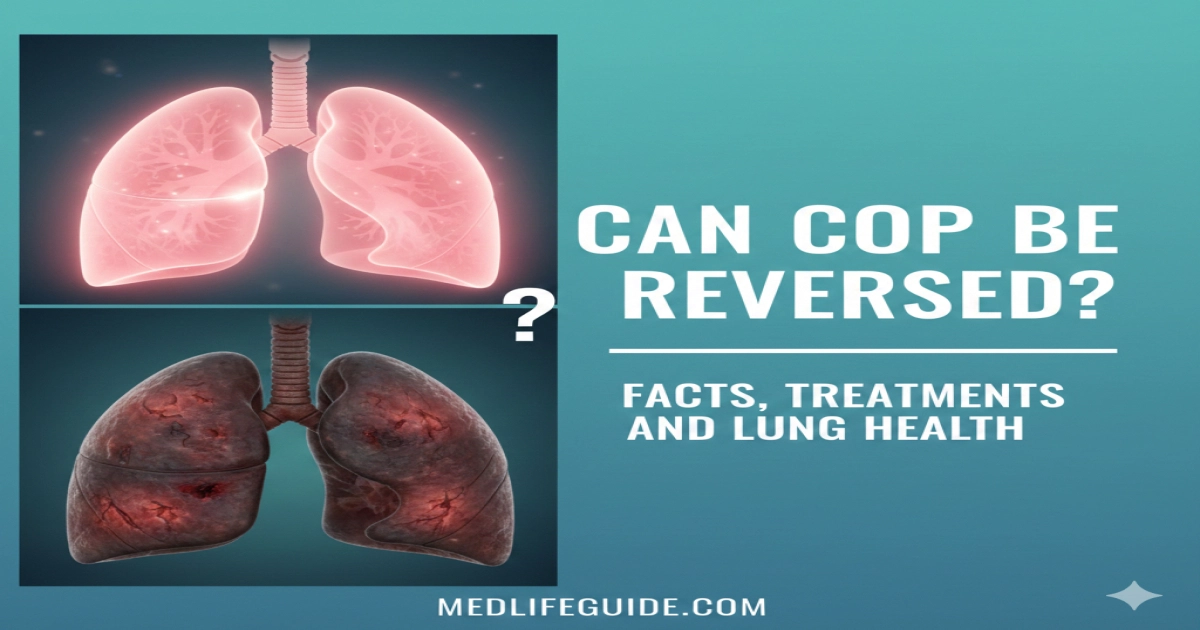
COPD cannot be fully reversed because the lung damage is permanent. However, treatment, lifestyle changes, and early care can slow disease progression, improve breathing, and help people live longer and better lives. According to Global Initiative for Chronic Obstructive Lung Disease (GOLD) and Centers for Disease Control and Prevention (CDC), proper treatment can stabilize COPD and prevent further lung damage.
What Is COPD?
Chronic Obstructive Pulmonary Disease (COPD) is a long-term lung disease that makes breathing difficult. It blocks airflow and damages lung tissue over time.
COPD includes two main conditions:
- Chronic bronchitis (inflamed airways with mucus)
- Emphysema (damaged air sacs in the lungs)
According to the National Institutes of Health (NIH), COPD affects millions of people and is a leading cause of disability and death worldwide.
How Healthy Lungs Work
Healthy lungs allow oxygen to enter and carbon dioxide to leave. Tiny air sacs called alveoli expand and contract easily.
In COPD:
- Air sacs lose elasticity
- Airways become inflamed
- Mucus blocks airflow
- Oxygen exchange becomes inefficient
This leads to breathing problems.
Why COPD Cannot Be Fully Reversed
COPD causes structural damage inside the lungs. This damage includes:
- Destroyed alveoli
- Scarred lung tissue
- Narrowed airways
Unlike skin or muscle, lung tissue does not regenerate well once severely damaged.
The American Lung Association confirms that COPD damage is permanent, but treatment can protect remaining lung function.
What Can Improve Even If COPD Cannot Be Reversed
Some parts of COPD can improve with treatment:
- Airway inflammation can decrease
- Mucus production can reduce
- Breathing efficiency can improve
- Oxygen levels can stabilize
This is called disease management, not reversal.
Stages of COPD and Reversibility Potential
COPD develops slowly over years. Early stages respond better to treatment.
Stage 1: Mild COPD
Symptoms:
- Mild cough
- Slight shortness of breath
Treatment impact:
- Lung function decline can be slowed significantly
- Symptoms may improve noticeably
Stage 2: Moderate COPD
Symptoms:
- Increased breathlessness
- Chronic cough
- Fatigue
Treatment impact:
- Symptoms improve with medication and lifestyle changes
- Disease progression can slow
Stage 3: Severe COPD
Symptoms:
- Major breathing difficulty
- Reduced daily activity
Treatment impact:
- Symptoms can be controlled
- Lung damage remains permanent
Stage 4: Very Severe COPD
Symptoms:
- Severe breathing limitation
- Low oxygen levels
Treatment impact:
- Focus shifts to quality of life and survival
Early treatment provides the best chance of stabilizing COPD.
Causes of COPD and Risk Factors
The most common causes include:
Smoking (Primary Cause)
Smoking damages lung tissue permanently.
Risk increases with:
- Long-term smoking
- Heavy smoking
- Early smoking age
The World Health Organization (WHO) identifies smoking as the leading cause of COPD worldwide.
Environmental Exposure
Long-term exposure to:
- Air pollution
- Chemical fumes
- Dust
- Biomass fuel smoke
Genetic Factors
Some people have a genetic condition called alpha-1 antitrypsin deficiency, which increases COPD risk.
Age and Occupational Exposure
Risk increases after age 40 and with jobs involving dust or chemicals.
Symptoms of COPD
Common symptoms include:
- Shortness of breath
- Chronic cough
- Wheezing
- Chest tightness
- Fatigue
- Frequent respiratory infections
Symptoms worsen over time without treatment.
Treatments That Slow COPD Progression
Treatment cannot reverse COPD, but it can significantly improve lung function and quality of life.
Bronchodilator Medications
These relax airway muscles.
Benefits:
- Easier breathing
- Reduced symptoms
- Improved exercise tolerance
Steroid Inhalers
These reduce inflammation.
Benefits:
- Less airway swelling
- Fewer flare-ups
Oxygen Therapy
Provides extra oxygen when levels are low.
Benefits:
- Improved survival
- Better organ function
Pulmonary Rehabilitation
This includes:
- Exercise training
- Breathing techniques
- Education
Benefits:
- Improved lung efficiency
- Reduced symptoms
- Increased strength
Vaccinations
Important vaccines include:
- Flu vaccine
- Pneumonia vaccine
These prevent infections that worsen COPD.
Lifestyle Changes That Protect Lung Function
Lifestyle changes play a major role in slowing COPD progression.
Stop Smoking
This is the most important step.
Benefits:
- Prevents further lung damage
- Improves breathing
- Increases life expectancy
Smoking cessation slows lung decline significantly.
Exercise Regularly
Exercise improves:
- Lung efficiency
- Muscle strength
- Oxygen use
Safe exercises include:
- Walking
- Cycling
- Breathing exercises
Maintain Healthy Weight
Being underweight weakens breathing muscles.
Healthy weight improves:
- Breathing strength
- Energy levels
Avoid Lung Irritants
Avoid exposure to:
- Smoke
- Air pollution
- Dust
- Chemical fumes
Can Lung Function Improve in COPD?
Yes, lung function can improve partially with treatment, even though damage remains.
Improvements include:
- Reduced airway inflammation
- Better airflow
- Improved oxygen exchange
- Increased exercise tolerance
However, lung tissue destruction cannot fully regenerate.
Unique Clinical Takeaways
This section highlights clinical insights not commonly explained in basic COPD discussions.
1. Early Smoking Cessation Alters Disease Trajectory
Stopping smoking early changes disease progression dramatically.
Clinical findings show:
- Lung decline slows immediately after quitting
- Remaining lung function stabilizes
- Life expectancy improves significantly
Patients who stop smoking in early COPD stages often maintain stable lung function for years.
This is the single most effective intervention.
2. Breathlessness Does Not Always Reflect Lung Damage Severity
Many patients assume severe breathlessness means severe lung damage. This is not always true.
Breathlessness can result from:
- Muscle weakness
- Anxiety
- Poor physical conditioning
- Heart conditions
Pulmonary rehabilitation improves breathing efficiency even without changing lung structure.
Improved muscle conditioning reduces breathlessness perception.
3. COPD Progression Is Highly Variable Between Individuals
COPD does not progress the same in every patient.
Progression speed depends on:
- Smoking status
- Environmental exposure
- Genetics
- Infection frequency
- Treatment adherence
Some patients remain stable for decades with proper care.
Others progress rapidly without treatment.
4. Frequent Exacerbations Cause Accelerated Lung Damage
COPD flare-ups accelerate lung decline.
Exacerbations cause:
- Increased inflammation
- Tissue injury
- Faster disease progression
Preventing flare-ups protects lung function.
Preventive measures include:
- Medication adherence
- Vaccination
- Infection prevention
5. Muscle Conditioning Plays a Major Role in Breathing Ability
Breathing depends on respiratory muscles.
Muscle weakness worsens symptoms.
Exercise improves:
- Oxygen efficiency
- Breathing strength
- Symptom tolerance
Pulmonary rehabilitation strengthens respiratory muscles.
This improves breathing without reversing lung damage.
Can COPD Be Prevented From Getting Worse?
Yes. COPD progression can be slowed or stabilized.
Key preventive measures include:
- Stop smoking
- Use prescribed medications
- Exercise regularly
- Avoid lung irritants
- Prevent infections
- Attend regular medical checkups
These measures preserve remaining lung function.
New and Emerging Treatments
Medical research continues to explore new COPD treatments.
Emerging approaches include:
Advanced Bronchodilators
Improve airway relaxation more effectively.
Lung Volume Reduction Procedures
Remove damaged lung areas to improve breathing efficiency.
Stem Cell Therapy (Experimental)
Under investigation for lung repair.
Insufficient data to verify full lung regeneration in humans at present.
Life Expectancy With COPD
Life expectancy depends on:
- Disease stage
- Smoking status
- Treatment adherence
- Overall health
Patients who:
- Stop smoking
- Follow treatment
- Exercise regularly
Often live many years with stable COPD.
When to See a Doctor
Medical evaluation is necessary if symptoms include:
- Persistent cough
- Breathing difficulty
- Frequent chest infections
- Wheezing
Early diagnosis improves treatment outcomes.
Frequently Asked Questions
No. COPD cannot be cured, but treatment can control symptoms and slow progression.
Damaged lung tissue cannot fully heal, but lung function can improve with treatment.
Yes. Quitting smoking significantly slows disease progression.
Yes. Exercise strengthens muscles and improves breathing efficiency.
References and Citations
The following authoritative medical sources support the clinical facts in this article. Internal educational links are provided for deeper reading:
- Global Initiative for Chronic Obstructive Lung Disease (GOLD) — COPD Diagnosis and Management Guidelines
Internal Link: /references/gold-copd-guidelines - Centers for Disease Control and Prevention (CDC) — COPD Overview and Prevention
Internal Link: /references/cdc-copd-overview - National Institutes of Health (NIH) — COPD Pathophysiology and Treatment
Internal Link: /references/nih-copd-research - American Lung Association — COPD Causes and Treatment Options
Internal Link: /references/american-lung-association-copd - World Health Organization (WHO) — Global COPD Burden and Risk Factors
Internal Link: /references/who-copd-global-report - Mayo Clinic — COPD Symptoms and Treatment
Internal Link: /references/mayo-clinic-copd-guide
Medical Disclaimer
This article is for educational purposes only and does not replace professional medical advice, diagnosis, or treatment. Always consult a qualified healthcare provider regarding any medical condition or treatment decisions