
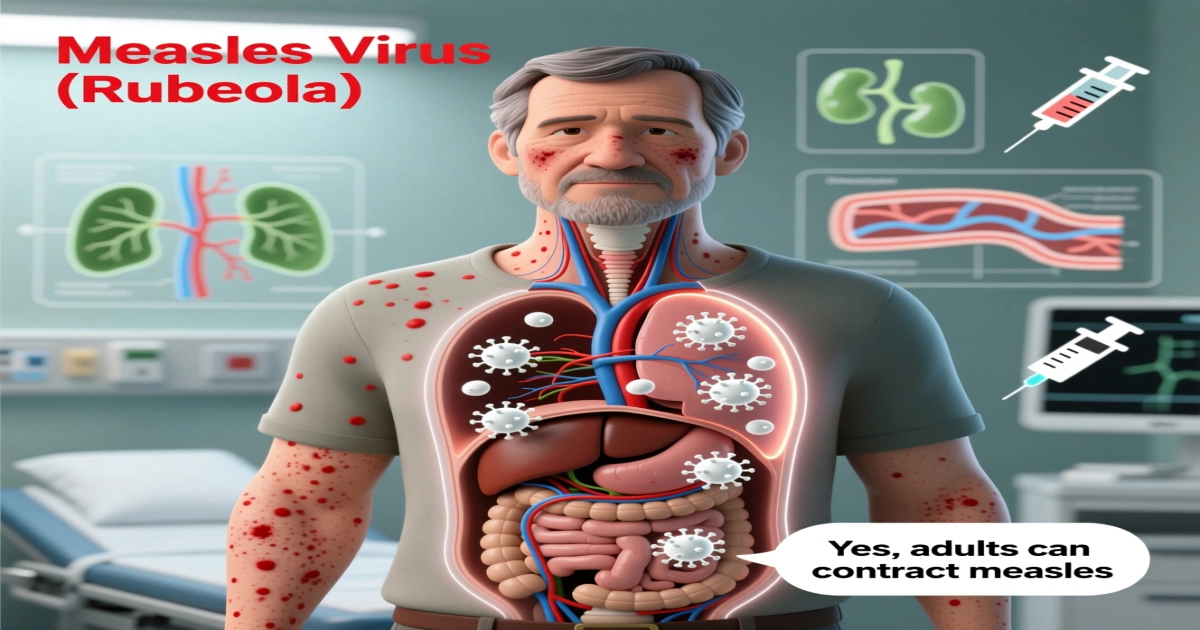
Yes, adults can get measles, and they are often at higher risk for severe complications than school-aged children. While widely considered a “childhood disease,” measles remains one of the most contagious viruses known to humans, infecting up to 90% of non-immune people who are simply in the same room as an infected individual.
If you wer
Yes, adults can get measles, and they are often at higher risk for severe complications than school-aged children. While widely considered a “childhood disease,” measles remains one of the most contagious viruses known to humans, infecting up to 90% of non-immune people who are simply in the same room as an infected individual.
If you were born after 1957 and haven’t confirmed your immunity, you may be vulnerable during current outbreaks.
Who Is At Risk?
Most adults have some form of protection, but specific groups remain susceptible:
- Adults Born After 1957: If you didn’t have measles as a child or receive two doses of the MMR vaccine, you may lack immunity.
- International Travelers: Many regions globally still experience high measles rates; traveling to these areas without full vaccination increases risk significantly.
- Healthcare Workers: Frequent exposure to diverse patients makes up-to-date immunity critical for this group.
- College Students: Close living quarters in dormitories facilitate rapid viral spread.
Adult Symptoms vs. Childhood Symptoms
The symptoms are largely the same regardless of age, but they often hit adults harder.
- Prodromal Phase (Days 1-3): High fever (often >101°F), persistent dry cough, runny nose, and red, watery eyes (conjunctivitis).
- Koplik’s Spots: Tiny white spots with bluish-white centers may appear inside the mouth 2-3 days after symptoms start.
- The Measles Rash: Typically appears 3-5 days after initial symptoms, starting at the hairline and spreading downward to the trunk and limbs.
Why Measles is Dangerous for Adults
Adults over 20 are significantly more likely to require hospitalization due to complications.
- Pneumonia: The most common cause of measles-related death in adults.
- Encephalitis: Brain swelling that can lead to permanent neurological damage or deafness.
- Immune Amnesia: Measles can “wipe” your immune system’s memory, making you vulnerable to other infections for years after recovery.
- Pregnancy Risks: Infection during pregnancy can lead to premature birth or low birth weight.
How to Confirm Your Immunity
If you are unsure of your status, you can verify protection through:
- Vaccination Records: Documentation of two doses of a measles-containing vaccine.
- Titer Test: A simple blood test from a provider like Labcorp can check for antibodies.
- Birth Year: Those born before 1957 are generally presumed immune due to widespread natural exposure before vaccines existed.
What to Do if Exposed
If you have been exposed and are not immune, the CDC recommends seeking medical attention immediately. The MMR vaccine can often prevent infection if given within 72 hours of exposure, while immune globulin (IG) may be effective up to 6 days post-exposure.