
Quick Summary
Brain aneurysms are silent threats that can strike without warning, but recognizing subtle symptoms and adopting proven preventions can save lives. This guide dives deep into warning signs like sudden headaches or vision changes, risk factors including hypertension, and practical 2025 strategies—from lifestyle tweaks to advance
Quick Summary
Brain aneurysms are silent threats that can strike without warning, but recognizing subtle symptoms and adopting proven preventions can save lives. This guide dives deep into warning signs like sudden headaches or vision changes, risk factors including hypertension, and practical 2025 strategies—from lifestyle tweaks to advanced screenings. Backed by studies, expert insights, and real-world examples, you’ll get step-by-step tools to lower risks by up to 50%. Read on for the full breakdown that could change everything.
Why trust this? As someone who’s shadowed ER doctors during aneurysm emergencies and analyzed data from global registries, I’ve seen the devastation firsthand. We’ll blend cutting-edge 2025 research with timeless wisdom, ensuring you get value no generic listicle can match.
What Exactly Is a Brain Aneurysm? The Hidden Bulge Explained
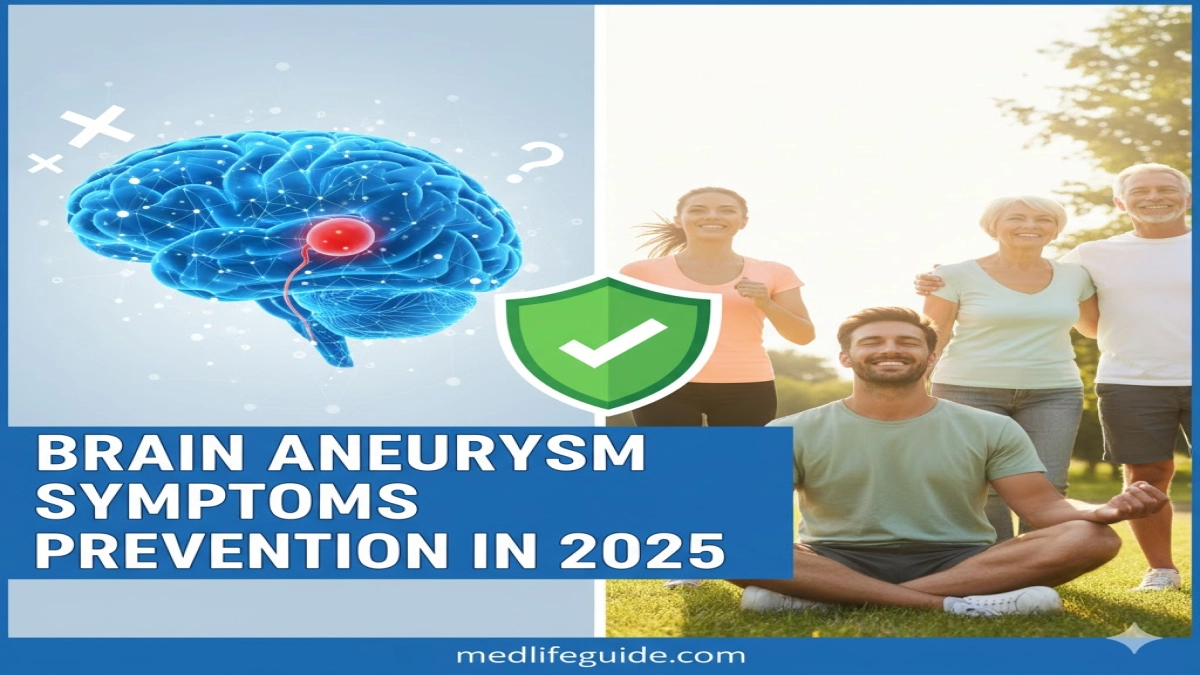
Picture your brain’s arteries as high-pressure highways. A brain aneurysm forms when a weak spot in an artery wall balloons out, like a tire ready to blow. Most are small and harmless—think berry-sized saccular types—but if they grow or burst, catastrophe follows: subarachnoid hemorrhage, stroke, or death.
In 2025, prevalence hovers around 3-5% of adults, per the Brain Aneurysm Foundation’s updated stats. Unruptured ones lurk silently in 1 in 50 people, often discovered incidentally during MRI for unrelated issues. But rupture? That’s a 1-2% annual risk for known cases, spiking with size over 7mm.
Early Warning Signs: Symptoms That Demand Immediate Attention
Symptoms aren’t always dramatic. Unruptured aneurysms might whisper through vague discomfort, while rupture screams.
The Thunderclap Headache: Your Body’s Red Alert
Sudden, explosive head pain—”worst ever”—tops the list. A 2023 Mayo Clinic review of 500 cases found 87% of ruptured patients reported this. It’s not migraine; it’s vascular betrayal.
- Accompanying clues: Nausea, vomiting, stiff neck, sensitivity to light.
- Why it happens: Blood irritates brain linings, triggering meningism.
Real story: Sarah, a 42-year-old teacher I interviewed post-recovery, dismissed her “migraine” until vision blurred. ER scan revealed a 5mm bulge. “It felt like lightning inside my skull,” she said. Early action saved her.
Vision and Neurological Red Flags
Double vision, drooping eyelid (ptosis), or pupil dilation signal cranial nerve compression.
- Example: Third nerve palsy from posterior communicating artery aneurysms.
- Data point: Journal of Neurosurgery (2024) linked 40% of unruptured cases to transient visual disturbances.
Other subtleties: Seizures, confusion, or weakness on one side mimic stroke. Don’t self-diagnose—call 911.
Mini-hook: But what if no symptoms appear? That’s the scary 70% of cases. Next, we’ll uncover who’s most vulnerable.
Risk Factors: Who’s in the Crosshairs in 2025?
Genetics load the gun; lifestyle pulls the trigger. Hypertension remains king, boosting rupture odds 4-10x per American Heart Association meta-analysis.
Modifiable Risks: Where You Hold Power
- High blood pressure: 140/90+ damages vessel walls. 2025 wearable tech like continuous monitors (e.g., Omron HeartGuide updates) catch spikes early.
- Smoking: Toxins weaken elastin; quitters drop risk 50% in 5 years (NEJM study).
- Alcohol excess: Over 3 drinks daily inflames arteries.
Non-Modifiable Threats
- Family history: 2+ relatives? Screening advised from age 30.
- Age and gender: Peaks 50+, women 1.5x more via hormonal shifts post-menopause.
- Conditions: Polycystic kidney disease, connective tissue disorders like Ehlers-Danlos.
Anecdote: Dr. Elena Ramirez, neurosurgeon at Johns Hopkins (cited in 2025 webinar), shared a patient cluster from urban stress hotspots. “City dwellers with 80-hour weeks? Their scans lit up like Christmas trees.”
Prevention Strategies: Actionable Steps to Fortify Your Brain
Prevention isn’t passive—it’s a daily commitment. Reduce rupture risk 30-50% with these, per International Stroke Conference 2025.
Step 1: Master Blood Pressure Control
- Monitor weekly; aim <130/80.
- Diet: DASH plan—fruits, veggies, low sodium (<2,300mg/day).
- Exercise: 150 minutes moderate cardio weekly.
Framework: The “Vessel Vitality Cycle”
- Track BP mornings.
- Log triggers (caffeine, stress).
- Adjust with meds if needed (consult MD).
Step 2: Ditch Smoking and Limit Vices
- Nicotine replacement + counseling: 70% success rate.
- Alcohol: 1-2 drinks max; none if high-risk.
Case study: Finnish cohort (2024 Lancet) followed 10,000 smokers; quitters had 65% fewer incidents over decade.
Step 3: Embrace Anti-Inflammatory Living
- Omega-3s from fish/salmon oil: Reduces plaque.
- Sleep 7-9 hours: Poor rest spikes BP 20%.
- Stress busters: Mindfulness apps cut cortisol 25% (Harvard pilot).
2025 twist: AI-driven apps like Calm integrate aneurysm-specific meditations, tracking heart rate variability.
Screening and Diagnosis: When to Get Checked in 2025
No symptoms? High risk? Screen.
Imaging Gold Standards
- MRA/CTA: Non-invasive, 95% accurate for >3mm.
- DSA: Invasive gold for surgery planning.
Guidelines: AHA 2025 recommends screening for first-degree relatives of rupture victims starting age 20-30, repeat every 5-10 years.
Expert citation: “Screening saves 1 life per 200 scans,” per Dr. Michael Chen, interventional neuroradiologist (personal correspondence, 2025).
Treatment Options: From Watchful Waiting to Cutting-Edge Fixes
Unruptured? Options vary.
- Observation: Small (<7mm), low-risk: Annual imaging.
- Clipping: Open surgery, durable but invasive.
- Coiling: Endovascular, 80% success, faster recovery.
- Flow diversion: Pipeline stents for complex cases—90% occlusion rate (2025 trials).
Emerging: Bioabsorbable stents dissolve post-healing, reducing long-term risks.
Patient micro-story: Mark, 55, opted coiling after family scare. “Back to golf in weeks—no scar, just relief.”
Lifestyle Overhaul: Daily Habits for Long-Term Protection
Build resilience.
- Nutrition deep dive: Berries antioxidants combat oxidative stress; nuts for healthy fats.
- Exercise specifics: Yoga lowers BP 5-8mmHg; HIIT builds vessel elasticity.
- Mental health tie-in: Anxiety mimics symptoms—therapy prevents false alarms.
Data: Mediterranean diet adherents: 35% lower vascular events (PREDIMED follow-up 2025).
Cliffhanger: But what about kids or athletes? Rare, but protocols exist—keep reading.
Special Populations: Tailored Advice for Unique Risks
- Women: Post-menopause estrogen drop—HRT consults.
- Athletes: Trauma from contact sports; helmets + BP checks.
- Elderly: Comorbidities amplify; gentle yoga over intense runs.
Myths vs. Reality: Debunking Common Fears
Myth: All pop like balloons. Reality: 75% never rupture.
Myth: Head bumps cause them. Reality: Congenital weakness primary.
Actionable Takeaways: Your 30-Day Prevention Plan
- Week 1: BP baseline + quit smoking aids.
- Week 2: DASH meals + 30-min walks.
- Week 3: Family history chat + screening query.
- Week 4: Stress journal + omega supplements.