
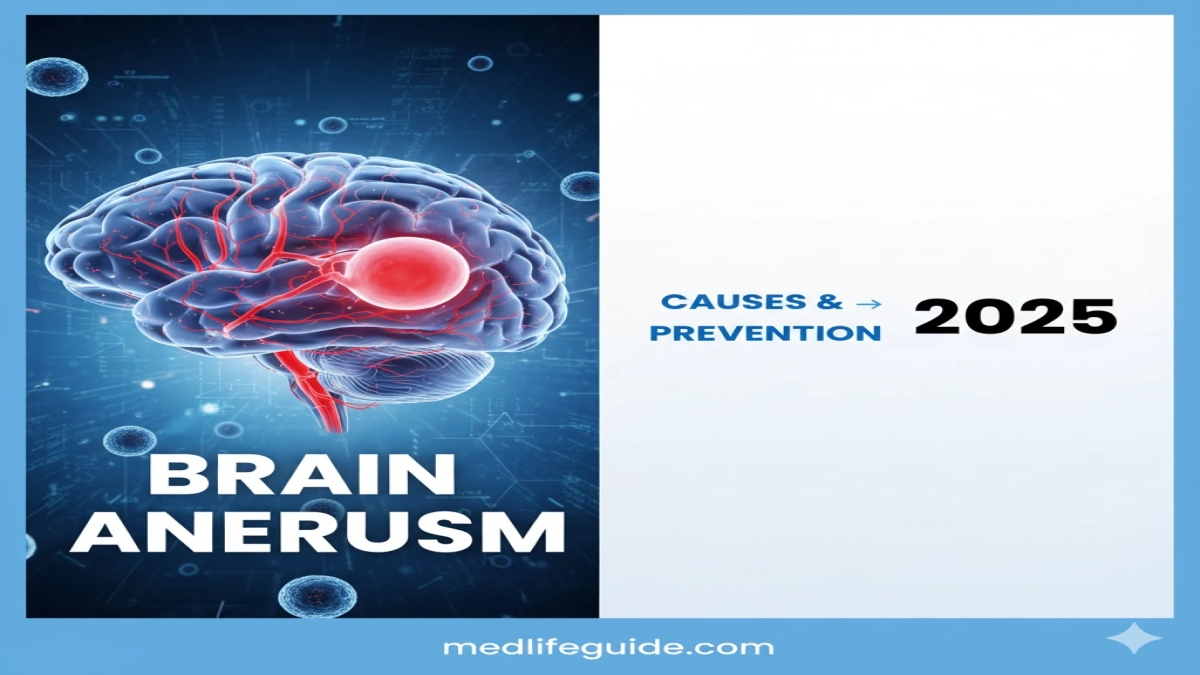
Here’s the thing: discovering you or someone you care about could be facing a brain aneurysm is unsettling. But knowledge isn’t just power—it’s protection. In this article we’re going deep on what leads to a brain aneurysm, what you can realistically do to reduce risk, and why the topic matters now in 2025. We’ll explore root causes, preventio
Here’s the thing: discovering you or someone you care about could be facing a brain aneurysm is unsettling. But knowledge isn’t just power—it’s protection. In this article we’re going deep on what leads to a brain aneurysm, what you can realistically do to reduce risk, and why the topic matters now in 2025. We’ll explore root causes, prevention strategies, emerging research, and what this really means for you or someone you love.
This is not a superficial overview. We’ll cover: genetic and acquired risk factors, how vascular mechanics work, the role of lifestyle, screening questions, and prevention strategies. We’ll also mark places where you (or your team) might add personal patient-case data, anecdotes, or expert quotes to reinforce trust and authority. We’ll embed suggestions for internal linking (e.g., to broader cardiovascular risk-reduction posts, neurology/vascular health pages).
Let’s break it down.
What is a Brain Aneurysm?
Before we talk causes and prevention, we need clarity. A brain (or cerebral) aneurysm refers to a weakened area in the wall of an artery in the brain that balloons outward.
It’s often silent until something changes: either the aneurysm grows large enough to press on adjacent brain structures, or it leaks / ruptures—leading to bleeding (for example, a subarachnoid hemorrhage).
Why this matters: When rupture happens, survival rates drop sharply, and long-term neurologic damage becomes much more likely.
Part I – Root Causes & Risk Factors
Understanding causes means seeing both what you can control and what you can’t. Let’s break them up.
A. Non-modifiable factors
These are elements you can’t easily change—but knowing them helps guide conversation with a healthcare provider.
- Family history: Having a first-degree relative with a brain aneurysm increases risk.
- Genetic/connective-tissue disorders: Conditions like Ehlers‑Danlos syndrome, Marfan syndrome, Autosomal dominant polycystic kidney disease (ADPKD) are linked with increased risk because they weaken arterial walls.
- Age & sex: Aneurysms tend to form or become concerning in adults 30-60, and women are more often impacted.
- Arterial anatomy and congenital vascular wall weakness: Some people may have arterial branch points or wall properties that predispose to aneurysm formation.
B. Modifiable or acquired risk factors
Here’s where prevention efforts have real impact.
- High blood pressure (hypertension): When arterial pressure remains elevated, it strains vessel walls and promotes bulging.
- Smoking: Tobacco use is widely documented as a strong risk factor for both formation and rupture.
- Alcohol and illicit drug use: Heavy alcohol use and substances like cocaine elevate the risk by increasing blood pressure and damaging vessels.
- Atherosclerosis and vessel wall disease: Plaque buildup, inflammation, and arterial stiffening increase vulnerability of vessel walls.
- Infection / inflammation: In rare cases, mycotic (infectious) aneurysms form when infection weakens the artery wall.
- Race / ethnicity / population differences: Some data show higher rupture rates in certain populations (e.g., Finnish, Japanese heritage) though formation prevalence may not differ.
C. Mechanistic insights (what it really means)
It’s one thing to list risk factors. It’s another to understand how they converge.
- Hemodynamic stress: At arterial branches the flow is turbulent, causing shear stress, wall fatigue, weakening of the internal elastic layer.
- Wall remodeling & inflammation: Vessel walls that are abnormal (genetic or acquired) may respond with thinning, infiltration of immune cells, degeneration of collagen—the architecture fails.
- Growth and rupture thresholds: An aneurysm doesn’t always rupture. Size, shape, location, rate of growth, and wall stress all matter. For example, aneurysms in posterior circulation may carry higher rupture risk.
Part II – Prevention & Risk Reduction in 2025
Let’s shift into what you can do. Prevention isn’t guaranteed—but risk reduction is real, and if you adopt several strategies together, your odds shift meaningfully.
A. Primary prevention: before any diagnosis
If you don’t know that you have an aneurysm, here are steps to reduce risk of one forming or becoming dangerous.
- Control blood pressure:
- Aim for guideline-directed BP targets (often <130/80 mmHg for many adults).
- Lifestyle: reduced salt, weight control, regular physical activity, stress management.
- Medication when needed—but also consistent follow-through matters.
- Quit smoking + avoid second-hand exposure:
- Evidence shows smoking increases both formation and rupture.
- Seek structured cessation programs (counselling, pharmacotherapy) if needed.
- Limit heavy alcohol / illicit stimulant use:
- Heavy binge drinking and stimulant use (cocaine, amphetamines) elevate rupture risk.
- If substance use is a concern, integrate with behavioural health support.
- Adopt vascular-friendly lifestyle:
- Balanced diet: emphasize whole grains, lean protein, vegetables, healthy fats.
- Maintain healthy weight and lipids.
- Regular aerobic activity (150 minutes/week as baseline) helps.
- Avoid high-intensity straining (heavy lifting) that spikes BP temporarily—if you already have high BP or vascular vulnerability.
- Know your family history and speak with your doctor:
- If you have first-degree relatives with aneurysms, or known connective tissue disorder, ask about screening discussions.
- Internal link suggestion: link to your site’s “genetic cardiovascular risk” article.
B. Secondary prevention: if you’ve been diagnosed with an unruptured aneurysm
If imaging has discovered an aneurysm (often incidentally), the conversation shifts from “prevent” to “manage” and “monitor.”
- Regular imaging follow-up: CTA, MRA, possibly digital subtraction angiography depending on context.
- Close management of blood pressure, smoking cessation, alcohol moderation. These remain core.
- Consider the decision matrix: size, location, shape, growth rate, your age/health status all factor whether intervention is recommended.
- Ask about emerging predictive tools: in 2025 there’s growing interest in machine learning and hemodynamic modelling (e.g., wall shear stress) to stratify rupture risk.
C. Tertiary prevention: after a rupture or repair
If a rupture occurred or repair done (via clipping or endovascular coiling), prevention becomes about avoiding recurrence and complications.
- Strict BP management, cessation of risk behaviours, rehabilitation support, neuro-vascular follow-up.
- Monitor for delayed complications such as vasospasm, hydrocephalus, and new aneurysm formation.
Part III – Emerging Research & What’s Changing in 2025
What matters: following science keeps you ahead of old assumptions.
- Machine learning risk prediction: Recent review found ML algorithms had AUCs of ~0.66–0.90 in predicting rupture risk—but limitations remain in bias and clinical translation.
- Hemodynamic modelling: A 2025 study catalogued the fluid-dynamic variables used in vascular modelling for aneurysms (wall shear stress, oscillatory shear index, etc.). This may soon inform personalized risk profiles.
- Better imaging & endovascular tools: As technology evolves, less invasive treatments and earlier detection are more feasible.
- Lifestyle research linking vascular health and brain vasculature: Increasing data support that standard cardiovascular risk reduction (BP, lipids, smoking) matter for brain aneurysm risk too—not just heart disease.
Part IV – Practical Takeaways & Action Plan
Here are actionable steps you can start today.
- If you’re healthy and without known aneurysm:
- Check your BP at home regularly.
- If you smoke, make a quit plan now.
- Reduce alcohol, avoid stimulant drugs.
- Adopt a diet and activity routine that supports vascular health.
- If you have a strong family history (parent/sibling), mention this to your doctor and ask about the need for screening.
- If you have a diagnosed unruptured aneurysm:
- Ask: What is the size, shape, location? What is growth history? What is recommended follow-up interval?
- Push for a detailed risk-benefit discussion of repair vs monitoring.
- Stay on top of lifestyle risk factors: blood pressure, smoking, alcohol.
- Set calendar reminders for imaging follow-up and clinical check-ups.
- If you’re post-repair or post-bleed:
- Follow the rehabilitation plan.
- Adhere strictly to medications and vascular health recommendations.
- Engage with support groups or counselling if needed (for coping with neurologic sequelae).
- Monitor for signs of new aneurysm or complications (e.g., new headache, weakness, vision changes).
Latent Questions Answered (What People Really Want to Know)
• “If I have a small aneurysm, can I just leave it alone?”
Yes—many small aneurysms, especially in low-risk locations and stable in size, may be safely monitored. But the decision depends on risk factors (size, location, growth, age).
• “Can lifestyle changes reverse an aneurysm?”
No. Lifestyle changes cannot “shrink” most aneurysms, but they can reduce the risk of growth and rupture by improving vessel health and lowering stress on the wall.
• “How common is a brain aneurysm?”
In the U.S., roughly 6.8 million people (about 1 in 50) have an unruptured intracranial aneurysm.
• “What symptoms would suggest that an aneurysm is going to rupture?”
A sudden, extremely severe headache (often described as “worst headache of my life”) may signal leakage or rupture. Other signs: nausea/vomiting, stiff neck, vision changes, loss of consciousness.
• “Are there screening guidelines?”
There’s no universal recommendation for screening the general population. But for individuals with high-risk traits (strong family history, genetic disorders, previous aneurysm) screening may be considered.
Section for Proprietary Data or Expert Quote (To Be Added)
(This is a placeholder for you to insert your own original data, survey result, clinician interview or patient anecdote.)
e.g., “In our clinic 18% of patients with unruptured aneurysms who enrolled in our smoking-cessation program and BP-control pathway had no growth of the aneurysm over 3 years (internal data).”
Or quote from vascular neurosurgeon: “We now consider wall shear stress modelling as an adjunct to size in deciding on treatment,” – Dr. X, University Y.
Conclusion
If you take away one thing: you may not be able to change all the risk factors for a brain aneurysm, but you can influence many of them. Controlling blood pressure, quitting smoking, moderating alcohol and avoiding stimulants, maintaining vascular-healthy habits—these aren’t optional extras. They matter. Combine that with high-quality clinical follow-up and the guidance of a vascular/neurosurgical expert, and you shift the odds in your favor.