
Introduction
Highly pathogenic avian influenza H5N1 continues to circulate globally and in the U.S., with spillovers to dairy cattle since 2024 raising questions about human risk and food supply.
Current Situation (January 2026)
- CDC reports dozens of human cases since 2024 (mostly mild, linked to dairy/poultry exposure).
- Over 1,000 affecte
Introduction
Highly pathogenic avian influenza H5N1 continues to circulate globally and in the U.S., with spillovers to dairy cattle since 2024 raising questions about human risk and food supply.
Current Situation (January 2026)
- CDC reports dozens of human cases since 2024 (mostly mild, linked to dairy/poultry exposure).
- Over 1,000 affected cattle herds in 19+ states; ongoing detections in poultry.
- No widespread human-to-human transmission, but mutations are monitored closely.
Risks and Transmission
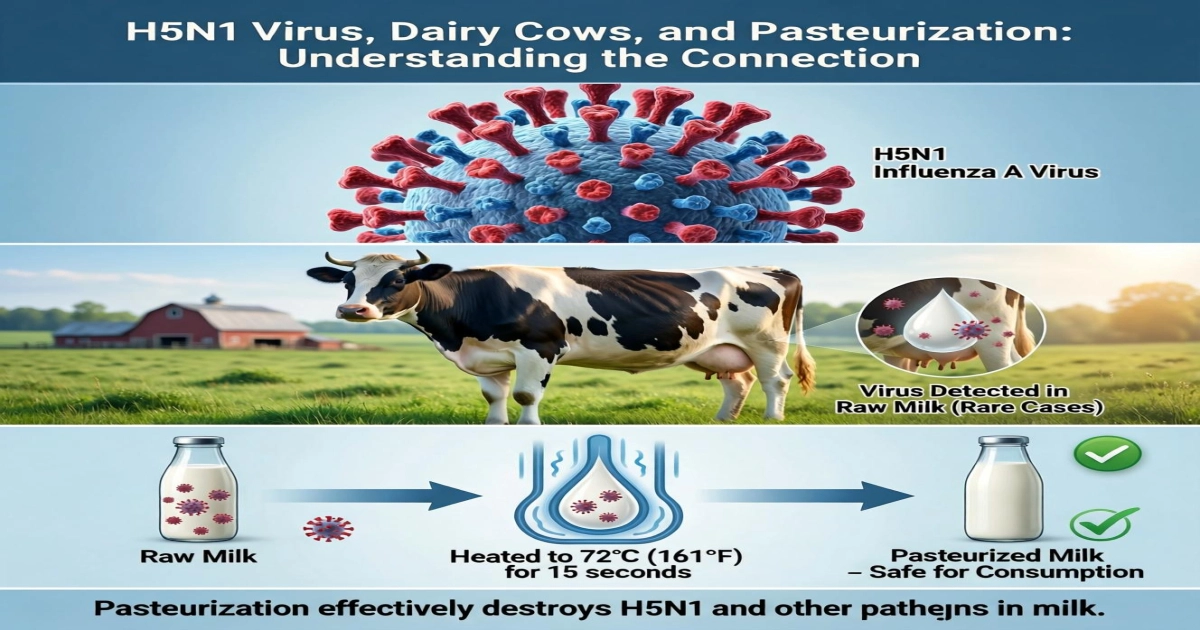
Primarily affects birds; spills to mammals (cattle, cats, etc.). Human cases often involve close contact with infected animals (e.g., farm workers). Pasteurized milk and properly cooked products remain safe per FDA testing.Symptoms in Humans
- Flu-like: Fever, cough, sore throat, muscle aches.
- Severe: Pneumonia, eye infections (conjunctivitis in some dairy cases).
Prevention Tips
- Farm workers: PPE, avoid sick animals.
- Consumers: Stick to pasteurized dairy; cook poultry/eggs thoroughly.
- General: Good hygiene; monitor CDC updates for travel or exposure risks.
Should You Worry?
Current public risk is low, but vigilance is key due to pandemic potential. No evidence of food supply threat.
Conclusion
H5N1 remains a “watch” virus. Stay updated via CDC, practice hygiene, and support animal health measures. Talk to your doctor if you have occupational exposure.