
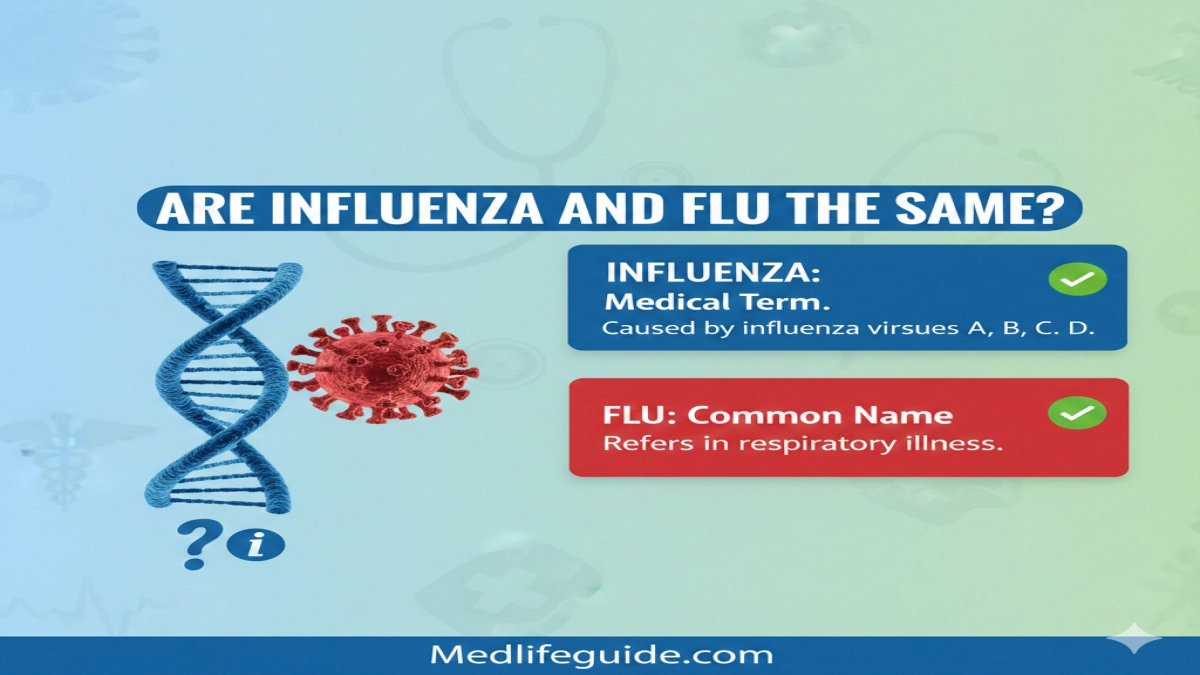
Yes. Influenza and flu are the same disease. “Flu” is the common, shortened name for influenza, a contagious viral respiratory illness caused by influenza viruses.
What Is Influenza?
Infl
Yes. Influenza and flu are the same disease. “Flu” is the common, shortened name for influenza, a contagious viral respiratory illness caused by influenza viruses.
What Is Influenza?
Influenza is an acute viral infection of the respiratory tract caused by influenza viruses. It primarily affects the nose, throat, and lungs.
Key Medical Characteristics
- Caused by influenza A, B, C, or D viruses
- Spread through respiratory droplets
- Seasonal outbreaks, mainly in fall and winter in the U.S.
- Can range from mild illness to severe, life-threatening disease
In clinical settings, physicians use the term influenza, while patients and the public commonly say flu.
What Does “Flu” Mean?
“Flu” is not a different illness. It is the informal name for influenza.
Why the Confusion Exists
- Media and public health messaging favor short terms
- Many non-influenza illnesses are mistakenly called “flu”
- Patients often label stomach viruses as “flu,” which is incorrect
Medical accuracy:
- Flu = Influenza
- Stomach flu ≠ Influenza
Are Influenza and Flu the Same? (Medical Clarification)
Clinical Verdict
- Same virus
- Same disease
- Same diagnostic criteria
- Same treatments and prevention methods
There is no biological, virological, or clinical difference between influenza and flu.
Types of Influenza Viruses
Influenza A
- Causes most seasonal flu epidemics
- Responsible for pandemics
- Subtyped by H and N proteins (e.g., H1N1)
Influenza B
- Circulates seasonally
- Affects humans only
- Often severe in children
Influenza C
- Causes mild illness
- Rarely leads to outbreaks
Influenza D
- Affects cattle
- Not known to infect humans
Common Symptoms of Influenza (Flu)
Respiratory Symptoms
- Cough
- Sore throat
- Runny or stuffy nose
Systemic Symptoms
- Fever or chills
- Muscle aches
- Headache
- Severe fatigue
Gastrointestinal Symptoms (Children More Than Adults)
- Nausea
- Vomiting
- Diarrhea
How Influenza Is Diagnosed
Clinical Diagnosis
- Based on symptoms during flu season
- High fever + body aches + cough raises suspicion
Laboratory Tests
- Rapid Influenza Diagnostic Tests (RIDTs)
- Molecular assays (PCR)
- Viral culture (rarely used clinically)
Influenza vs Common Cold
| Feature | Influenza | Common Cold |
|---|---|---|
| Fever | High, sudden | Rare or mild |
| Body aches | Severe | Mild |
| Fatigue | Extreme | Mild |
| Onset | Abrupt | Gradual |
| Complications | Common | Rare |
Unique Clinical Takeaways
1. Symptom Severity Is Not Predictable by Age Alone
Young, healthy adults can experience severe influenza complications, including viral pneumonia and myocarditis. Risk stratification must include:
- Viral strain severity
- Immune response variability
- Delayed antiviral treatment
Clinical takeaway: Do not dismiss flu severity based solely on age or fitness level.
2. Influenza Can Trigger Secondary Organ Damage
Influenza is not limited to the lungs. Documented complications include:
- Acute kidney injury due to dehydration and rhabdomyolysis
- Cardiac inflammation (myocarditis, pericarditis)
- Neurological effects such as encephalopathy
Clinical takeaway: Persistent chest pain, confusion, or low urine output after flu symptoms require urgent evaluation.
3. Antiviral Timing Is More Important Than Vaccination Status
Even vaccinated individuals can benefit from antiviral therapy if started early.
- Best efficacy within 48 hours of symptom onset
- High-risk patients may benefit even after 48 hours
Clinical takeaway: Do not delay antivirals while confirming test results in high-risk patients.
Who Is at Highest Risk for Severe Influenza?
High-Risk Groups
- Adults over 65
- Children under 5
- Pregnant individuals
- Chronic disease patients (kidney, heart, lung, diabetes)
- Immunocompromised individuals
Influenza Treatment Options
Antiviral Medications
- Oseltamivir
- Zanamivir
- Baloxavir
Supportive Care
- Hydration
- Fever control
- Rest
Antibiotics are not effective unless bacterial complications occur.
Influenza Prevention
Annual Flu Vaccination
- Recommended for everyone ≥6 months
- Updated yearly to match circulating strains
Non-Pharmaceutical Measures
- Hand hygiene
- Masking during outbreaks
- Avoiding close contact when sick
Common Myths About Influenza
Myth: Flu and influenza are different illnesses
False. They are the same.
Myth: Flu vaccines cause flu
False. Inactivated vaccines cannot cause influenza.
Myth: Healthy people don’t need flu shots
False. Healthy individuals can transmit influenza and develop severe disease.
When to Seek Medical Care
Seek urgent care if symptoms include:
- Difficulty breathing
- Chest pain
- Persistent high fever
- Confusion
- Dehydration
Public Health Importance of Correct Terminology
Using “flu” inaccurately:
- Minimizes disease severity
- Delays care
- Increases transmission
Medical communication should reinforce that flu = influenza, a potentially serious illness.