
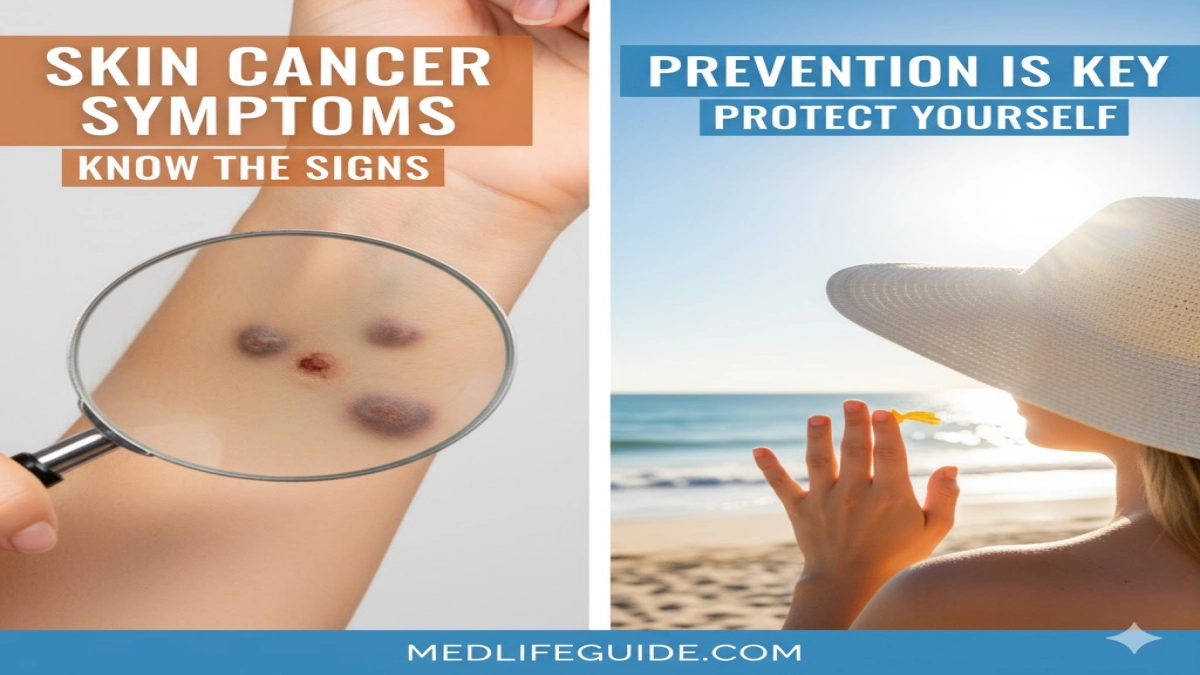
Medically Reviewed and Compiled by Dr. Adam N. Khan, MD.
To spot skin cancer early, look for new growths, sores that do not heal, or moles that change in size and color. You can prevent most skin cancers by wearing sunscreen, seeking shade, and avoiding tanning beds.
To spot skin cancer early, look for new growths, sores that do not heal, or moles that change in size and color. You can prevent most skin cancers by wearing sunscreen, seeking shade, and avoiding tanning beds.
Understanding Skin Cancer Today
Skin cancer is the most common type of cancer in the world. It happens when skin cells grow out of control, usually because of damage from the sun. While it can be scary, the good news is that skin cancer is very easy to treat if you find it early.
In 2026, doctors have better tools than ever to help patients, but the most important tool is still your own eyes. By knowing what to look for and how to protect yourself, you can keep your skin healthy for years to come.
Common Symptoms of Skin Cancer
Not all skin cancers look the same. Some look like small bumps, while others look like dry patches or changing moles. Here are the main signs you should watch for.
1. New or Changing Moles
A new spot on your skin or a mole that starts to look different is often the first sign of trouble. Doctors use a simple trick called the ABCDE rule to help you remember what to check:
- Asymmetry: One half of the mole does not match the other half.
- Border: The edges are blurry, ragged, or bumpy instead of smooth.
- Color: The mole has many colors, like different shades of brown, black, or even pink and blue.
- Diameter: The spot is larger than the size of a pencil eraser.
- Evolving: The mole is changing in size, shape, or color over time.
2. Sores That Won’t Heal
If you have a sore, a scab, or a crusty patch that stays for more than three weeks, it needs a professional look. Sometimes these sores might seem to get better and then come back in the same spot. This is a very common sign of “non-melanoma” skin cancers.
3. Shiny or Pearly Bumps
Some skin cancers look like a small, shiny bump that might be pink, red, or white. On darker skin, these bumps might look tan or black. They often look like a “pearly” pimple that just won’t go away.
4. Rough or Scaly Patches
You might feel a patch of skin that is very rough, like sandpaper. It might be itchy or even bleed a little if you touch it. These are often found on parts of the body that get the most sun, like the face, ears, and hands.
How to Prevent Skin Cancer
Prevention is your best defense. Most skin damage comes from ultraviolet (UV) rays from the sun or tanning beds. Follow these steps to keep your skin safe.
Use Sunscreen Every Day
Even on cloudy days, UV rays can reach your skin. Use a “broad-spectrum” sunscreen with an SPF of 30 or higher. This protects you from both types of harmful rays (UVA and UVB).
- Apply enough: Use about a palm-full for your whole body.
- Reapply: Put more on every two hours, or right after you swim or sweat.
Seek the Shade
The sun is strongest between 10 a.m. and 4 p.m. If you are outside during these hours, try to stay under a tree, an umbrella, or a roof. A good rule of thumb is the “shadow rule”: if your shadow is shorter than you, it is time to find some shade.
Wear Protective Clothes
Clothes are a great shield. If you can, wear long sleeves and long pants. Look for clothes with a UPF label, which means they are specially made to block the sun.
- Hats: Wear a hat with a wide brim to shade your face, ears, and the back of your neck.
- Sunglasses: Wear glasses that block UV rays to protect your eyes and the thin skin around them.
Say No to Tanning Beds
Tanning beds are not a “safe” way to get a tan. They use very strong UV rays that damage your skin cells and greatly increase your risk of cancer. If you want a tanned look, use a spray-on tan or a tanning lotion instead.
Doing a Monthly Skin Check
Checking your own skin is easy and only takes a few minutes. You should do this once a month in a room with bright light. You will need a full-length mirror and a small hand mirror.
- Check your face and neck: Look at your nose, lips, and ears. Use the hand mirror to see the back of your neck.
- Look at your scalp: Use a comb or a blow dryer to move your hair so you can see the skin underneath.
- Check your arms and hands: Look at your palms, the backs of your hands, and even under your fingernails.
- Look at your torso: Check your chest, stomach, and under the breasts.
- Check your back: Use the hand mirror to look at your shoulders, back, and buttocks.
- Examine your legs and feet: Look at the front and back of your legs. Check between your toes and the soles of your feet.
When to See a Doctor
If you find anything that looks “weird” or different from the other spots on your body, make an appointment with a dermatologist. Most of the time, a spot is harmless, but it is always better to be safe.
Early detection saves lives. When skin cancer is found early, it is almost always curable.
Quick Summary of Key Points
| What to Watch For | How to Stay Safe |
| Changing moles (ABCDE) | Wear SPF 30+ sunscreen |
| Sores that don’t heal | Stay in shade (10am – 4pm) |
| New, shiny bumps | Wear wide-brimmed hats |
| Rough, scaly patches | Avoid all tanning beds |
Medical Disclaimer
All content published on medlifeguide is intended for informational and educational purposes only and does not substitute professional medical advice, diagnosis, or treatment. Always consult a qualified healthcare provider regarding any medical condition, symptoms, or treatment decisions.
Medlifeguide provides clear, evidence-based information on cancer to help individuals and families understand prevention, early signs, diagnosis, treatment options, and supportive care. Our cancer coverage includes in-depth resources on Breast Cancer, Colon Cancer, Kidney Cancer, Pancreatic Cancer, Prostate Cancer, and Skin Cancer, offering practical guidance on symptoms, screening, staging, therapies, side-effect management, and lifestyle considerations to support informed health decisions.