
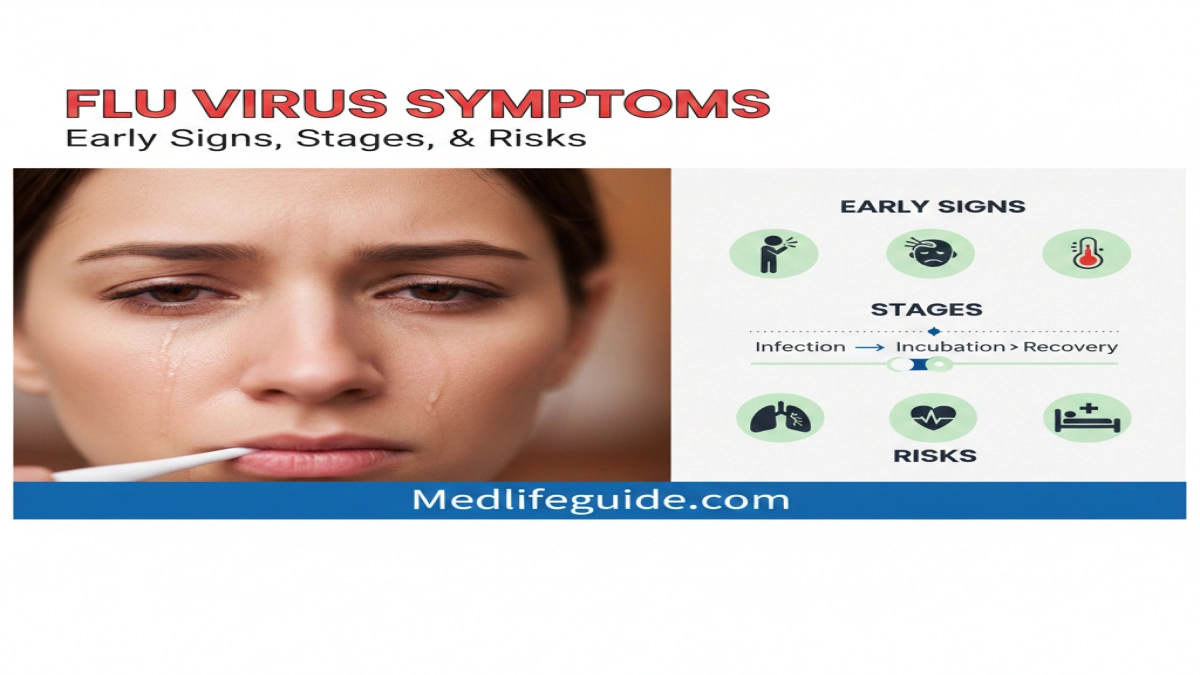
Influenza, commonly called the flu, is a contagious respiratory illness caused by influenza viruses. It affects the nose, throat, and lungs and can range from mild to severe. Understanding flu virus symptoms helps with early recognition, timely care, and prevention of complications—especially in high-risk groups such as older adults, children, pregnant individuals, and people with chronic lung disease, including COPD.
What Is the Flu Virus?
Influenza viruses are RNA viruses that circulate seasonally. The most common types that infect humans are influenza A and B. These viruses spread mainly through respiratory droplets when an infected person coughs, sneezes, or talks. Transmission can also occur by touching contaminated surfaces and then touching the mouth, nose, or eyes.
Early Flu Virus Symptoms
Symptoms often begin suddenly, usually 1–4 days after exposure.
Common Early Signs
- Sudden fever or feeling feverish
- Chills
- Headache
- Muscle aches (myalgia)
- Fatigue or weakness
- Dry cough
- Sore throat
These early flu virus symptoms are often more intense than those of a common cold.
Progressive and Full-Stage Flu Symptoms
Respiratory Symptoms
- Persistent cough
- Chest discomfort
- Shortness of breath (more common in severe cases or in COPD patients)
Systemic Symptoms
- High fever (often 100°F–104°F in adults)
- Severe body aches
- Extreme tiredness lasting days to weeks
Gastrointestinal Symptoms (More Common in Children)
- Nausea
- Vomiting
- Diarrhea
Flu Symptoms by Age Group
Adults
Adults often report fever, body aches, headache, and fatigue as the most severe symptoms. Cough and chest symptoms may worsen in people with asthma or COPD.
Children
Children may develop higher fevers than adults. Gastrointestinal symptoms are more common. Irritability and poor feeding can be early signs in infants.
Older Adults
Fever may be absent or mild. Confusion, weakness, or worsening of chronic medical conditions may be the main presentation.
How Long Do Flu Symptoms Last?
- Days 1–3: Sudden onset of fever, aches, fatigue
- Days 4–7: Fever improves; cough and weakness persist
- Weeks 1–2: Fatigue and cough gradually resolve
Some people experience lingering tiredness for several weeks.
Flu Virus Symptoms vs. Common Cold
| Feature | Flu | Common Cold |
|---|---|---|
| Onset | Sudden | Gradual |
| Fever | Common | Rare |
| Body Aches | Severe | Mild |
| Fatigue | Extreme | Mild |
| Cough | Common | Mild |
When Flu Symptoms Become Dangerous
Seek medical care immediately if any of the following occur:
- Difficulty breathing or chest pain
- Blue or gray lips
- Severe weakness or dizziness
- Confusion or altered mental status
- High fever lasting more than 3 days
- Symptoms that improve then suddenly worsen
Flu Symptoms in People with COPD
People with COPD are at higher risk of severe influenza complications.
Why the Risk Is Higher
- Reduced lung reserve
- Increased airway inflammation
- Higher risk of secondary bacterial pneumonia
Warning Signs in COPD Patients
- Sudden increase in breathlessness
- Increased sputum volume or color change
- Reduced response to usual inhalers
Early antiviral treatment can reduce severity and hospitalization risk.
Diagnosis of Flu Based on Symptoms
Clinical diagnosis is often based on symptom pattern during flu season. Laboratory tests may include:
- Rapid influenza diagnostic tests
- Molecular assays (PCR-based tests)
Testing is more common in hospitalized or high-risk patients.
Treatment and Symptom Relief
Antiviral Medications
- Most effective when started within 48 hours of symptom onset
- Can shorten illness duration and reduce complications
Supportive Care
- Rest
- Fluids
- Fever reducers (acetaminophen or ibuprofen)
Avoid aspirin in children due to risk of Reye syndrome.
Unique Clinical Takeaways
1. Symptom Intensity Matters More Than Symptom Count
Patients often focus on the number of symptoms, but clinical risk correlates more with severity and speed of onset. Sudden, intense fatigue and body aches are more predictive of influenza than mild multi-symptom illness.
2. COPD and Flu Create a High-Risk Feedback Loop
Influenza can trigger COPD exacerbations, while COPD increases flu severity. Early antiviral therapy and prompt monitoring of oxygen levels can prevent rapid deterioration.
3. Fever Absence Does Not Exclude Flu in Older Adults
Older adults may present without fever. New confusion, falls, or sudden weakness during flu season should raise suspicion even without classic flu virus symptoms.
Prevention of Flu Virus Symptoms
Annual Flu Vaccination
- Reduces risk of infection
- Lowers severity if infection occurs
- Especially important for COPD patients
Everyday Prevention
- Hand hygiene
- Mask use during outbreaks
- Avoid close contact with sick individuals
Recovery and Return to Normal Activity
Return to normal activities only after:
- Fever-free for 24 hours without medication
- Energy levels improving
- Cough controlled
Premature return increases transmission risk.
Frequently Asked Questions
Can flu symptoms appear without fever?
Yes. Especially in older adults or immunocompromised individuals.
Are flu symptoms worse at night?
Fatigue and cough often feel worse at night due to airway sensitivity and dehydration.
Can flu symptoms come back after improvement?
Yes. This may indicate a secondary infection and requires medical evaluation.
Medical Disclaimer
This content is for informational purposes only and does not replace professional medical advice, diagnosis, or treatment. Always consult a qualified healthcare provider for personalized medical guidance.